
“Which is hotter, red or green curry?” is the question I’m asked more than any other at our pop-up events, usually by someone hovering over the menu, worried about ordering the wrong one. And I understand why people guess wrong: red looks like the dangerous one, green looks like the safe one. In Thai cooking it’s the other way round. Green curry is hotter than red curry, always, in traditional Thai cooking. Below I’ll explain exactly why, show you where yellow, panang and massaman fit on the heat scale, and help you pick the right curry for your taste.
Red vs green vs yellow: the comparison table
| Green curry | Red curry | Yellow curry | |
|---|---|---|---|
| Thai name | Gaeng keow wan (แกงเขียวหวาน) | Gaeng phet (แกงเผ็ด) | Gaeng karee (แกงกะหรี่) |
| Heat level | Hottest | Medium–hot | Mild |
| Chillies in the paste | Fresh green bird’s eye chillies (50,000–100,000 SHU) | Dried red spur chillies (5,000–30,000 SHU) | A few dried red chillies, softened by turmeric and spices |
| Flavour | Sharp, fresh, herbal | Rich, rounded, gently sweet | Mellow, earthy, creamy |
| Colour comes from | Fresh green chillies | Dried red chillies | Turmeric |
| Classic version | Green chicken curry with Thai aubergine | Red curry with duck or pork and bamboo shoots | Chicken and potato yellow curry |
| Order it if… | You genuinely like heat | You want the all-rounder | You’re heat-shy or feeding children |
Understanding Thai curries

First, a quick note on what a Thai curry actually is, because the heat is decided long before any coconut milk goes in the pan: it comes from the curry paste. Every Thai curry starts with a paste pounded from chillies, garlic, shallots, galangal, lemongrass, kaffir lime zest, coriander root and shrimp paste. Green, red and yellow curries are all named after the colour of that paste, and because the colour comes from the chillies themselves (or, in yellow’s case, turmeric), the colour is an honest label for the heat.
One caveat before the comparison: anyone can make any curry hotter simply by adding more paste. A heavy-handed red curry will beat a timid green one every time. So everything below assumes each curry is made with a similar amount of paste, the way they’d be made in a Thai home kitchen.
What the Thai names tell you
Honestly, the Thai names settle the heat question on their own:
Gaeng phet (แกงเผ็ด), red curry, literally means “spicy curry”. It’s the original, the default curry that the others are measured against, built on dried red spur chillies.
Gaeng keow wan (แกงเขียวหวาน), green curry, translates as “sweet green curry”, and this trips a lot of people up. The wan (sweet) describes the pale, pastel shade of the green: the colour, not the taste. A proper green curry is not a sweet dish; it’s usually the fiercest thing on the menu. Green curry is also the youngster of the family: it emerged from central Thai kitchens around Bangkok in the early twentieth century, when cooks started pounding the paste from fresh green chillies instead of dried red ones. I go deeper into the colour in my guide to why green curry is green.
Gaeng karee (แกงกะหรี่), yellow curry, borrows its name from the word “curry” itself. It’s the most Indian-influenced of the three, carrying turmeric, cumin and coriander seed that arrived in Thailand with Indian and Persian traders. That spice-led, chilli-light recipe is exactly why it’s the mild one.
Green curry heat level

Green curry is the spiciest of the three popular Thai curries, and the reason is simple: green curry paste is pounded from fresh green bird’s eye chillies. These little chillies measure roughly 50,000–100,000 on the Scoville scale, several times hotter than the dried spur chillies in red paste, and because they go in fresh rather than dried, the heat is sharp, bright and immediate. To see exactly where they sit next to a habanero, read my guide to Thai chilli vs habanero heat levels.
That said, the actual heat of any green curry varies enormously with the cook. In Thailand, where the paste is used generously, gaeng keow wan can be genuinely eye-watering. The coconut milk softens the edges and adds creaminess, but it doesn’t hide a properly made green paste. Nothing does.
Is red Thai curry spicy?

Red curry has a noticeable warmth, but it’s a clear step down from green. Red curry paste is made with dried red spur chillies (prik chee fa haeng), which sit around 5,000–30,000 SHU, fiery enough to earn the name “spicy curry” but far gentler than fresh bird’s eyes. Drying the chillies also changes their character: the heat becomes rounder and the flavour deeper, almost fruity, which is why red curry tastes richer and slightly sweeter than green.
That balance makes red curry the workhorse of the Thai kitchen: it’s the base Thai cooks adapt into countless other curries, and the most approachable choice if you’re not used to intense heat. As with green, the cook controls the final fire by how much paste goes in the pan.
Yellow curry heat level

Yellow curry is the mildest of the three. Its colour comes from turmeric rather than chillies, and the paste leans on warm, earthy spices (cumin, coriander seed, a touch of curry powder) instead of raw heat. There are dried red chillies in there, but far fewer than in red paste.
The result is a gentle, creamy, faintly sweet curry, classically made with chicken and chunks of potato. If you’re cooking for children, or for anyone nervous about spice, yellow curry is the one I always recommend: all the fragrance of Thai food with barely a tingle.
Why your takeaway’s green curry isn’t hot
Here’s where the confusion usually starts. People tell me, “but the green curry from my local is the mild one!” And they’re not imagining it. Many Thai restaurants in the UK quietly tone their green curry down, because it’s the most popular dish on the menu and the kitchen doesn’t want to frighten off first-timers. Less paste goes in, the chillies are deseeded, or milder green chillies stand in for bird’s eyes.
So in plenty of UK restaurants the traditional heat ranking gets flattened, or even inverted, and a punchy red curry can out-burn a polite green one. In Thailand there’s no such mercy: gaeng keow wan is fierce. If you want yours done properly, ask for it “Thai hot”; most kitchens will grin and oblige. I’ve written more about how restaurants calibrate spice in my guide is Thai food spicy?
Can't decide what to eat tonight?
Take our 60-second quiz and we'll pick for you
Where panang, massaman and the rest fit in
Red, green and yellow aren’t the whole family. From mildest to hottest, this is how I’d rank the curries you’ll meet on a UK Thai menu. Massaman is the gentlest of all: a slow, Muslim-influenced curry built on cinnamon, cardamom and peanuts rather than chilli heat. Yellow curry comes next, mild, turmeric-led and creamy. Khao soi sits in the middle, the northern coconut noodle curry that’s warming rather than hot (try my khao soi recipe). Panang is thicker, richer and nuttier than red curry, with a touch less fire (my beef panang recipe shows the difference). Red curry is the medium-hot benchmark. Green curry is the hottest of the coconut-milk curries. And jungle curry (gaeng pa) is the wild card: no coconut milk at all, so there’s nothing to soften the chillies. It’s hotter than green, and you’ll rarely see it in the UK, which is probably for the best.
Difference between red and green Thai curry
Red and green curry pastes are built on the same backbone: garlic, shallots, galangal, lemongrass, kaffir lime zest, coriander root and shrimp paste. The defining difference is the chillies: fresh green bird’s eyes in one, dried red spur chillies in the other. Green paste tastes brighter and more herbal; red paste is deeper and more rounded. You can watch me make both in the videos below.
Buying paste? The heat depends on the brand
One thing the “green is hotter” rule can’t survive: mixing brands. Shop-bought pastes vary wildly in strength. Mae Ploy (the tub I reach for when I’m not pounding my own) is properly concentrated and authentically hot. Maesri tins are decent but saltier and a little weaker. The supermarket jars (Thai Kitchen, Blue Dragon, Thai Taste) are much gentler again, made mild on purpose for Western shoppers.
So a green curry made from a supermarket jar can easily end up milder than a red curry made with Mae Ploy. The colour ranking only holds when you compare pastes within the same brand; better still, make your own green curry paste or red curry paste and control the heat yourself.
So which should you order?
My honest cheat sheet, after years of watching customers choose at our events. If you love heat, go for green curry and ask for it Thai hot. If you want the safest crowd-pleaser, red curry is hard to beat: warm, rich, and very hard to dislike. If you’re heat-shy or ordering for kids, yellow curry or massaman are the ones to choose. And if you want something rich and indulgent, panang is your answer.
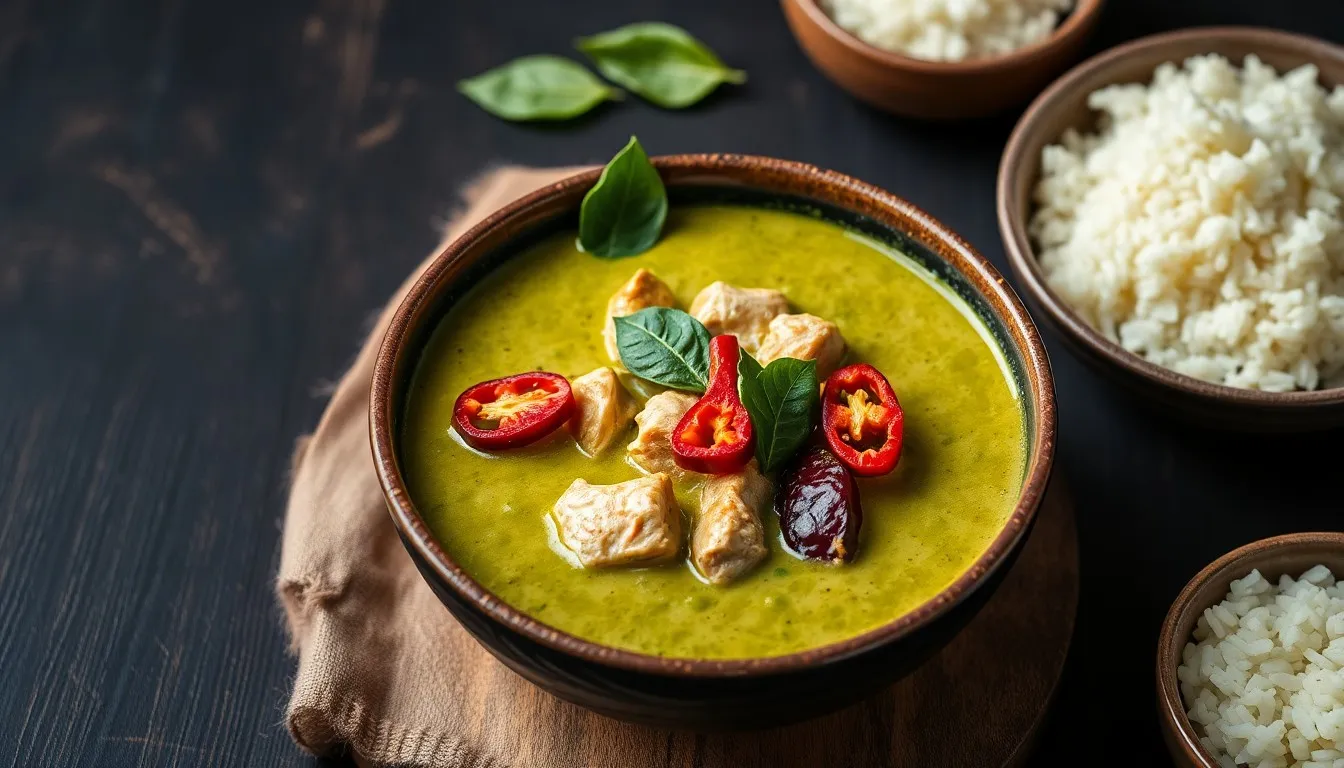
Proteins, if you’re cooking at home: chicken is the classic partner for green curry (gaeng keow wan gai); beef and duck stand up beautifully to red; prawns and firm white fish work in either. Whatever you choose, serve it with properly cooked jasmine rice; if you do overdo the heat, a spoonful of plain rice or a splash more coconut milk will rescue you far better than water ever will.
Thai green curry is always hotter
Yellow curry is always mild when compared to the red and green curries. But between green and red, Thai green curry is always considered hotter. A lot of people assume that the red is hotter because, well, it’s red! But this just isn’t the case.
The fresh green bird’s eye chillies in green curry paste are more potent than the dried red spur chillies in red curry paste. You would need far more red curry paste to match the heat of green curry.
So there’s your answer: Thai green curry is always hotter than Thai red curry. If your takeaway says otherwise, now you know exactly why.

Frequently asked questions
Is red or green Thai curry hotter?
Green curry is hotter. Traditional green curry paste is pounded from fresh green bird’s eye chillies (50,000–100,000 SHU), while red curry paste uses milder dried spur chillies (5,000–30,000 SHU). Yellow curry is milder than both.
Why isn’t my takeaway green curry spicy?
Many UK Thai restaurants deliberately tone green curry down for Western palates (less paste, deseeded or milder chillies) because it’s the best-selling dish on the menu. In Thailand, green curry is fierce. Ask for it “Thai hot” if you want the authentic level of heat.
What is the difference between red and green Thai curry?
The chillies in the paste. Green curry uses fresh green bird’s eye chillies, so it’s hotter, sharper and more herbal. Red curry uses dried red spur chillies, so it’s milder, richer and slightly sweeter. The rest of the paste (garlic, shallots, galangal, lemongrass, kaffir lime and shrimp paste) is nearly identical.
Which Thai curry is the mildest?
Massaman is the mildest Thai curry overall, built on warm spices and peanuts rather than chilli heat. Of the three colour curries, yellow is the mildest: its colour comes from turmeric, not chillies.
Is green curry supposed to be sweet?
No. The Thai name gaeng keow wan does mean “sweet green curry”, but the “sweet” describes the pale, pastel shade of the green (the colour, not the taste). A traditional green curry is savoury, herbal and hot, with only gentle background sweetness from coconut milk and palm sugar.
Can I use red curry paste instead of green?
Yes: they’re used in the same quantities and the cooking method is identical, so you can swap one for the other in any recipe. The dish will taste different though: richer and slightly sweeter with red, sharper and more herbal with green.
Which Thai curry is best for chicken?
Green chicken curry (gaeng keow wan gai) is the absolute classic, but chicken works beautifully in all of them. Beef and duck suit red curry’s deeper flavour; prawns and firm white fish are lovely in either red or green.
Is panang curry hotter than red curry?
No: panang is slightly milder than red curry, but thicker, richer and nuttier, with ground peanuts in the paste and much less sauce. Think of it as red curry’s indulgent cousin.
Why is green curry green?
The colour comes from the fresh green bird’s eye chillies pounded into the paste, often helped along by fresh coriander and Thai basil. The fresher the paste, the more vibrant the colour, and generally the hotter the curry. I cover this fully in why is green curry green?
Which Thai curry is the healthiest?
They’re broadly similar: the calories come mostly from the coconut milk, not the paste. A brothier curry with plenty of vegetables and less coconut cream will always be lighter; my guide to the lowest-calorie Thai food goes through the best choices.



Comments