
These 20 Common Ingredients in Thai Food Are Essential For Thai Cooking
Thai cuisine is celebrated for its distinctive flavours and harmonious balance of sweet, salty, sour, and spicy elements. It relies on a variety of fresh ingredients, including aromatic herbs, spices, and essential components like fish sauce and coconut milk. Stock these twenty ingredients and you can cook the vast majority of Thai dishes without a special shopping trip — most keep for months in the fridge or cupboard.
Thai cooking is a delicate art of harmonizing these ingredients to produce dishes that are both flavourful and visually stunning.
Fish Sauce (Nam Pla)
A vital element of Thai cuisine, fish sauce is made by fermenting fish with salt. It imparts a salty and savoury flavour to dishes and is often used as a seasoning or dipping sauce. It keeps for years once opened, though the aroma fades slowly, which is covered in does fish sauce go bad. If you're living in England and wondering where to find fish sauce, check out our Thai survival guide to food in England — it's easier to find than you might think.

Coconut Milk (Kati)
Extracted from grated coconut flesh, coconut milk is creamy and rich. It’s a key ingredient in many Thai curries, soups, and desserts, adding a delightful tropical sweetness.

Lemongrass (Takhrai)
Known for its fragrant, lemony aroma and flavour, lemongrass is sliced or pounded and used to infuse broths, soups, and curries with a bright, citrusy note.

Galangal (Kha)
Galangal is a rhizome similar to ginger but with a more peppery and earthy taste. It’s a crucial component in many Thai curries and soups, lending depth and complexity.

Kaffir Lime Leaves (Bai Makrut)
These uniquely shaped leaves have an intensely aromatic citrus flavour and are often torn or finely sliced and added to curries and soups for their distinctive essence.

Thai Basil (Bai Horapa)
Thai basil is prized for its sweet, anise-like flavour with a hint of pepper. It’s an essential ingredient in dishes like Pad Krapow and Thai basil chicken.

Bird’s Eye Chilli (Prik Kee Noo)
These small, fiery chillies are used to add a fiery kick to Thai dishes. Their heat level can vary, so use them sparingly for a spicy zing. If you’ve ever wondered how hot Thai chillies are compared to a habanero, they sit at 50,000–100,000 SHU on the Scoville scale.

Palm Sugar (Nam Tan Peep)
Made from the sap of palm trees, palm sugar is a natural sweetener with a caramel-like flavour. It’s commonly used in Thai curries, sauces, and desserts.

Coriander (Pak Chee)
Coriander leaves and stems add a fresh, citrusy note and are a common garnish for Thai dishes, providing a burst of green flavour and colour.

Shrimp Paste (Kapi)
This pungent condiment is made from fermented shrimp and salt. It’s used as a base in many Thai curry pastes like the famous green curry paste and dipping sauces, lending depth and umami.

Tamarind Paste (Makham Piag)
Tamarind paste offers a tangy and slightly sweet flavour. It’s used in dishes like Pad Thai and various curries, as well as in soups and sauces.

Garlic (Kratiem)
Garlic is a fundamental ingredient in Thai cooking. It’s used both fresh and fried to add a savoury depth of flavour to a wide range of dishes.

Onion (Horm)
Onions are often used in Thai stir-fries and curry pastes. They provide a mild, sweet flavour and add texture to various dishes.

Turmeric (Khamin)
Turmeric adds both colour and an earthy, slightly bitter taste to Thai dishes. It’s a key component of yellow curry paste and certain rice dishes.

Coriander Roots (Rak Pak Chee)
The roots of the coriander plant are used to enhance the flavour of curry pastes, adding a rich, herbal depth to the base.

Lime (Manao)
Limes are used for their juice and zest to provide acidity and freshness to Thai dishes, whether in marinades, sauces, or as a garnish.

Shallots (Hom Daeng)
Shallots are smaller and milder than onions. They are frequently used in Thai salads, stir-fries, and curry pastes for their sweet and aromatic flavour.

Soy Sauce (Si-Iw)
While not native to Thai cuisine, soy sauce is often used to add a savoury, umami element to various dishes and sauces.

Jasmine Rice (Kao)
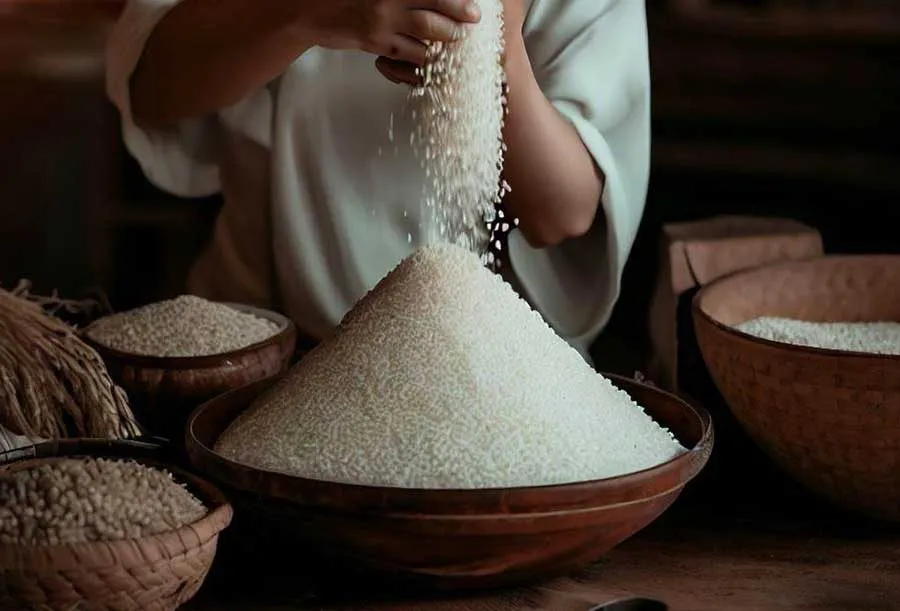
Thai Jasmine Rice is the staple of Thai cuisine, with steamed jasmine rice and sticky rice being the most common varieties used in various dishes and as side accompaniments.

Egg (Kai)
Eggs are used in Thai stir-fries, noodles, and soups, and they’re often served as a topping or garnish to add protein and richness to dishes. They are also a dish on their own: boiled, peeled, deep-fried until the surface blisters, then dressed in a tamarind and palm sugar caramel. That is son in law eggs, named for the way a mother told her daughter's husband what she thought of him.

Storage & Shelf-Life Guide: Keeping Your Thai Pantry Fresh
Not all Thai ingredients have the same lifespan. Understanding how to store them prevents waste and keeps your pantry ready for spontaneous Thai cooking.
Fermented and condiment pastes (fish sauce, shrimp paste, tamarind, soy sauce): These are shelf-stable at room temperature for 2–3 years if unopened. After opening, store in a cool place (not sunlight). Fish sauce and shrimp paste can last 5+ years unopened; once opened, they remain stable for 12+ months without refrigeration due to high salt content.
Can't decide what to eat tonight?
Take our 60-second quiz and we'll pick for you
Fresh herbs (lemongrass, Thai basil, coriander, kaffir lime leaves): Store in the fridge wrapped in damp paper towels inside a sealed bag (keeps 5–7 days). Lemongrass and kaffir lime leaves freeze exceptionally well — chop and freeze in ice cube trays with a little water or oil (lasts 3–4 months). Thai basil and coriander don’t freeze well, so use fresh or freeze whole stems in oil.
Rhizomes and roots (galangal, ginger, turmeric): Keep in the fridge crisper drawer wrapped in paper towels (keeps 2–3 weeks). For longer storage, peel and freeze in ice cube trays with water (lasts 6+ months). Dried galangal and turmeric powder keep for 2–3 years in a dark, sealed container.
Coconut milk: Canned coconut milk keeps unopened at room temperature for 18–24 months. Once opened, transfer unused portions to an airtight container and refrigerate (lasts 3–5 days). Freezing is excellent — pour into ice cube trays for portioned freezing (lasts 3–4 months). Do not re-seal an opened can and refrigerate; use within a day or freeze.
Spices and dried items (palm sugar, turmeric powder, coriander roots): Store in dark, sealed containers away from heat and light. Most dried spices keep for 2–3 years; check colour and aroma — if dulled, they’re losing potency and should be replaced.
Chillies, garlic, onion, shallots: Keep in a cool, dark place (pantry, not fridge unless very humid climate) for 1–2 weeks. For longer storage, chillies freeze superbly whole (3–4 months). Garlic and shallots can be frozen minced in oil-filled ice cube trays (3 months).
Sourcing Quality: Brand Recommendations and What to Look For
Not all brands deliver the same quality. Here’s what to prioritize when shopping:
Fish sauce: Squid Brand (Thailand) and Red Boat (Vietnam) are gold-standard choices. Look for sauces that list only "fish" and "salt" in ingredients — avoid varieties with added flavourings or sugar. Premium fish sauce (20–28% protein) tastes noticeably more complex than economy grades (12–15% protein). If your pad thai ends up tasting too fishy despite using a good bottle, it's usually a balance or heat problem, not a fish sauce problem — see our guide on why pad thai tastes too fishy.
Coconut milk: Choose brands with 50%+ coconut extract (check labels — some budget brands are heavily diluted water). Aroy-D and Thai Kitchen are reliable. Avoid brands with guar gum as a primary thickener (it replaces real coconut); prefer brands thickened with natural coconut solids.
Curry paste bases: Mae Ploy and Maesri are consistent, authentic. For fresh curry paste (if available in Asian markets), prefer refrigerated varieties over shelf-stable; fresh typically tastes superior.
Lemongrass and galangal: Fresh is best; frozen (from Asian markets) is next. Dried versions are acceptable for pastes but inferior in soups where the fresh aroma matters. Look for vibrant colour when fresh; pale dried herbs have lost potency.
Palm sugar: Prefer loose granules or discs from Asian markets over processed blocks; true palm sugar has no additives. Generic "palm sugar" labeled as "palm jaggery" is authentic; brands like Aroy-D and Thai Taste deliver consistency.
Ingredient Substitutions: When the Asian Market Is Closed
Not every ingredient has an ideal substitute, but here’s when you can improvise:
- Kaffir lime leaves: Fresh is irreplaceable in flavour, but dried kaffir lime leaves work (use double the amount, add earlier to cooking). Regular lime zest can’t replicate the floral note — use lime juice + a pinch of lemongrass paste as an emergency sub.
- Tamarind paste: Lime juice or rice vinegar can replicate sourness but not depth. If you must substitute, use 1 part lime juice + ½ part soy sauce to approximate umami + sourness.
- Palm sugar: Brown sugar or regular sugar works mechanically but tastes less complex. Use in equal amounts; expect slightly sharper sweetness.
- Thai basil: Regular basil (Italian) has a different anise-pepper profile; use half the amount if substituting. Coriander is not a substitute — use coriander alone rather than as a basil stand-in.
- Bird’s eye chillies: Substitute with Thai chilli flakes (use 1 teaspoon flakes per 2–3 fresh chillies) or red serrano peppers (similar heat, slightly different flavour).
- Shrimp paste: No direct substitute; skip it rather than replace, as no alternative replicates umami + funk together. For vegetarian cooking, miso + a tiny pinch of mushroom powder is closest.
Regional Thai Variations: How Ingredient Use Changes Across Thailand Thai food by region
Thai cuisine isn’t uniform; ingredient emphasis varies dramatically by region.
Northern Thailand (Chiang Mai region): Emphasizes sticky rice, minimal coconut milk (curries are drier, soupless), heavier use of galangal and ginger, more garlic, coriander-heavy finishing. Lime is less prominent; ingredients are earthier.
Central Thailand (Bangkok region): The most balanced "five-flavour" approach: sweet (palm sugar), salty (fish sauce), sour (lime), spicy (chilli), and umami (shrimp paste/fish sauce). Uses all 20 ingredients relatively equally. Most Thai restaurant food globally reflects Central style.
Southern Thailand (Phuket region): Heavy use of shrimp paste, more seafood-forward pastes, liberal chilli use, turmeric-forward curries (more Indian influence), increased coconut milk in curries. Fish sauce usage peaks here.
Northeastern Thailand (Isaan region): Sticky rice dominant, lime-forward (sour dominant), minimal coconut milk, heavy coriander, fresh chillies abundant. Flavour profile is assertively sour and spicy rather than balanced.
Understanding these regional variations helps you choose ingredient amounts and combinations based on the regional cuisine you’re cooking. A Central Thai green curry uses all ingredients; an Isaan som tam skips coconut entirely and emphasizes lime + chilli.
As we’ve explored these common Thai food ingredients, it’s as if we’ve taken a whirlwind trip through the bustling markets of Bangkok, the aromatic streets of Chiang Mai, and the exotic flavours of Phuket. If you’re curious about the tropical fruits that also define Thai flavour — mangoes, jackfruit, rambutan, and more — I’ve written a separate guide to exotic fruits in Thailand worth exploring. Each ingredient, from the zesty lemongrass to the fiery chillies and the creamy coconut milk, tells a story of a vibrant culinary culture that’s as diverse as it is delicious.
But remember, dear food adventurer, Thai cuisine is more than just a list of ingredients; it’s an experience. It’s the sizzle of a hot wok, the smell of garlic and chillies hitting hot oil, and plates shared down the middle of the table — Thai meals are eaten together, with every dish served at once. So, whether you’re planning to whip up a homemade Thai feast or you’re headed to your favourite Thai restaurant, savour not just the ingredients but the joy, laughter, and memories that come with every bite.
Now, armed with this ingredient knowledge, go forth and conquer your kitchen, experiment, and create your own Thai culinary masterpieces. And as you do, don’t forget to sprinkle in a little adventure, a dash of fun, and a lot of love. Happy cooking, and may your Thai dishes always be filled with flavour, flair, and a touch of the extraordinary! 🌶️🍜🥥


Comments