Jasmine rice — hom mali in Thai — is a high-quality long grain originally from Thailand, though these days it’s grown across Asia. It has a natural floral fragrance you’ll smell the moment it starts cooking, and it’s the everyday rice of Thailand: one of the main types of rice in Thailand and the one served with nearly all of the most popular Thai dishes.
It’s also slightly different to cook than regular long grain — it needs less water — which is why so much rice outside Thailand comes out mushy. Here’s how we do it at home.

Do You Have to Wash Jasmine Rice Before Cooking?
The simple answer to this is yes you should. It only takes a few seconds and it will improve the fluffiness of the rice. The reason that we wash the rice is to remove some of the starches which can make the rice stick together. What happens if you don’t wash the rice? Usually nothing! If you add the correct amount of water then you will still end up with perfect Jasmine rice.
As you can see below the Jasmine rice I use doesn’t need to be washed so it’s worth checking the packet. But as a rule, it’s always best to wash Jasmine rice before cooking.

How Do You Cook Jasmine Rice in a Rice Cooker
If you’ve got a rice cooker then cooking Jasmine rice is a pretty straightforward process. If you haven’t got one then you can use a pot or saucepan. Although it’s not as easy, once you get used to it you’ll be able to cook the perfect rice every time! If you eat rice often it’s definitely worth getting a rice cooker. At home, I use the Yum Asia Rice Cooker and highly recommend it. It’s the easiest way to get perfect jasmine rice.
The Easy Way – With a Rice Cooker
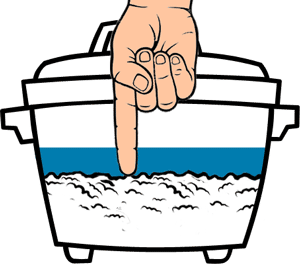
Using a rice cooker is the easiest way to cook Jasmine rice. Every home in Thailand has a rice cooker! Thai people can’t live without rice. Rice is eaten every day in Thailand so having a rice cooker is essential!
- First of all, just put the amount of rice that you want into the rice steamer.
- Add enough water to cover the rice.
- Use your hand to move the rice around and make sure there are no grains stuck to the bottom of the steamer.
- Use your hand to level out the rice as best you can.
- Add a little bit more water and then use your finger to measure the depth of the water.
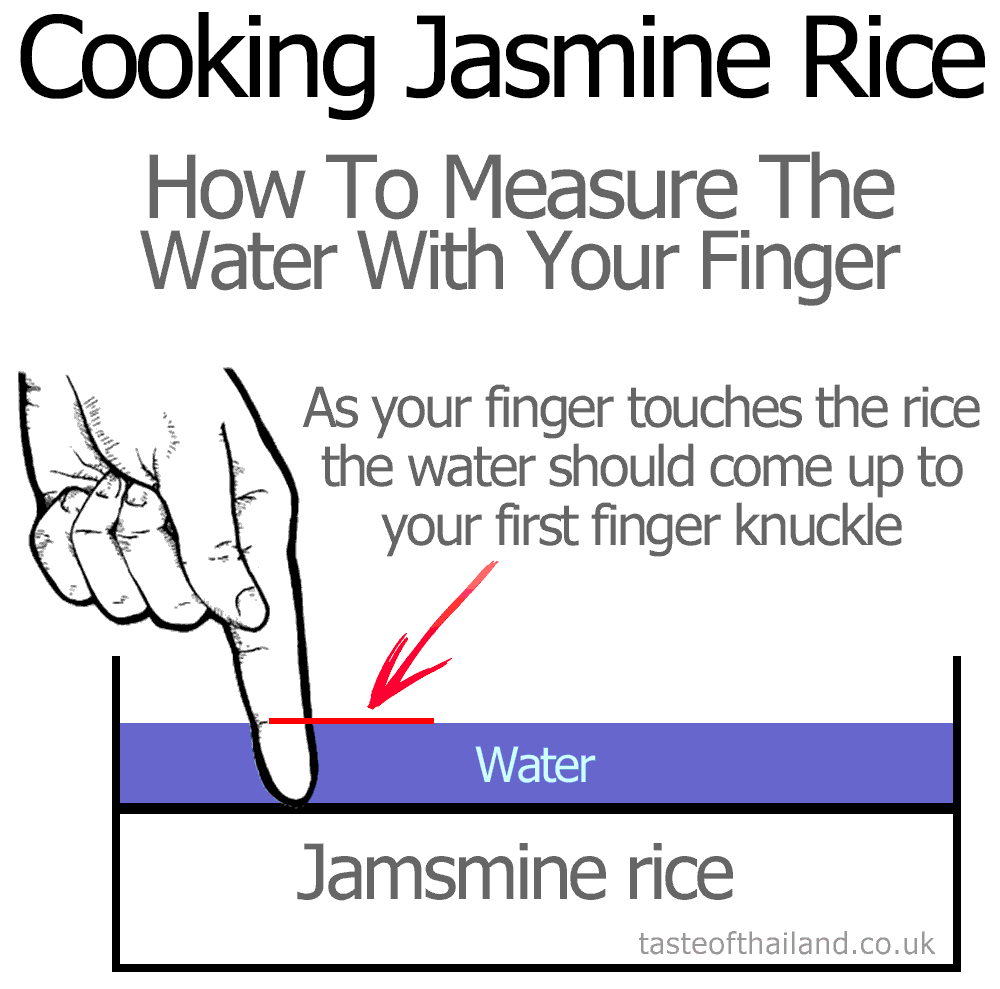
The easiest way to do this is to use the ‘rice finger method’. This is where you put your finger into to the water until it reaches the top of the rice. The water should come up to your first knuckle. Add or remove the water as necessary, See below for more information on this method.
Using The ‘Rice Finger Method’
The rice finger method or the rice knuckle method involved inserting your index finger vertically into the pot or rice steamer. Place your finger so that it touches the top of the rice, right at its surface.
It’s important not to push your finger too deeply into the rice; a gentle touch that allows your fingertip to make contact with the rice grains is sufficient.
As you insert your finger, you’ll notice that it naturally stops at a certain point. This point indicates the surface level of the rice. This step is crucial for accurate water measurement, as establishing a consistent reference point helps you add the appropriate amount of water for the perfect jasmine rice.
With practice, you’ll develop a sense of how much water corresponds to the amount of rice you’re using. Over time, you’ll become more comfortable with this traditional method and achieve perfectly cooked jasmine rice every time.
- When you have the water level correct, put the lid on the rice steamer and flick the switch to ‘cook’. Your rice will be done in around 20 minutes depending on how much rice you are cooking.
- Once the rice cooker has switched itself off you should leave the rice for at least another 5 minutes for it to settle. If you take it out straight away it may feel a bit too wet.

When you know how to measure rice with your finger, it makes things a lot easier. However, if you are not comfortable using your finger to measure the water then you can use the measuring cup method which is explained below.
Using The Cup Method To Measure The Water
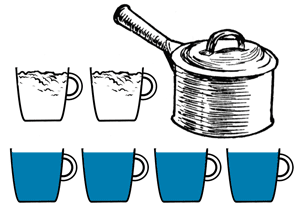
If you’re not sure about using your finger to measure how much water you need compared to how much rice then there is another way of measuring.
This is a more mechanical method so if you’ve never cooked Jasmine rice before then this technique may be easier until you get a feel for it.
Getting the water-to-rice ratio using a cup is very straightforward. The ratio is 1½ cups of water for every 1 cup of rice — jasmine rice needs less water than ordinary long grain, and using the 2:1 ratio printed on some packets is the most common reason it comes out mushy.
If you add 2 cups of rice then you simply add 3 cups of water. It’s that simple. I recommend you learn the finger method though! Nobody in Asia uses the cup method 🙂
The Hard Way – Cooking Jasmine Rice on The Stove
If you like Asian food and don’t have a rice steamer then you really should get one! There are lots of cheap rice steamers on Amazon so you don’t have to spend a fortune. Using a rice steamer really takes the stress out of cooking rice!
Don’t worry if you haven’t got a rice steamer because using a saucepan is the next best thing! Knowing how to cook jasmine rice on the stove is a very handy skill to have!
The main difference is that a rice cooker switches off automatically when the rice is cooked. A saucepan doesn’t! This means you’ve got to use your judgement and there’s a chance you may end up with burnt rice. Don’t worry though as we’ve got some tips to minimise the chances of this happening.
With a Saucepan
- First of all, just put the amount of rice that you want into the saucepan.
- Add enough water to cover the rice.
- Use your hand to move the rice around and make sure there are no grains stuck to the bottom of the saucepan.
- Use your hand to level out the rice as best you can.
- Add a little bit more water and then use your finger to measure the depth of the water using the method explained above.
- Put the lid on the saucepan and bring it to the boil.
- When it starts to boil (you can see the saucepan lid moving) reduce the heat and just let it simmer.
- When the lid stops moving you know that all the water has almost gone. Take the lid off and use a fork to lift up the rice at the bottom of the saucepan. If it’s still wet then quickly put the lid back on and give it a few more minutes and check again. If all the water has gone then turn off the heat because your rice is cooked!
The important thing is to not take the lid off the saucepan! You have to resist the temptation to look at all costs!!
If you cook the rice for too long then it will dry out at the bottom and start to burn. If this happens don’t worry, you’ll get the hang of it eventually! It takes practice and it also depends on your brand of Jasmine rice. If your rice came out too hard then next time add more water. On the other hand, if your rice is too wet then reduce the amount of water next time,
Now you know how to cook jasmine rice you should learn how to make green curry to go along with it 🙂 If you'd also like to learn how to cook sticky rice, that's a slightly different process. If you want some more information then check out my video below.
How to Cook Jasmine Rice – From My YouTube Channel
Frequently Asked Questions
What is the right water-to-rice ratio for jasmine rice?
1½ cups of water for every 1 cup of rice. Jasmine rice needs less water than ordinary long grain — the 2:1 ratio printed on some packets is why so much jasmine rice comes out mushy.
What is the finger (or knuckle) method?
Rest your fingertip on the surface of the levelled rice and add water until it reaches your first knuckle — roughly 2.5cm above the rice. It works regardless of how much rice you're cooking or the size of the pot, which is why it's how nearly everyone in Thailand measures.
Do I need to rinse jasmine rice before cooking?
Yes, as a rule — two or three rinses under cold water removes the surface starch that makes the grains clump. Some brands are sold as no-wash (check the packet), and if you forget, the rice will still cook fine with the right amount of water.
Why did my jasmine rice come out mushy or too hard?
Mushy means too much water — next time use less, and make sure you're not using a 2:1 ratio. Too hard or dry means too little water or too fierce a heat. Every brand absorbs slightly differently, so adjust by a splash either way and you'll have it dialled in by the second or third pot.
Is jasmine rice the same as sticky rice?
No — they're different varieties cooked completely differently. Jasmine rice is boiled or steamed in water; Thai sticky rice (glutinous rice) is soaked for hours and then steamed dry. See my guide on how to cook sticky rice for that method.
How long does jasmine rice take to cook?
About 20 minutes in a rice cooker, plus 5 minutes resting after it switches off. On the stove it's 10–15 minutes of simmering once it reaches the boil. Either way, let it rest with the lid on for 5 minutes before serving — it finishes the rice and stops it feeling wet.
Please Leave a Rating If You Enjoyed This Guide 🙂
If you're living in England and looking for jasmine rice, our Thai survival guide to food in England explains where to find it in UK supermarkets.




Comments