Written by Manaow Prasatthong, 3rd Generation Thai Chef
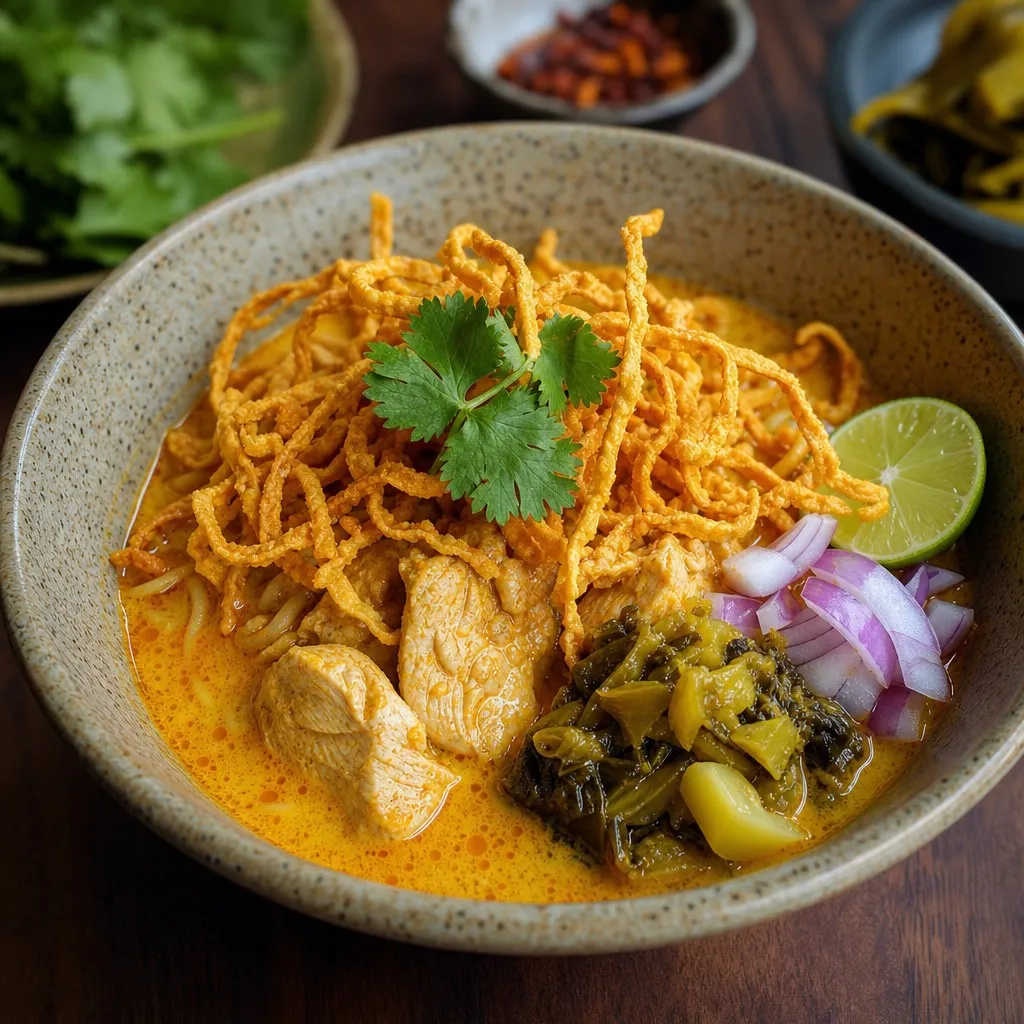
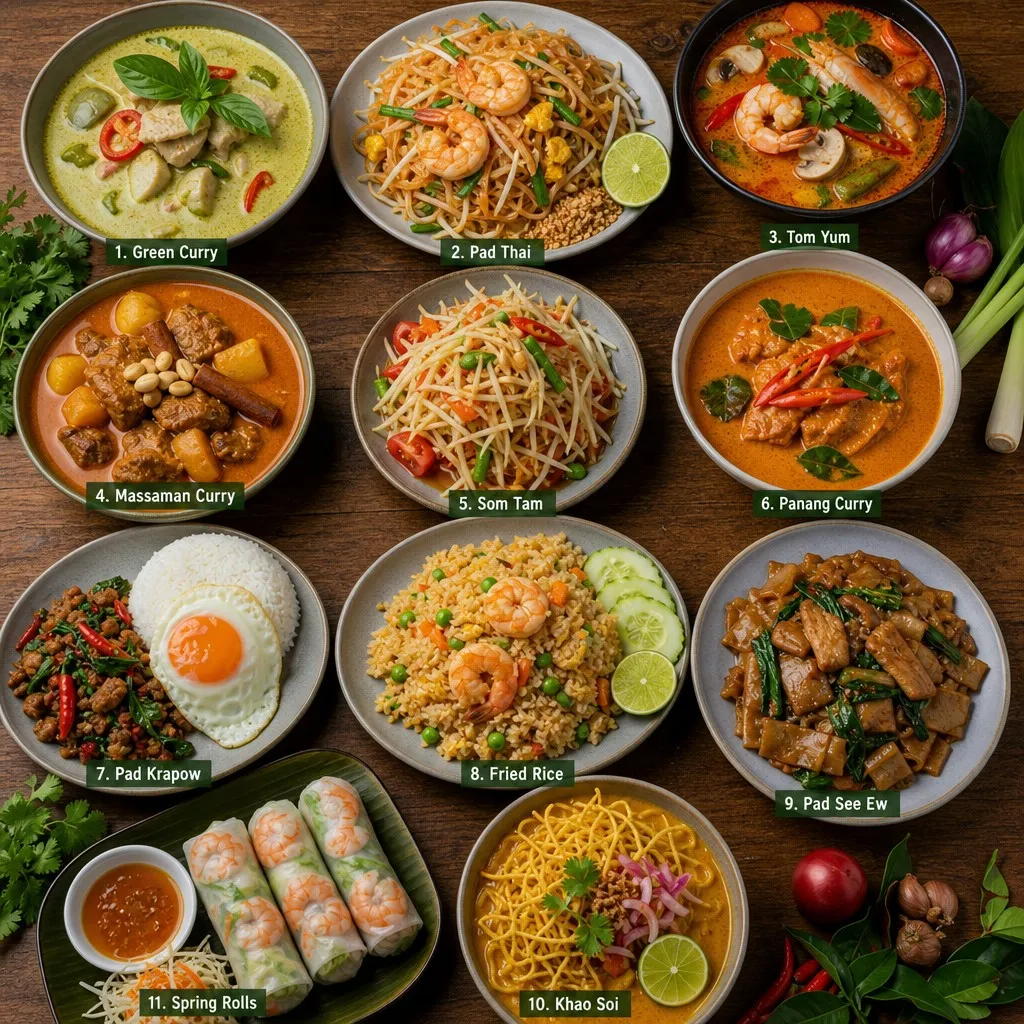
Khao soi is Northern Thailand's most beloved dish: a rich, golden coconut curry broth ladled over soft egg noodles, with a tangle of crispy fried noodles piled on top. It originated in the north of the country, particularly around Chiang Mai, and it is distinct enough from mainstream Thai food that first-time visitors are often surprised to discover it exists at all. That contrast of textures (silky broth, tender noodles, and a crunchy topping) is what makes it genuinely special.
What makes khao soi different?
The dual noodle texture
The most immediately striking thing about khao soi is the way it is served: both soft and crispy noodles in the same bowl. The soft egg noodles sit in the broth, absorbing the curry as you eat. On top, a small nest of the same noodles has been deep-fried until golden and shatteringly crisp. The combination means every spoonful delivers a contrast of textures that you do not get in any other Thai noodle dish.
The coconut curry broth
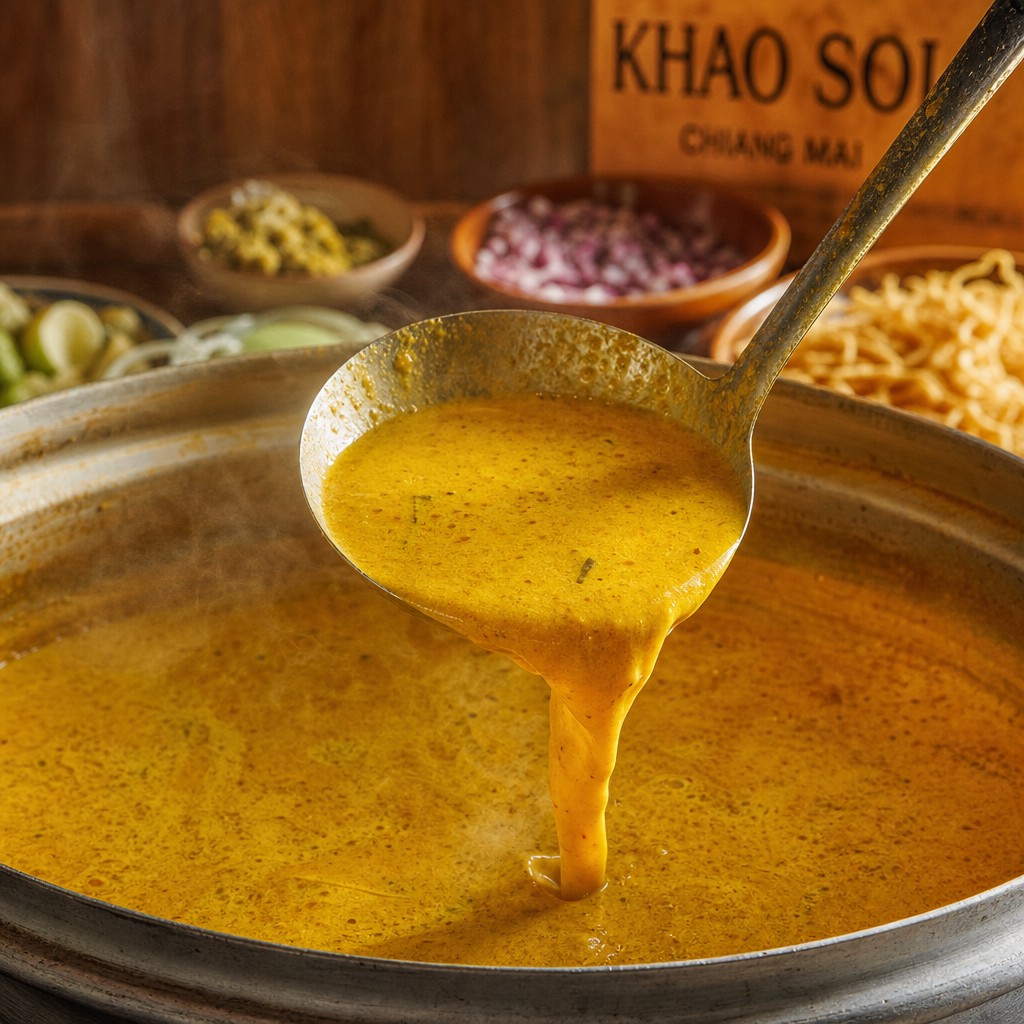
The broth is coconut milk-based, which gives it a creamy richness, but it is lighter and less sweet than southern Thai curries. The curry paste used in khao soi contains dried red chillies, turmeric, shallots, garlic, and warming spices like cumin and coriander seed; these give it a depth more reminiscent of Indian or Burmese cooking than the fresh, herb-forward pastes used in green or red curry. The result is warming rather than fiery, complex rather than sharp.
The garnishes
Khao soi is served with a set of accompaniments that you add at the table to adjust the flavour as you eat: pickled mustard greens (which cut through the richness with a sour, funky edge), raw shallots, a wedge of lime, and a spoonful of chilli oil. These are not optional extras; they are part of the dish. Squeeze the lime in, add a few pickled greens, and the whole bowl transforms.
The origins of khao soi
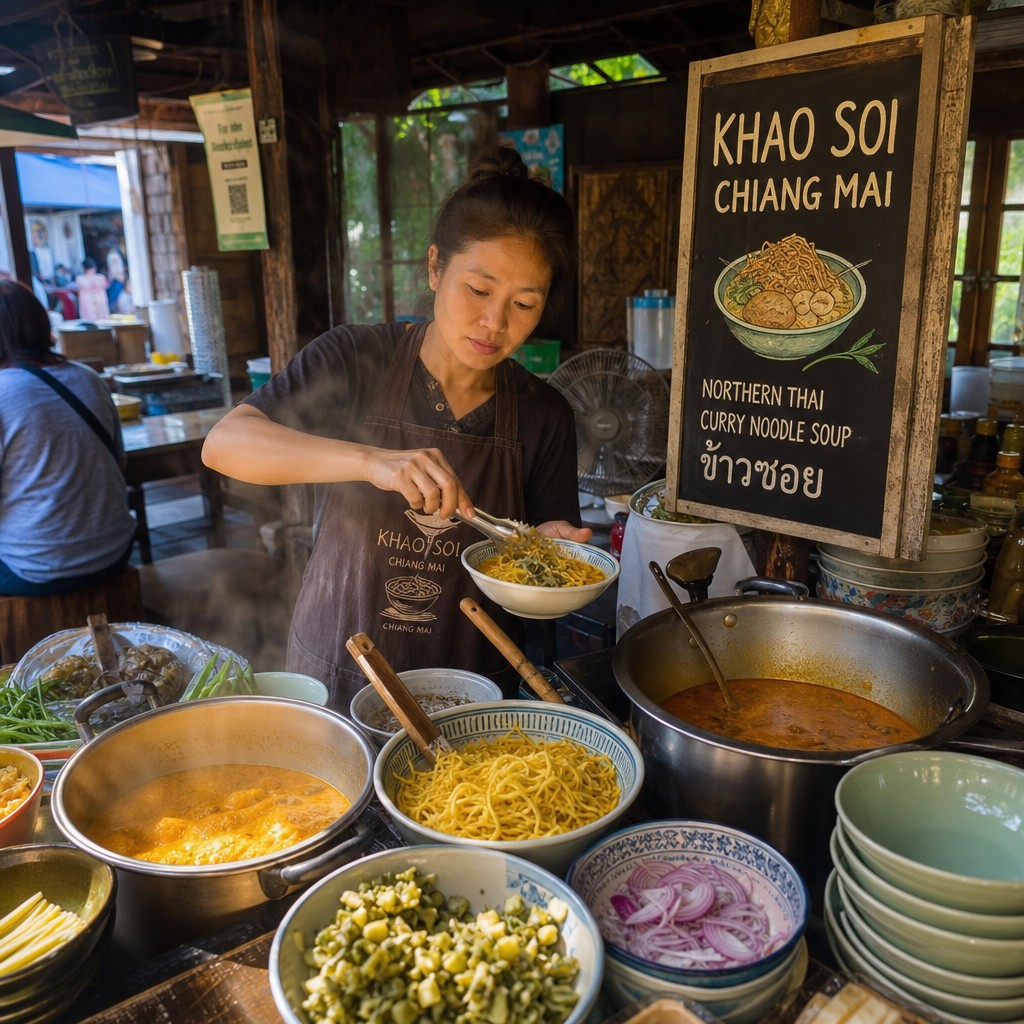
Khao soi sits at a crossroads of culinary cultures. The dish shows clear influences from Burmese cooking, specifically the Burmese noodle soup ohn no khao swe, as well as from the Yunnanese Chinese Muslim traders who travelled the old caravan routes through what is now Northern Thailand and Myanmar. These traders brought with them dried spices, wheat noodles, and a tradition of coconut milk-based soups that does not appear in central Thai cuisine at all.
The dish became embedded in Chiang Mai and the surrounding northern provinces over generations. Today it is closely associated with the city in the same way that pad thai is associated with Thailand as a whole: it is the dish visitors come specifically to eat. There are both Muslim and Buddhist versions: the Muslim version traditionally uses beef or chicken (avoiding pork), while Buddhist versions are found across the north with chicken being the most common protein in either case. Tofu versions also exist for vegetarians, though they are less common.
How khao soi differs from other Thai curries
If you are familiar with green or red curry, khao soi will feel quite different. Green and red curries are thick, scooped over rice, and eaten alongside other dishes. Khao soi is broth-based, closer to a noodle soup than a curry in the Western sense, and it is a complete meal in itself. The flavour is less sweet than a typical restaurant green curry, and the warming spice profile (cumin, turmeric, dried chillies) gives it a distinct character.
Compared to tom yum, the differences are equally stark. Tom yum has a clear broth flavoured with lemongrass, kaffir lime leaves, galangal, and fish sauce: sharp, sour, and hot. Khao soi has none of that brightness; it is rich, coconut-based, and warming rather than tart. The two dishes occupy completely different ends of the Thai flavour spectrum.
This is also why khao soi is considered distinctly Northern Thai rather than mainstream Thai. If you order it in Bangkok, you may find it, but it will likely be a pale imitation of what you get in Chiang Mai. In Southern Thailand, you will struggle to find it at all.
What does khao soi taste like?
The flavour is rich, mildly spicy, and deeply warming, with a gentle sweetness from the coconut milk that never tips into cloying territory. The turmeric gives it a subtle earthiness and that distinctive golden colour. Dried chillies add background heat that builds slowly rather than hitting immediately. Overall, it is a gentle, enveloping bowl of food: the kind of thing you want on a cool evening or after a long day of travelling.
The textural contrast is part of the experience too. The broth coats the soft noodles beautifully, and the crispy fried noodles on top gradually soften as you work through the bowl, so it evolves as you eat. Add the pickled greens and a squeeze of lime halfway through and the whole character shifts, cutting through the richness and brightening everything up.
Where to find khao soi
Khao soi is primarily a Northern Thai dish. Chiang Mai is its heartland, and you will find excellent versions at every level: market stalls and local noodle shops through to mid-range restaurants specifically known for the dish. It is also available elsewhere in the north: Chiang Rai, Lampang, and Mae Hong Son all have good versions.
In Bangkok, khao soi exists but is not everywhere. Restaurants specialising in Northern Thai food serve it, and it has become more common in the city as awareness of regional Thai food has grown. In Southern Thailand, it is almost unknown in local restaurants.
Outside Thailand, khao soi has started appearing on menus in Thai restaurants in the UK, US, and Australia, particularly in cities with a larger Thai community or restaurants that focus on regional cooking rather than a generic Thai menu. If you are ordering it abroad, ask whether it comes with the traditional garnishes; without the pickled mustard greens and chilli oil, you are missing a significant part of the dish.
If you are ordering in Thailand, ask for khao soi gai (ข้าวซอยไก่) for the chicken version; this is the most common and usually the most reliably good. Khao soi nuea is the beef version.
How to make khao soi at home
Making khao soi from scratch is more involved than most Thai dishes but very achievable. The core components are: a khao soi paste (dried red chillies, turmeric, shallots, garlic, ginger, cumin, and coriander seed, all pounded together), full-fat coconut milk, egg noodles, and your protein of choice. Chicken drumsticks or thighs work best because they stay tender during the longer cooking time.
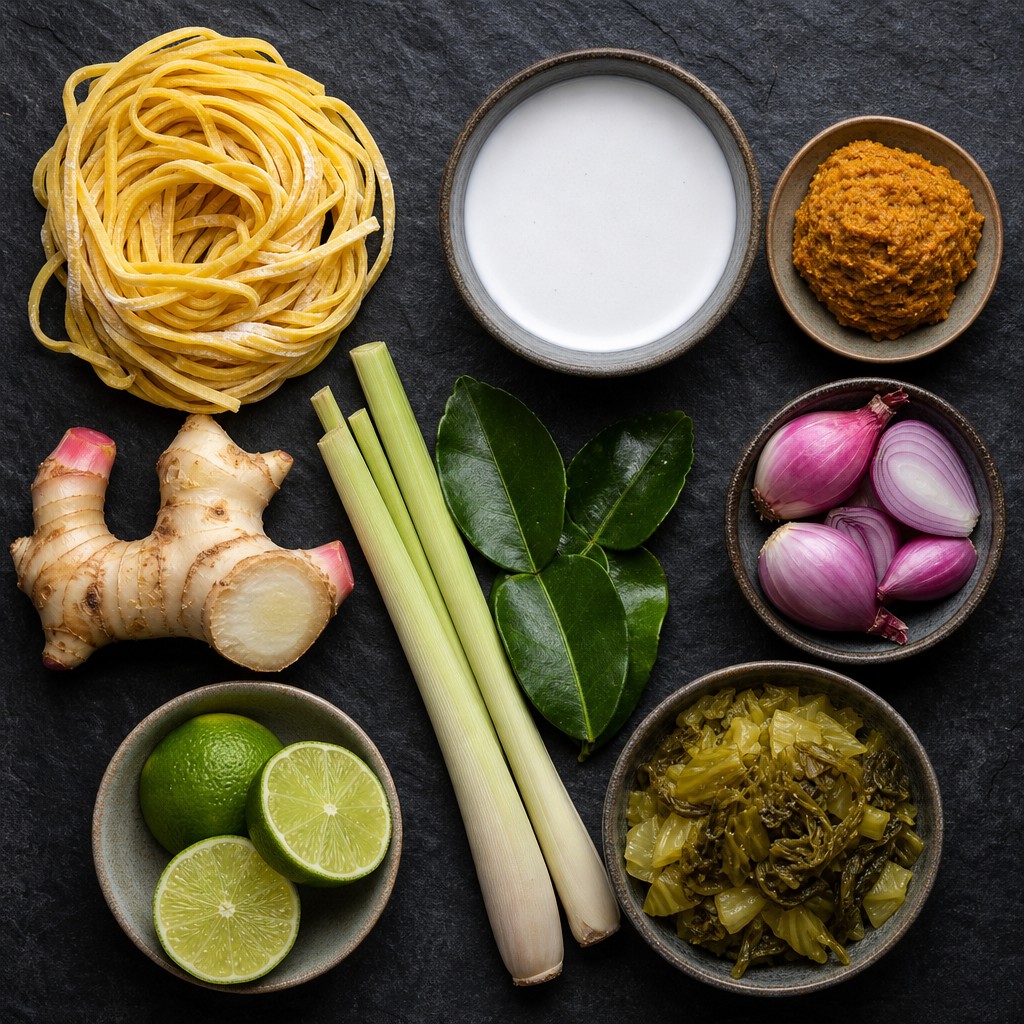
The method follows a similar logic to other Thai coconut curries: fry the paste in a small amount of coconut milk until fragrant, then add the remaining coconut milk and your protein and simmer until cooked through. Season with fish sauce and a little palm sugar. Cook a second portion of egg noodles separately and deep-fry a small handful in hot oil until crispy; this becomes the topping. Serve with pickled mustard greens, shallots, lime, and chilli oil on the side.
A few key tips: do not rush the paste stage. Give it at least five minutes in the coconut milk before adding anything else, so the spices can bloom properly. And balance the seasoning carefully at the end; it should be rich and savoury with just a hint of sweetness, not sweet-forward. For now, take a look at our easy Thai recipes with chicken for more ideas while we work on a dedicated khao soi recipe.
Khao soi is one of those dishes that rewards seeking out. Whether you are eating it at a market stall in Chiang Mai for the first time, or making it at home on a cold evening, the combination of a rich coconut curry broth, tender noodles, crispy topping, and those bright table garnishes adds up to something genuinely memorable. If you have only ever experienced mainstream Thai food, khao soi is a very good reason to explore what the north of the country has to offer. If you are curious about how spicy Thai food really is, khao soi is one of the gentler introductions.

Comments