
What is Thai Food Exactly?
Thai food comes from Thailand, a country in Southeast Asia. This guide covers the basics — what Thai food is, what’s in it, and how to order it.

The Basics of Thai Food

Thai food balances sweet, sour, spicy, and salty flavours in most dishes — if you want to try it done properly, we serve authentic Thai food in Dorset at events across the county. Key ingredients include lemongrass, kaffir lime leaves, chilli peppers, fish sauce, and coconut milk. Common cooking methods are stir-frying, steaming, grilling, and boiling. Popular dishes include Pad Thai, Tom Yum Soup, and Green Curry.
Common Ingredients in Thai Food
Most Thai dishes are built on a small set of core ingredients. These are the ones that appear again and again across different dishes and regions.
Chilli Peppers: Central to Thai cuisine’s fiery personality, chilli peppers bring both heat and depth to dishes. Their diverse range caters to varying palates, from the mild warmth of bird’s eye chillies to the intense spiciness of Thai bird chillies.
Lemongrass: With its citrusy fragrance and delicate flavour, lemongrass is a culinary cornerstone. It imparts a zesty, refreshing note to soups, curries, and marinades.
Galangal: Resembling ginger, yet with a peppery and pine-like aroma, galangal adds complexity and depth to Thai cuisine. It’s a staple in curry pastes and soups.
Kaffir Lime Leaves: These aromatic leaves bring an intense citrus aroma to dishes. They’re commonly used in soups, curries, and stir-fries, infusing a unique fragrance.
Fish Sauce: Often referred to as the "umami bomb" of Thai cooking, fish sauce is a fermented condiment made from fish and salt. It provides a savoury depth and complexity to a myriad of dishes. If your pad thai tastes too fishy, it's usually a balance or heat issue — our guide on why pad thai tastes too fishy explains the fix.
Coconut Milk: A creamy elixir derived from the white flesh of coconuts, coconut milk brings a luxurious richness to Thai curries, soups, and desserts, countering the spiciness with a soothing touch.
Thai Basil: Unlike its sweet Italian counterpart, Thai basil boasts a distinctive aroma with an anise-like undertone. It’s a common herb in stir-fries, curries, and noodle dishes.
Palm Sugar: Derived from the sap of palm trees, palm sugar is used to add sweetness and depth to Thai dishes, balancing the flavours and harmonizing the taste profile.
Tamarind: This tangy fruit lends its sour notes to Thai cuisine. Tamarind pulp is used to create the sour base of many dishes, contributing to the vibrant flavour profile.
Shrimp Paste: A potent umami-packed condiment made from fermented shrimp, it’s often used as a foundational ingredient in curry pastes.
These ingredients appear in most Thai dishes — from street food stalls to restaurant kitchens — and understanding them makes it much easier to navigate a Thai menu.

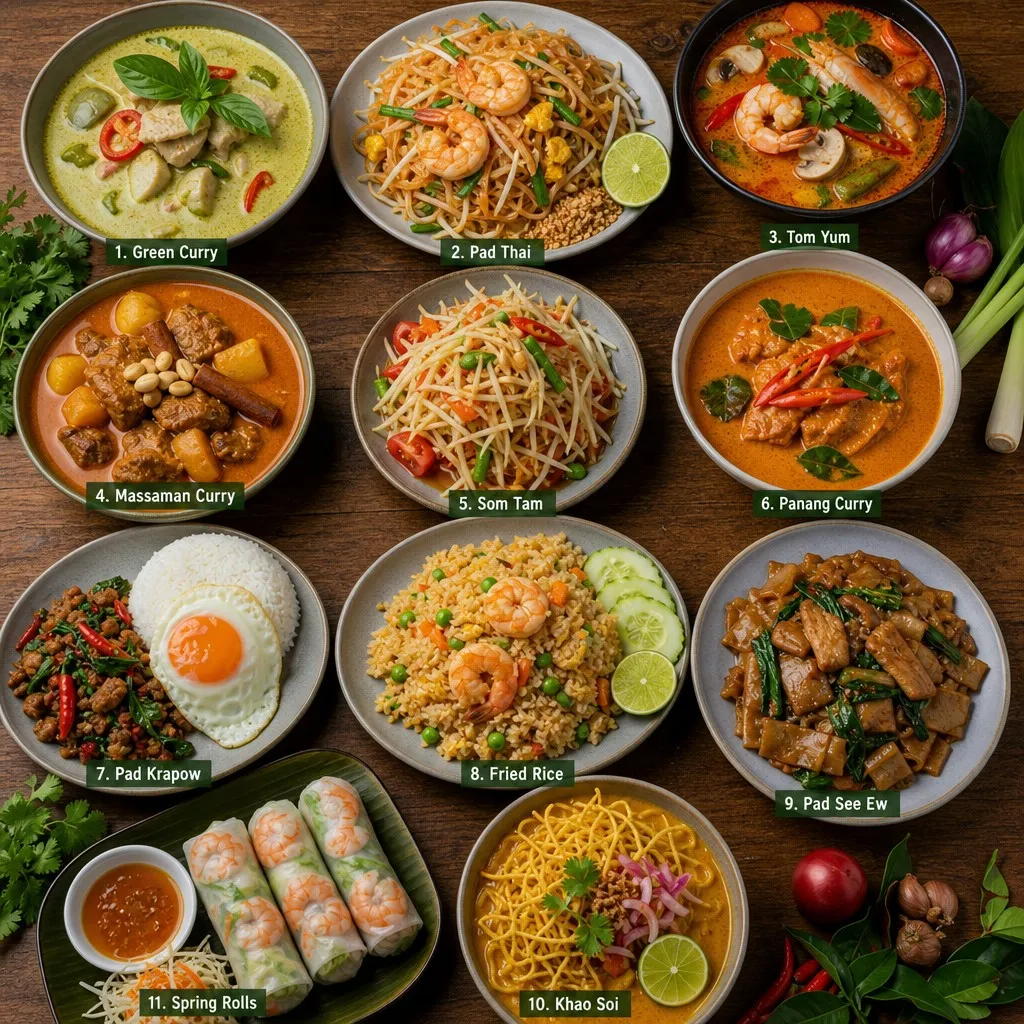
The 10 Most Popular Thai Foods for Beginners (see also: the full top 10 list and the top 5 street foods)
If you’re new to Thai food, these 10 dishes are a good place to start:
Pad Thai: A beloved stir-fried noodle dish with eggs, tofu, and your choice of protein, tossed in a tamarind-based sauce and garnished with crushed peanuts and lime.
Tom Yum Goong: A hot and sour shrimp soup, featuring fragrant lemongrass, galangal, and kaffir lime leaves, with a burst of chilli heat and tangy lime.
Green Curry (Gaeng Keow Wan): A creamy coconut-based curry with tender chunks of chicken, beef, or vegetables, infused with the flavours of green chilli paste, Thai basil, and aromatics.
Massaman Curry: A mild yet rich curry with influences from Persian cuisine, combining tender meat (usually beef or chicken) with potatoes and peanuts in a flavourful spiced sauce.
Som Tum (Papaya Salad): A refreshing salad made from shredded green papaya, tomatoes, green beans, peanuts, and chilli peppers, all tossed in a tangy lime dressing.
Can't decide what to eat tonight?
Take our 60-second quiz and we'll pick for you
Pad See Ew: Wide rice noodles stir-fried with dark soy sauce, Chinese broccoli, and your choice of protein, resulting in a savoury and slightly sweet dish. Curious how Thai and Chinese cuisines actually compare? Read my guide on the difference between Thai and Chinese food.
Khao Pad (Fried Rice): Fragrant jasmine rice stir-fried with a medley of vegetables, protein, and egg, often seasoned with soy sauce and served with a wedge of lime.
Panang Curry: A rich and aromatic red curry that’s less spicy than some others, featuring tender meat (chicken, beef, or pork) in a creamy coconut sauce.
Pad Krapow (Basil Stir-Fry): A quick and flavourful stir-fry dish made with minced meat (often pork or chicken), Thai holy basil, garlic, and chilli peppers, served over rice and topped with a fried egg.
Tom Kha Gai: A creamy and soothing coconut milk soup with chicken, flavoured with galangal, lemongrass, and kaffir lime leaves, and gently spiced with Thai chillies.
Restaurants – How to Order Thai Food for Beginners

A few things are worth knowing before you order Thai food in a restaurant for the first time.
Consider Spice Levels:
Spice Tolerance: If you’re not accustomed to spiciness, don’t hesitate to request a milder version of a dish. Thai restaurants often accommodate varying spice preferences. Most menus in Thai restaurants will give you a warning if a specific dish is very hot.
Sharing Culture:
Unlike Western food, Thai food, on the whole, is made to be shared. Everything on the table is supposed to be eaten with rice. In fact, it’s safe to say that rice is the single most important component of the meal.

Generally, each person will have their own plate of rice which is accompanied by several shared dishes which often include a curry, a fish dish, a stir-fry, salad, soup and vegetables.
All the food is served at once so there are no starters. Soups come in a large bowl and are eaten with the meal, not before it. The flavours of each dish are stronger than what you would expect because they’re made to be eaten with rice.
Dining Manners:
In Thai culture, chopsticks are primarily used for noodle dishes, while spoons are used for rice and curries. You’ll often find both utensils on the table.
As mentioned before, shared dishes are placed in the centre of the table for everyone to share. Do not use your own spoon or fork to take food from the communal plates as this is considered bad form. Each communal dish should have its own spoon or fork.
Condiments:
Most Thai restaurants provide condiments like fish sauce, chilli flakes, and sugar. Use them to customize the flavour of your dishes according to your preference.
Basic Vocabulary:
If you have a Thai waiter, here are some basic words you could try and use 🙂
| English | Thai Transliteration | Thai Script |
|---|---|---|
| Delicious | Aroi | อร่อย |
| Spicy | Ped | เผ็ด |
| Not Spicy | Mai ped | ไม่เผ็ด |
| Water | Nam | น้ำ |
| Rice | Khao | ข้าว |
| Noodles | Sen | เส้น |
| Chicken | Gai | ไก่ |
| Pork | Moo | หมู |
| Beef | Neua | เนื้อ |
| Shrimp | Goong | กุ้ง |
| Fish | Pla | ปลา |
| Tofu | Tao-hu | เต้าหู้ |
Is Thai Food Healthy?
If you want to know about additives, check our Does Thai Food Have MSG article. It covers the myths versus what Thai kitchens actually use.
Thai food is so diverse and covers so many different things, in general though, is Thai food healthy? No, it’s not particularly healthy or unhealthy — it depends on what you order.
In general, most Thai food contains sugar. This is definitely not healthy. Also, many things are deep-fried.
On the other hand, there are lots of Thai vegetable soups which contain hardly any calories at all. Also, Thai food contains lots of healthy nutritious herbs and spices like galangal, Thai holy basil, turmeric and lemongrass.
Coconut milk is often used in Thai food, especially in curries and soups. The health benefits of coconut milk are widely recognised.
To learn more on this subject, check out my other post entitled ‘is Thai food healthy’. Our Thai food guides and FAQs cover other common questions about the cuisine.


Explore Thai Food by Region Thai food by region
Thailand's cuisine varies significantly by region. Once you know the basics, explore each area's distinct flavours:
- Northern Thai Food — milder, herb-forward, famous for khao soi and Chiang Mai sausage
- Southern Thai Food — the spiciest region, with heavy use of turmeric and dried spices
- Isaan Food — fiery, fermented, home of som tum and sticky rice
- Central Thai Food — the style most people think of as "Thai food", origin of the classic curries
Want to Learn More?
Check the bottom of the page for more related posts.
Please Leave a Rating If You Enjoyed This Post 🙂



Comments