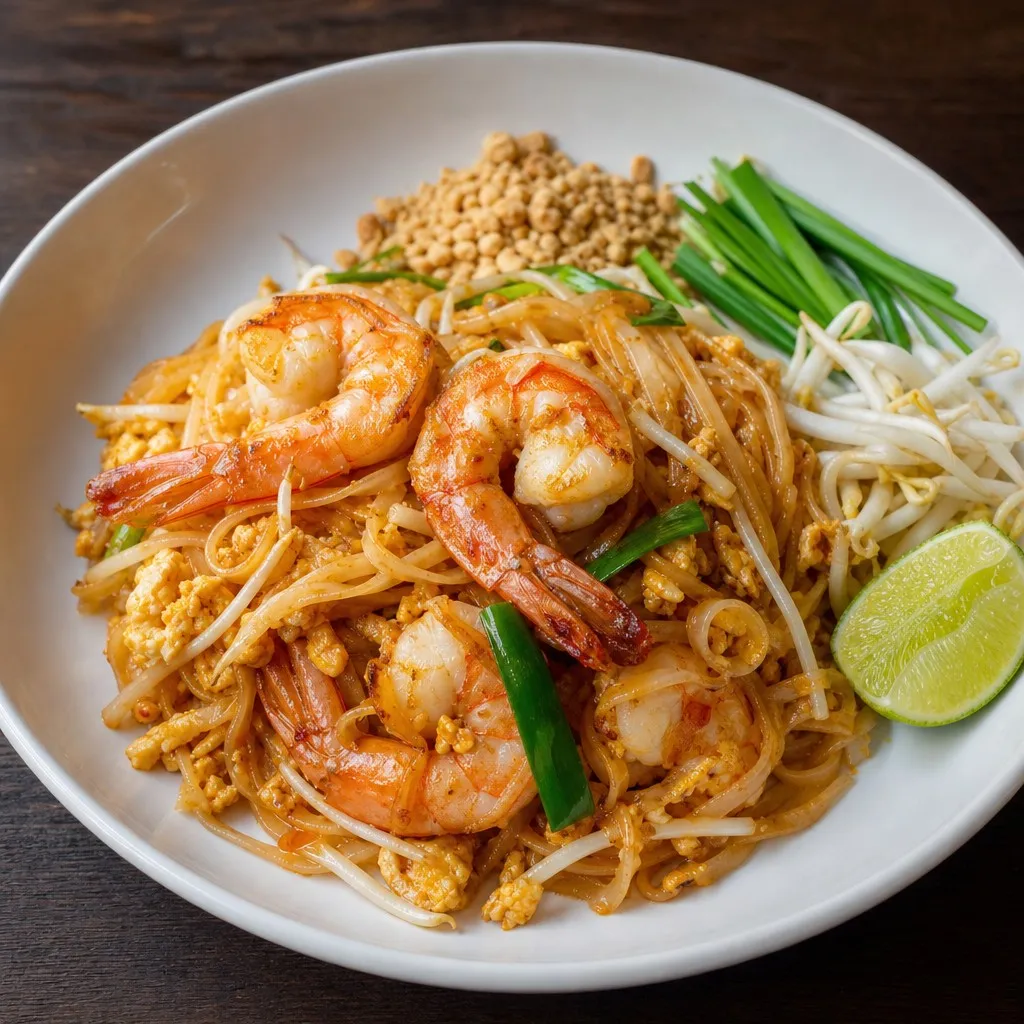
Pad Thai is probably the most famous Thai dish in the world, and it's one that gets butchered more than almost any other. Too sweet, too saucy, wrong noodles, no tamarind. I've seen it all, and the sauce faults are worked through in why your pad thai tastes too sweet or too sour. So let me show you how it should actually taste: the sauce is the heart of it, and it should be a careful balance of sour tamarind, salty fish sauce, and a gentle sweetness from palm sugar. Get that right and everything else falls into place. And if your pad thai keeps coming out paler than the restaurant version, we've written a full guide on why restaurant pad thai is orange — it's not just the sauce.
The noodles are just as important. You want flat rice noodles, around 5mm wide. Soak them in cold water, not boiling, for 30 minutes until they're pliable but still have some resistance. If you soak them too long or in hot water, they'll go mushy in the wok. They finish cooking in the sauce during stir-frying, so you want them slightly underdone when they go in. How much resistance counts as right, and how to check it in the pan, is in how to tell when pad thai is properly cooked.
Dried shrimp are in the traditional recipe and I always include them. They add a savoury depth that's hard to replicate. You'll find them in any Asian supermarket. They're small, they're cheap, and they're worth it. But the Pad Thai is still excellent without them if you can't find any. If your finished dish tastes too fishy, dried shrimp stacks with the fish sauce — halve one or the other to cut the pungency. Read our guide on why pad thai tastes too fishy for the full fix.

Pad Thai (ผัดไทย): what's in the name?
The name simply means "Thai stir-fry": phad (ผัด) is the verb for stir-frying in a wok, and Thai (ไทย) refers to the nation. It's a name with deliberate intent. In the late 1930s, Thailand's prime minister Plaek Phibunsongkhram launched a series of nationalist campaigns to modernise and unify the country. Part of that campaign involved promoting a single national dish, a cheap, nutritious noodle recipe that could feed the whole population and carry a proudly Thai identity. Street vendors were encouraged to sell it, and recipes were even broadcast on the radio.
What makes me smile is that the dish itself has Chinese roots. The stir-fry technique, the rice noodles, the flavour philosophy all came with Chinese immigrants over centuries. But it was reframed, refined, and claimed as something distinctly Thai. By the 1950s it had taken hold, and today it's the dish the world associates with Thailand more than any other. I find that story fascinating every time I make it.
The sauce: tamarind, fish sauce and palm sugar
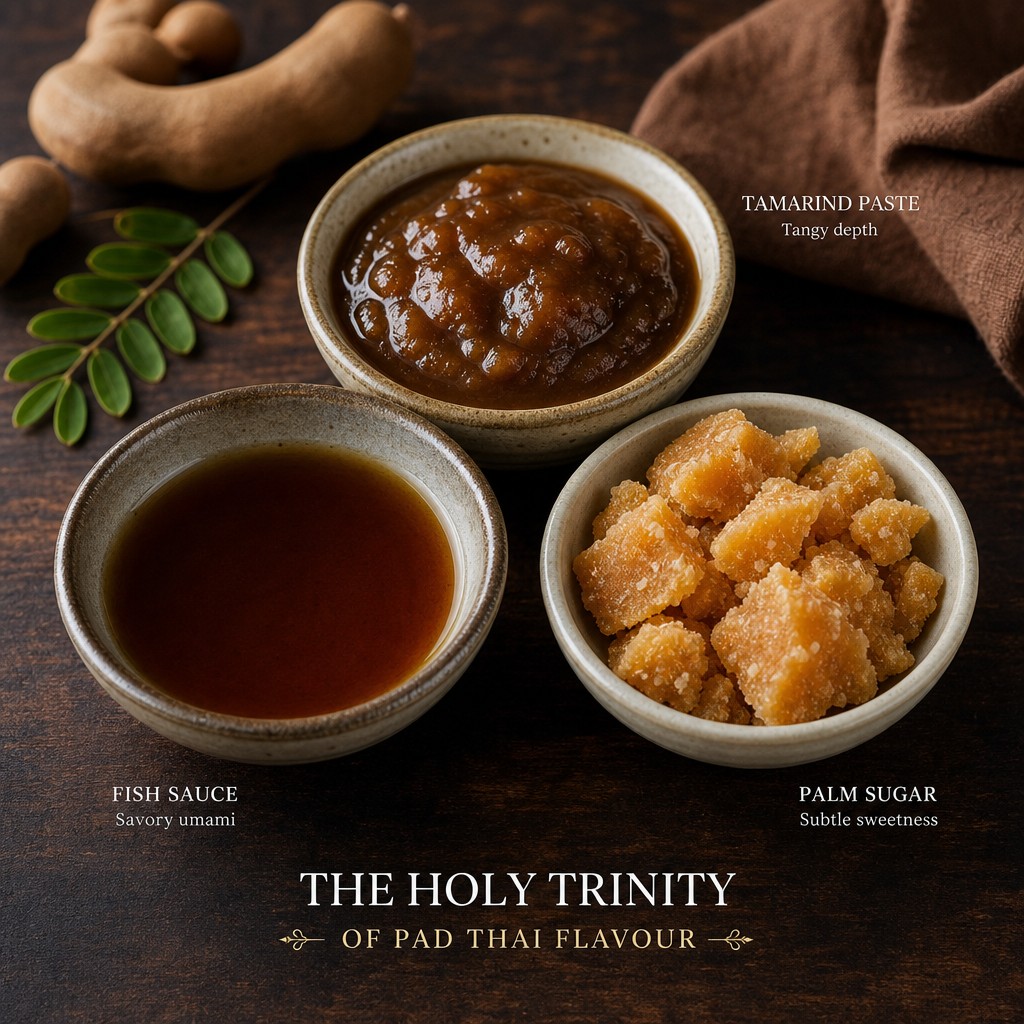
The sauce is everything. I can forgive slightly overcooked noodles or an imperfect wok technique, but I can't forgive a bad Pad Thai sauce. You need three things: tamarind paste for acidity, fish sauce for saltiness and depth, and palm sugar for a gentle, rounded sweetness.
Tamarind does more than add sourness; it also preserves and tenderises. Use a proper tamarind paste rather than a concentrate if you can find it; the flavour is fruitier and less harsh. For the fish sauce, quality matters more than people realise. I use Tiparos or Squid Brand. A good-quality 40N fish sauce has a layered, savoury depth that cheap versions simply don't. If your Pad Thai tastes flat or aggressively salty, your fish sauce is probably the culprit. Read more about why Thai cooking relies on fish sauce the way Western cooking relies on salt, and check our guide on how to fix salty pad thai if the balance goes wrong.
Palm sugar is my strong preference over brown sugar. It has a more complex, slightly caramel-like flavour that softens the sharpness of the tamarind beautifully. Brown sugar works if you can't find palm sugar, but go easy: it's sweeter, so use a little less. Mix your sauce, taste it before it hits the wok, and trust your palate.
Why prawns, and how to cook them right
Prawns are my favourite protein in Pad Thai because their natural sweetness plays so well against the tamarind's acidity. When the sauce caramelises around them, you get these little pockets of intense flavour that you simply don't get with chicken or tofu. I always use raw king prawns. Already-cooked prawns go rubbery in a hot wok.
The window for perfect prawns in a wok is short: roughly two minutes on high heat. You're looking for the moment they turn from grey-translucent to pink with a slight curl. At that point, push them to the side immediately. They'll continue cooking from residual heat as you add the eggs and noodles, which is exactly what you want. If you wait until they're fully opaque and tightly curled before moving on, they'll be overcooked by the time the dish is plated. The tell-tale sign of overcooked prawns in Pad Thai is a texture like rubber bands. Pull back a little earlier than feels comfortable.
Protein variations: prawn, chicken, tofu and vegetarian
Pad Thai is wonderfully adaptable. I've made it for meat-eaters, pescatarians, and vegans around the same table, just swapping the protein. Here's a quick guide to how each one behaves in the wok.
| Protein | Wok time | Texture | Sauce absorption | Notes |
|---|---|---|---|---|
| King prawns | 2 min | Juicy, firm | Medium; flavour sits on surface | Use raw; cook until just pink |
| Chicken breast | 4–5 min | Tender, lean | Good; absorbs sauce well | Slice thin; cook through fully |
| Firm tofu | 3–4 min | Silky inside, crisp outside | Excellent; soaks up sauce | Press dry and fry before adding |
| Mixed veg (vegan) | 3 min | Varies | High | Replace fish sauce with soy or tamari |
For a fully vegan version, swap the fish sauce for a good-quality soy sauce or tamari, skip the dried shrimp, and use tofu or extra vegetables. The sauce will taste slightly different but it's still very good. I'd also recommend adding a small splash of rice vinegar to compensate for the tamarind's reduced impact without fish sauce's salt.
Controlling spice: from mild to fiery
Here's something I'm asked constantly: is Pad Thai spicy? The honest answer is no, at least not in its base form. The sauce is tangy, savoury, and sweet. There are no chillies in the core recipe at all. This makes it one of the more accessible Thai dishes for people who are wary of heat.
The spice in Pad Thai is entirely optional and added at the table, not during cooking. In Thailand you'd typically be presented with a small tray of condiments: dried chilli flakes, chilli in fish sauce, sugar, and sometimes fresh sliced chillies. You season the dish yourself according to your own preference. Genuinely sensible.
When I serve it at home, I put a small bowl of dried chilli flakes on the table. My approach: start mild, taste, then add heat incrementally. For a mild version, use none at all. For medium warmth, a pinch of dried chilli flakes stirred through works well. If you want fiery, fry a sliced fresh bird's-eye chilli with the garlic and shallots at the very start; that way it'll infuse the whole dish with heat rather than sitting on top. The beauty of Pad Thai is that everyone at the table can eat from the same wok and finish with a completely different experience.
Garnishes and what to put on the table
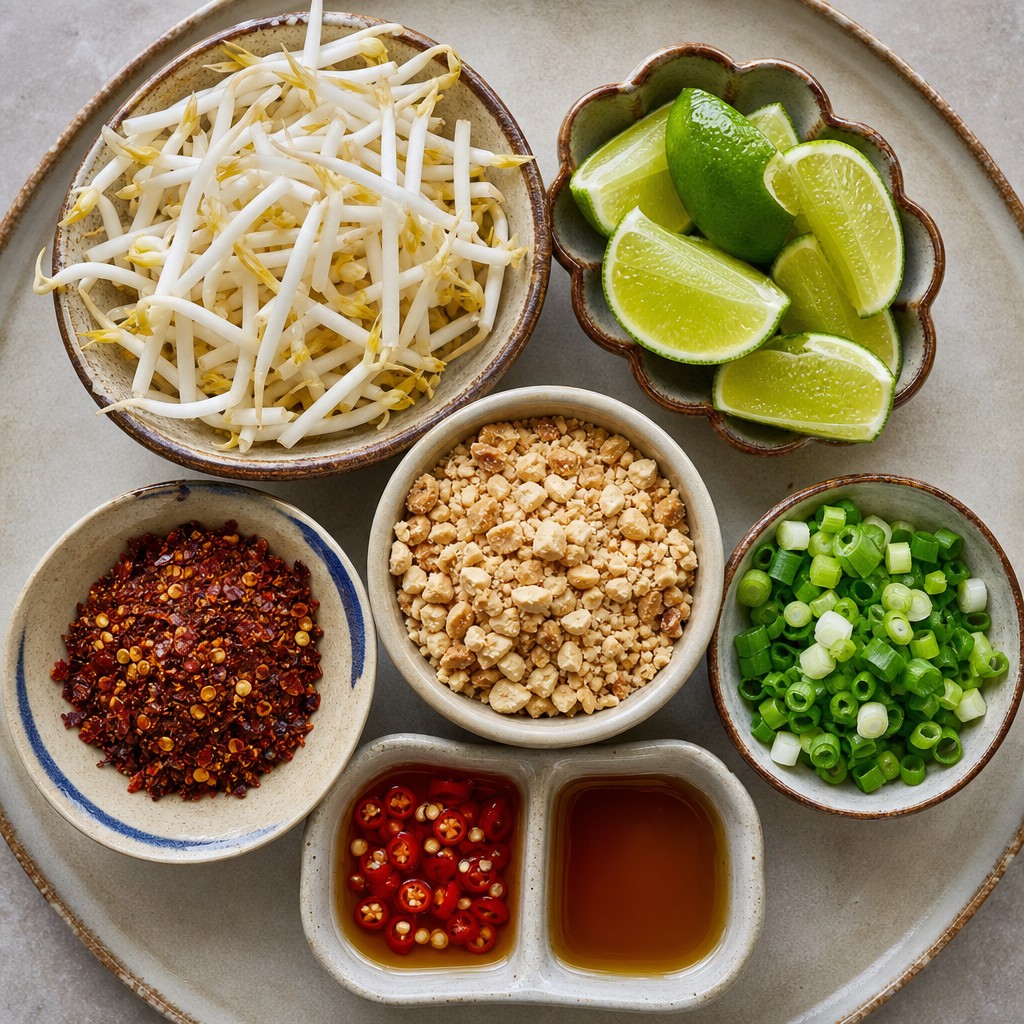
This is the part people often skip, and it matters. Pad Thai isn't just a noodle dish you serve in a bowl — it's meant to be finished at the table. In Thailand, a plate of Pad Thai arrives with a small tray alongside it, and everyone builds their own version from what's on it. At home, I put out five things: a wedge of lime, a handful of bean sprouts, crushed roasted peanuts, sliced spring onions, and dried chilli flakes. That's all you need.
The lime isn't decoration. Squeeze it over generously the moment the bowl lands in front of you. The acidity cuts through the richness of the sauce and pulls every flavour into focus. It's the ingredient that ties the dish together, and without it the Pad Thai tastes slightly flat.
Bean sprouts on the side give people a choice. Some like them tossed in during the last minute of cooking (warm, slightly wilted), others prefer to add raw sprouts to their own bowl at the table for maximum crunch. I do both: a handful in the wok, a small pile on the side.
Crushed peanuts add fat and texture. Use roasted, unsalted peanuts and crush them roughly — you want chunks, not powder. If anyone at the table has a nut allergy, skip them and the dish is still excellent. Sliced spring onions finish things off with freshness and a mild onion bite. And the dried chilli flakes are there for those who want heat without me having to cook two separate batches.
Put it all out, let people season their own bowls, and that condiment tray makes the whole experience feel genuinely Thai — because it is.
Is Pad Thai healthy? Nutrition breakdown
A serving of prawn Pad Thai (this recipe serves two) comes in at roughly 420–450 calories per portion. The macros break down to approximately 45g carbohydrate from the rice noodles, 28g protein from the prawns and eggs, and 14–16g fat, most of which comes from the cooking oil and peanuts.
On the positive side, rice noodles are gluten-free and lower in fat than wheat noodles. Prawns are an excellent lean protein. Bean sprouts add fibre and crunch for almost no calories. The tamarind provides small amounts of iron and B vitamins.
The main consideration is sodium. Fish sauce and dried shrimp together contribute a significant amount of salt, roughly 1,200–1,500mg per serving. If you're watching your sodium intake, reduce the fish sauce slightly and taste as you go rather than following the recipe mechanically. If you've made the dish and it comes out too salty, our guide on fixing salty pad thai walks through the acid-first rescue method.
For a lighter version, I'd suggest: reducing the oil to one tablespoon, doubling the bean sprouts, swapping prawns for tofu, and adding a handful of shredded cabbage or thinly sliced courgette with the noodles. You lose very little in the way of enjoyment and bring the calories down to around 340–360. It's still genuinely satisfying. See also my guide to cooking jasmine rice if you want a wholesome side to round the meal out.
What to drink with Pad Thai
My first recommendation is always a cold Thai beer: Singha or Chang. The light, slightly bitter lager cuts through the richness of the sauce and is simply the natural companion to the dish. It's what you'd drink at a street food stall in Bangkok at 11pm, and there's a reason for that.
If you're choosing wine, go white and go aromatic. A dry New Zealand Sauvignon Blanc handles the tamarind acidity well; an off-dry German Riesling is even better, as the touch of residual sweetness mirrors the palm sugar in the sauce. Avoid red wine. The tannins fight the fish sauce and tamarind and the pairing quickly becomes unpleasant.
For non-alcoholic options, Thai iced tea (cha yen) is my favourite: sweet, creamy, and cooling against the warmth of the dish. A good ginger beer also works beautifully, adding its own gentle spice. Sparkling water with lime is the simplest and most refreshing choice of all. For something more substantial alongside, try the drunken noodles recipe another night. A very different flavour profile but equally satisfying.
Common mistakes and how to fix them
Mushy noodles almost always come from soaking in hot water or soaking too long. Use cold water, 30 minutes maximum, and drain them while they still have some resistance. They finish cooking in the wok, so they should feel slightly underdone when they go in.
When the sauce sits in a pool at the bottom instead of coating the noodles, the heat wasn't high enough. You need maximum heat, the kind that makes the wok smoke slightly. Keep tossing constantly and don't crowd the wok. Cook in two batches if you're feeding more than two people. If the noodles are clumping together rather than coating in sauce, that's usually the same problem. And if the finished dish comes out greasy rather than glossy, that's a different fault worth reading up on. If it tastes too fishy instead, the problem is usually heat and balance — read why pad thai tastes too fishy for the fix.
Overcooked prawns are easy to avoid. Pull them from the heat the moment they turn pink. They'll look slightly undercooked at that point; that's correct. They carry on cooking as the rest of the dish comes together.
Add bean sprouts in the final minute only, and give them just one quick toss. They should be warm but still crisp.
If the dish tastes flat, reach for the lime. Squeeze a generous wedge over just before eating. The acidity lifts every other flavour and makes everything taste brighter and more defined. It's not optional garnish; it's a genuine ingredient.
My family’s recipe: I’ve made this Pad Thai for meat-eaters, pescatarians and vegans around the same table, and I cook with Tiparos or Squid Brand fish sauce. The one thing that matters: the sauce. Balance the tamarind, fish sauce and palm sugar before it goes anywhere near the wok — I can forgive slightly overcooked noodles, but never a bad sauce.
Ingredients
- 200g flat rice noodles (5mm wide)
- 200g raw king prawns, peeled
- 2 eggs
- 100g bean sprouts
- 3 spring onions, sliced
- 2 tbsp tamarind paste
- 2 tbsp fish sauce
- 1 tbsp palm sugar or brown sugar
- 2 tbsp dried shrimp (optional but authentic)
- 3 tbsp roasted peanuts, roughly chopped
- 2 cloves garlic, chopped
- 2 shallots, sliced
- Lime wedges to serve
- Cooking oil
How to Make Prawn Pad Thai
Start by soaking your rice noodles in cold water for 30 minutes. Mix the tamarind paste, fish sauce and palm sugar together to make the sauce, taste it and adjust if needed. It should be tangy, salty and slightly sweet. Set both aside.
When you're ready to cook, heat a generous amount of oil in your wok over the highest heat possible. Add the garlic and shallots and fry for 30 seconds. Add the prawns and stir-fry until they just turn pink. Don't overcook them at this stage; they'll get more time in the wok.
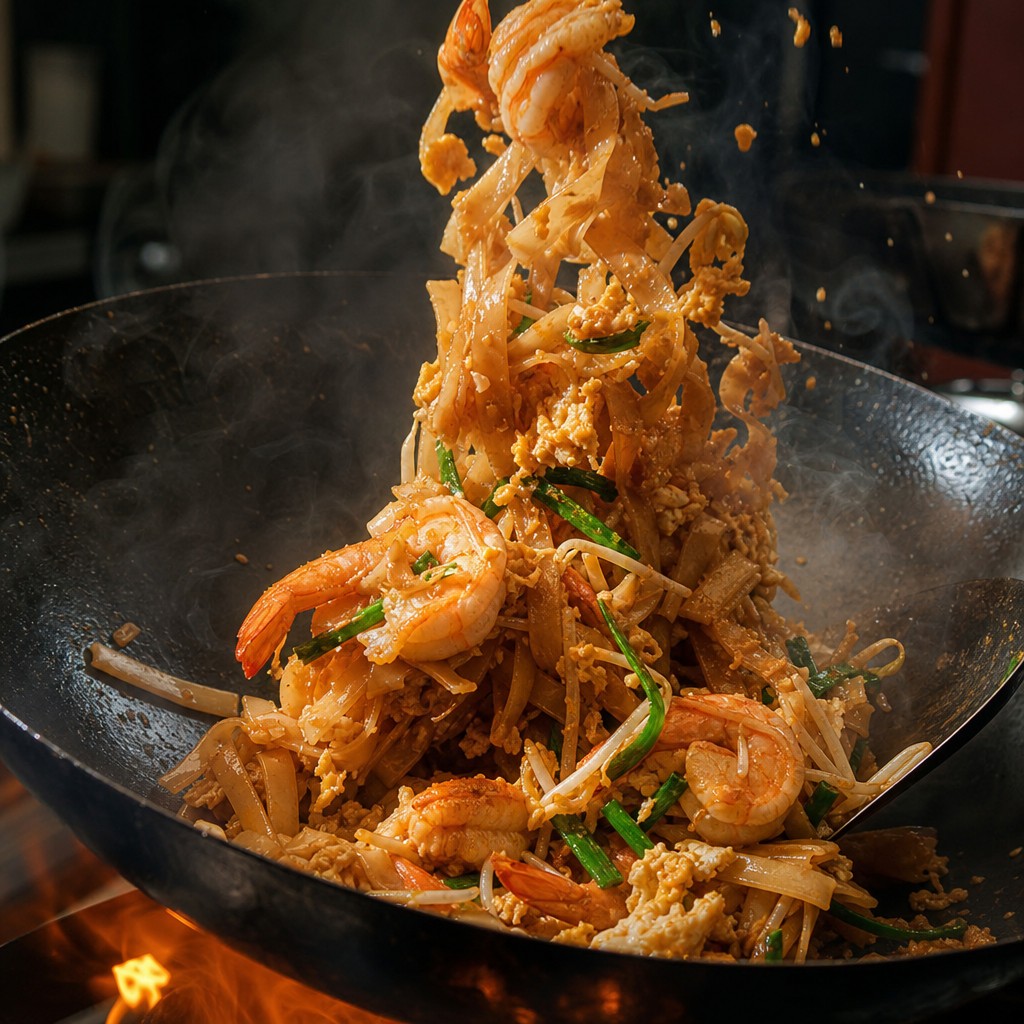
Push everything to the side and crack the eggs into the space. Scramble quickly and mix through the prawns just before the egg is fully set.
Drain the noodles and add them to the wok. Pour the Pad Thai sauce over the top. Toss everything together continuously for 2–3 minutes. The noodles will absorb the sauce and become slightly caramelised at the edges, which is what you want. If they look too dry, add a splash of water.
Add the dried shrimp if using, the bean sprouts, and the spring onions. Toss for one more minute. You want the bean sprouts to warm through but keep their crunch.
Pile it into bowls, top with chopped peanuts, and serve with lime wedges. Squeeze lime over generously just before eating. That final hit of acidity brings everything alive.
Watch the video
Frequently asked questions
Can I make Pad Thai ahead of time?
Pad Thai is best eaten fresh, straight from the wok. The noodles soften and the bean sprouts lose their crunch after sitting. That said, you can prepare all your ingredients ahead (soak the noodles, mix the sauce, peel the prawns) and cook it in 5 minutes when you're ready to eat. Leftovers keep for 2 days in the fridge, but reheat gently over low heat.
What's the difference between Pad Thai and other Thai noodle dishes?
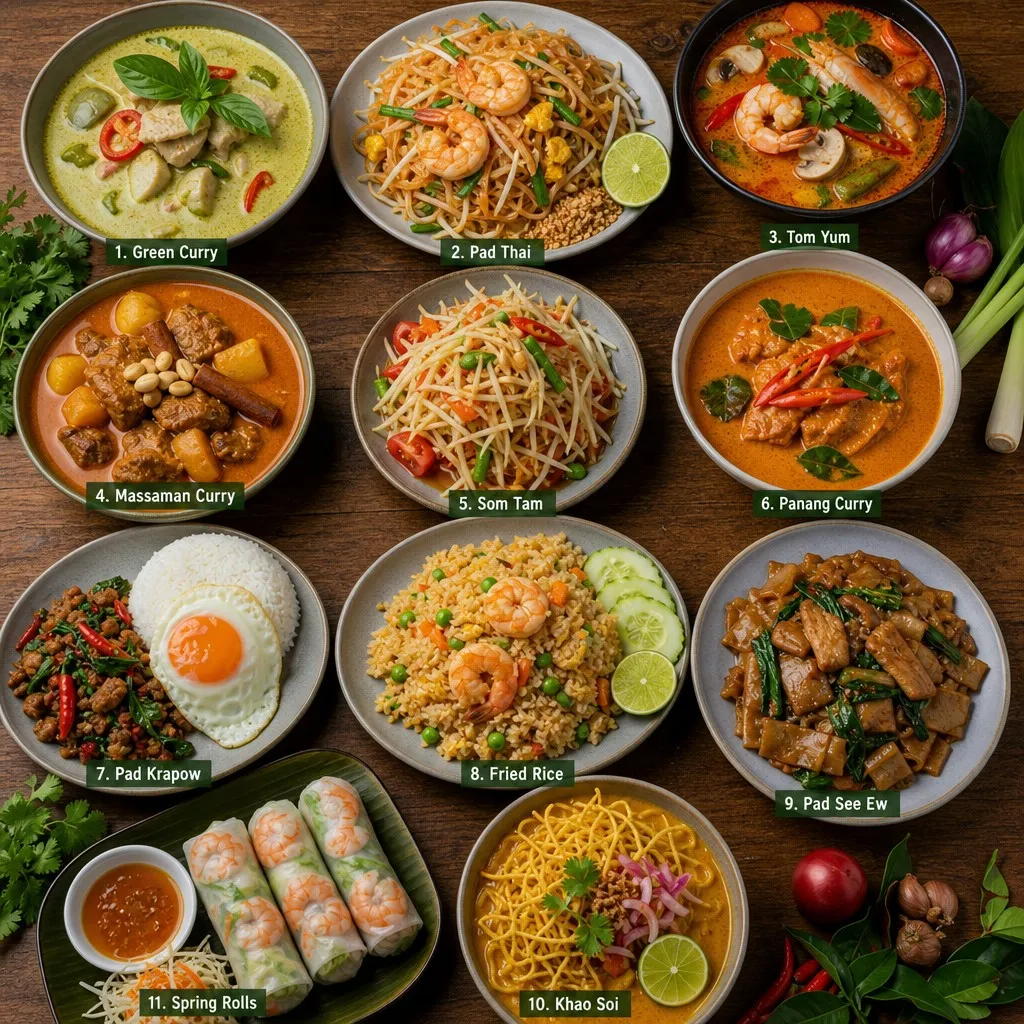
Pad Thai is defined by its sauce: tamarind, fish sauce, and palm sugar in that specific balance. Other dishes like Pad See Ew (dark soy sauce base) or Pad Krapow (basil-forward, spicy) use different sauces and flavour profiles entirely. The noodles are also different: Pad Thai uses flat rice noodles, while Pad See Ew uses thicker noodles and Pad Krapow uses thin rice noodles.
Can I use a different type of noodle?
You technically can, but the result won't be authentic Pad Thai. The flat rice noodles have a specific texture that absorbs the sauce without falling apart. Egg noodles will soak up too much liquid. Round rice noodles lack the surface area. Wheat noodles change the whole character. If you can't find flat rice noodles, it's worth ordering them online; they're inexpensive and worth having in your pantry.
Is Pad Thai suitable for vegetarians or vegans?
Yes. Replace the prawns with firm tofu (press it dry first, then fry to crisp the edges). Use soy sauce instead of fish sauce (or find vegan fish sauce made from seaweed). Skip the egg, or use a plant-based alternative. The dried shrimp are optional anyway. The result is delicious and fully plant-based. You might add an extra tbsp of soy sauce to boost umami without the prawns.
What if I can't find tamarind paste?
Tamarind is key to authentic Pad Thai. It's not just "sour," it has a specific flavour that lime juice can't replicate. That said, if you're truly stuck, use lime juice as a temporary substitute (use 3 tbsp lime juice + 1 tbsp water). The result won't be the same, but it'll be closer than using nothing. Most Asian supermarkets stock tamarind paste. You can also order it online and keep it in the cupboard.
Why does my Pad Thai taste different from restaurants?
Restaurant Pad Thai often has MSG, more sugar, and heavy oil. Their woks are also much hotter than home stoves, which gives a slight char and deeper flavour. If you want to get closer, use a very high heat (cast iron or carbon steel wok works best), don't crowd the pan, and taste the sauce before you add it to dial in the balance. Also: that final squeeze of fresh lime is non-negotiable.
How do I know when the prawns are done?
Raw prawns are translucent grey. When they hit the hot wok, they turn opaque pink and curl slightly. The moment they're fully pink (30 seconds to 2 minutes depending on size), they're done. If you wait for them to turn completely white or orange-pink, you've overcooked them. They'll continue cooking slightly when the sauce hits them, so aim for "just barely pink, slightly translucent still."
Is authentic Pad Thai spicy?
No. The base recipe has no chillies at all. Heat comes from optional dried chilli flakes, which you add at the table to your own taste. This is how it's done in Thailand: the sauce is balanced, and heat is a personal choice. If you want it spicy, add chilli flakes. If you don't, don't add them. The sauce itself should never be fiery.
Can I freeze Pad Thai?
I don't recommend freezing Pad Thai. The noodles become mushy when thawed, and the bean sprouts turn to mush. It's meant to be eaten fresh. If you have leftovers, eat them within 2 days. However, you can freeze the cooked sauce separately and the uncooked noodles (if not yet soaked), then make fresh Pad Thai when you're ready.
Written by Manaow Prasatthong, 3rd Generation Thai Chef


Comments