
The Perfect Easy Tom Yum Soup Recipe for Beginners
If you’re looking for an easy tom yum soup recipe, then you are in luck. Not only is this recipe easy, it’s authentic. The reason is that Tom Yum Soup, sometimes spelled Tom Yam or Tom Yum is one of the easiest Thai dishes to make at home. As long as you have the right ingredients, anyone can make this iconic Thai dish.
A Brief History of Tom Yum Soup

The origins of Tom Yum Soup can be traced back to the region that is now modern-day Thailand. Thailand’s cuisine has been influenced by various cultures, including Chinese, Indian, and indigenous Thai traditions. In ancient Thai cooking, a similar soup was made using local ingredients such as herbs, spices, and seafood. These early versions of Tom Yum were less complex than the modern variations.
Over the centuries, Thailand’s cuisine has been influenced by neighbouring countries and traders. The introduction of ingredients like chillies and lemongrass can be attributed to Chinese and Southeast Asian influences.
In the 19th century, during the reign of King Rama IV and King Rama V, Thai cuisine underwent significant refinement and transformation. The Thai royal court played a crucial role in shaping the country’s culinary traditions.
Tom Yum Soup, as we know it today, likely began to take shape during the 19th century. It is believed to have originated in central Thailand, particularly around the region of Ayutthaya.
The name “Tom Yum” derives from the Thai words “tom,” meaning “to boil,” and “yum,” referring to a spicy and sour salad. Thus, Tom Yum Soup essentially translates to “boiled spicy and sour soup.”
My Easy Tom Yum Soup Recipe

For my easy Tom Yum soup recipe, I’m using prawns which in Thai is called ‘Goong’. Tom Yum Goong is the classic version of this soup but you can just swap it out for chicken breast if you prefer. To be honest I usually make it with chicken.
There are two different types of Tom Yum soup, a clear version that is more watery called ‘Tom Yum Nam Sai’ and a creamier version called ‘Tom Yum Nam Khon’ — I break down the difference between clear and creamy Tom Yum in more detail. This recipe is for ‘Tom Yum Nam Khon’ which is the more well-known version.
My family’s recipe: This is the version I cook at home — to be honest, I usually make it with chicken rather than prawns. The one thing that matters: take the soup off the heat before you add the lime juice and fish sauce. Lime sharpens dramatically as a broth cools, and boiling lime makes it harsh.

Easy Tom Yum Soup Recipe (Tom Yum Nam Khon)
Equipment
- 1 wok
Ingredients
- 300 g of Prawns
- 80 ml of Evaporated Milk
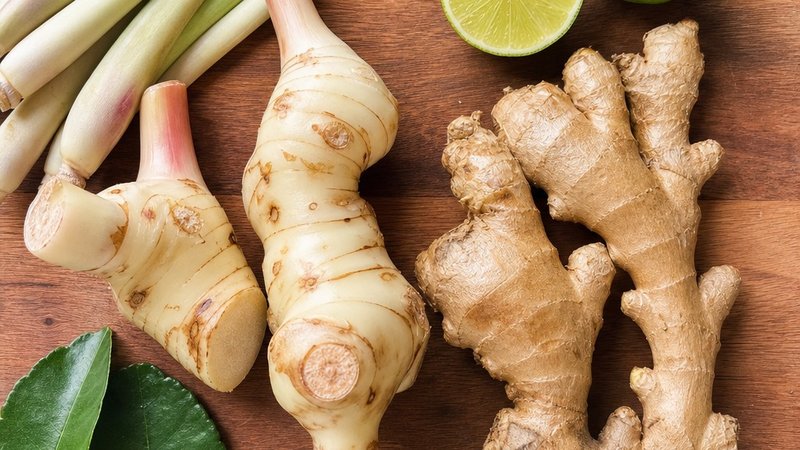
- 15 g of Lemongrass
- 15 g of Galangal
- 30 g of Shallot
- 3 Kaffir Lime Leaves
- Handful of Coriander
- 2 Spring Onions
- 5 – 10 Birds Eye Chillies
- 1 Tomato
- 120 g Oyster Mushrooms
- 3-4 tbsp of Lime Juice
- 2 Cups of Water
- 1/2 tsp Salt
- 2 tbsp of Fish Sauce
- 1 tbsp of Chilli Paste If you don't have any Thai Chilli paste you can buy some Tom Yum paste online.
Instructions
- Prepare the lemongrass by cutting the ends, pulverize it with a pestle to release more flavour and then cut it into small pieces
- Slice the galangal
- Cut the shallots
- Pull apart the kaffir lime leaves
- Cut up the coriander
- Slice the spring onions
- Pulverize the chillies
- Slice the tomatoes
- Cut up the oyster mushrooms
- Squeeze the limes into a bowl
- Add 2 cups of water to your wok and turn up the heat
- Add the lemongrass, shallot & galangal
- Add half a tsp of salt and bring it to the boil
- Let it boil for a minute or so then add the chilli paste
- Let it boil for another minute then add your prawns
- Let it boil for a couple of minutes before adding 80ml of evaporated milk
- Bring it to the boil again then turn off the heat
- Add the lime juice and fish sauce and stir them in
- Add the coriander, tomatoes and spring onions and mix them in
- Your Tom Yum Soup is now ready to serve
Video
Visual Guide


Flavour Balancing: Getting Tom Yum Soup Exactly Right
The key to authentic tom yum is balancing three elements: sour (lime), salt (fish sauce), and heat (chillies). If your soup tastes off, use this troubleshooting guide:
Too salty or fishy-tasting? You've added too much fish sauce, which is the same fault that makes pad thai taste too fishy. Add more water to dilute (up to ½ cup) and taste. If still too salty, add a pinch of palm sugar (the same acid-then-sugar order used in fixing a pad thai that is too salty) (½ tsp at a time) to round out the harshness. Sugar doesn't mask salt—it balances it chemically by engaging sweet taste receptors alongside salty ones.
Too sour (aggressively limey)? You've added lime juice after the broth cooled. Lime juice taste changes dramatically with temperature—hot soup hides lime's sharpness; cold soup reveals it. Add a splash more fish sauce (½ tbsp) to create balance, or stir in a touch of palm sugar (¼ tsp) to soften sourness without making it sweet.
Not hot enough or too hot? Bird's eye chillies vary wildly in heat. If your soup is mild, add fresh chillies (whole, not diced—you can fish them out later). If it's too hot, add more coconut milk or broth (neither introduces new flavours) and taste again. Never add water alone—it dilutes salt alongside heat, worsening balance.
Tastes flat or dull overall? You're likely missing umami (savoury depth). Tom yum relies on fish sauce's glutamate; if you've held back on fish sauce thinking it's too strong, you've actually weakened the dish. A proper tom yum should punch you with salty-sour-spicy intensity, not be delicate. Add another ½ tbsp fish sauce and taste.
The flavour triangle principle: Think of tom yum's three dimensions as points on a triangle. Sour (lime), salty (fish sauce), and heat (chillies) should all contribute equally. If one drowns out the others, the dish loses complexity. A balanced tom yum hits all three simultaneously on your palate.
Fresh Herbs vs. Shortcuts: When Pre-Made Pastes Work
This recipe uses fresh lemongrass, galangal, and kaffir lime leaves—the proper way. But home cooks often ask: can I use tom yum paste or lemongrass paste to save time?
Commercial tom yum paste: Brands like Thai Kitchen or Mae Ploy are 80% acceptable for weeknight cooking. They contain the core aromatics pre-mixed. Trade-off: you lose the fresh citrus bite of kaffir lime leaves and the peppery complexity of fresh galangal. The result tastes slightly flatter, more one-dimensional. Verdict: Use only if short on time; the soup is still edible but noticeably less fragrant.
Lemongrass paste (from a tube): Concentrated and salty, lemongrass paste can substitute for fresh lemongrass in a 1:1 ratio by weight (about 1 tbsp paste for 15g fresh lemongrass). However, you lose the textural element of lemongrass bits in the broth—diners won't have the satisfying experience of encountering aromatic fibres. Use only if fresh lemongrass is genuinely unavailable.
Galangal powder: Dried galangal tastes medicinal and lacks fresh galangal's citrus notes. Not recommended. If you must substitute, use fresh ginger (slightly different flavour profile but at least fresh and bright) at a 1:2 ratio (use less ginger than galangal called for).
Kaffir lime leaves (dried or frozen): Dried leaves lose 80% of their aroma. Frozen leaves are acceptable—they thaw into the broth as it cooks and release their oils. Use double the quantity of frozen compared to fresh (6 frozen instead of 3 fresh).
Bottom line: This recipe's fresh herb approach is worth it for a special meal. For casual weeknight cooking, tom yum paste + fresh lime juice gets you to 80% authenticity without the ingredient hunt.
คนไทยหรือเปล่าคะ? ลองดูหน้า อาหารไทยในอังกฤษ ของเราสิ!
Tom Yum Variations: Street Vendor vs. Restaurant vs. Home Styles
Tom yum soup varies dramatically depending on who's cooking it:
Bangkok street-vendor style: Intensely salty (lots of fish sauce), spicy (generous chillies), broth is thin and clear (minimal evaporated milk). Served in a plastic bag or styrofoam cup, often with raw lime wedges and extra chillies on the side so you customize heat. Flavour-forward and aggressive—designed to wake up your palate at 7 AM.
Tourist resort style (what you see in upscale Thai restaurants abroad): Creamy (heavy evaporated milk), moderate heat (toned down for Western palates), herbs are subtle rather than bold. Served in elegant bowls with precision-cut garnishes. Tastes more refined but less authentic—the cream mutes the sharp edges that define true tom yum.
Home cooking style (this recipe): A middle ground: balanced salt and sourness, enough heat to taste interesting without overwhelming, moderate creaminess. Designed for family meals where diners have varying spice tolerances. Fresh herbs are visible and abundant, making the dish look and taste vibrant.
How to recreate restaurant quality at home: If you want that upscale restaurant depth, use chicken or seafood stock instead of plain water (adds umami), toast your lemongrass and galangal in a dry pan before adding them (releases volatilized oils), and double the fish sauce for intensity. The broth will taste noticeably richer.
Tom Yum Soup – FAQ
How is Tom Yum Soup typically served?
Tom Yum Soup is usually served as a hot and flavourful broth with the chosen protein and vegetables. It’s commonly garnished with fresh coriander leaves. It can be enjoyed as an starter or a main course when served with rice.
Is Tom Yum Soup always spicy?
Traditionally, Tom Yum Soup is spicy due to the use of bird’s eye chillies or chilli paste. However, the level of spiciness can be adjusted to your preference by adding more or fewer chillies. There are also milder versions of Tom Yum Soup available.
What is the difference between Tom Yum and Tom Kha Soup?
Tom Yum Soup is known for its spicy and sour flavour, while Tom Kha Soup is creamy and coconut-based. Tom Kha includes ingredients like coconut milk, galangal, lemongrass, and kaffir lime leaves, but it is less spicy than Tom Yum.
Can I make a vegetarian or vegan version of Tom Yum Soup?
Yes, you can make a vegetarian or vegan Tom Yum Soup by using vegetable broth and omitting animal-based proteins like shrimp or chicken. Tofu is a popular protein substitute in vegetarian and vegan versions.
What is the origin of Tom Yum Soup?
Tom Yum Soup is believed to have originated in central Thailand, specifically in the region around Ayutthaya, during the 19th century. It evolved from earlier Thai culinary traditions and was influenced by various cultures.
Can I customize the ingredients in Tom Yum Soup?
Absolutely! Tom Yum Soup is versatile, and you can customize it to your liking. You can add or omit ingredients based on your taste preferences. Some variations include seafood Tom Yum, chicken Tom Yum, and vegetarian Tom Yum.
What are some common side dishes to serve with Tom Yum Soup?
Common side dishes that pair well with Tom Yum Soup include steamed jasmine rice, Thai jasmine rice, or sticky rice. Additionally, some people enjoy Thai salads or fresh spring rolls as accompaniments.
Can I make Tom Yum Soup ahead of time?
While Tom Yum Soup is best enjoyed fresh, you can prepare the broth in advance and add the protein and vegetables when you’re ready to serve. This can help save time when you’re planning a meal.
Is Tom Yum Soup gluten-free?
Yes, check out the list of ingredients in the easy Tom Yum soup recipe above and you will see they are all gluten free.
What is the significance of the name “Tom Yum”?
The name “Tom Yum” comes from the Thai words “tom,” meaning “to boil,” and “yum,” referring to a spicy and sour salad. Therefore, Tom Yum Soup translates to “boiled spicy and sour soup.”


Comments