Written by Manaow Prasatthong, 3rd Generation Thai Chef
What is massaman curry?
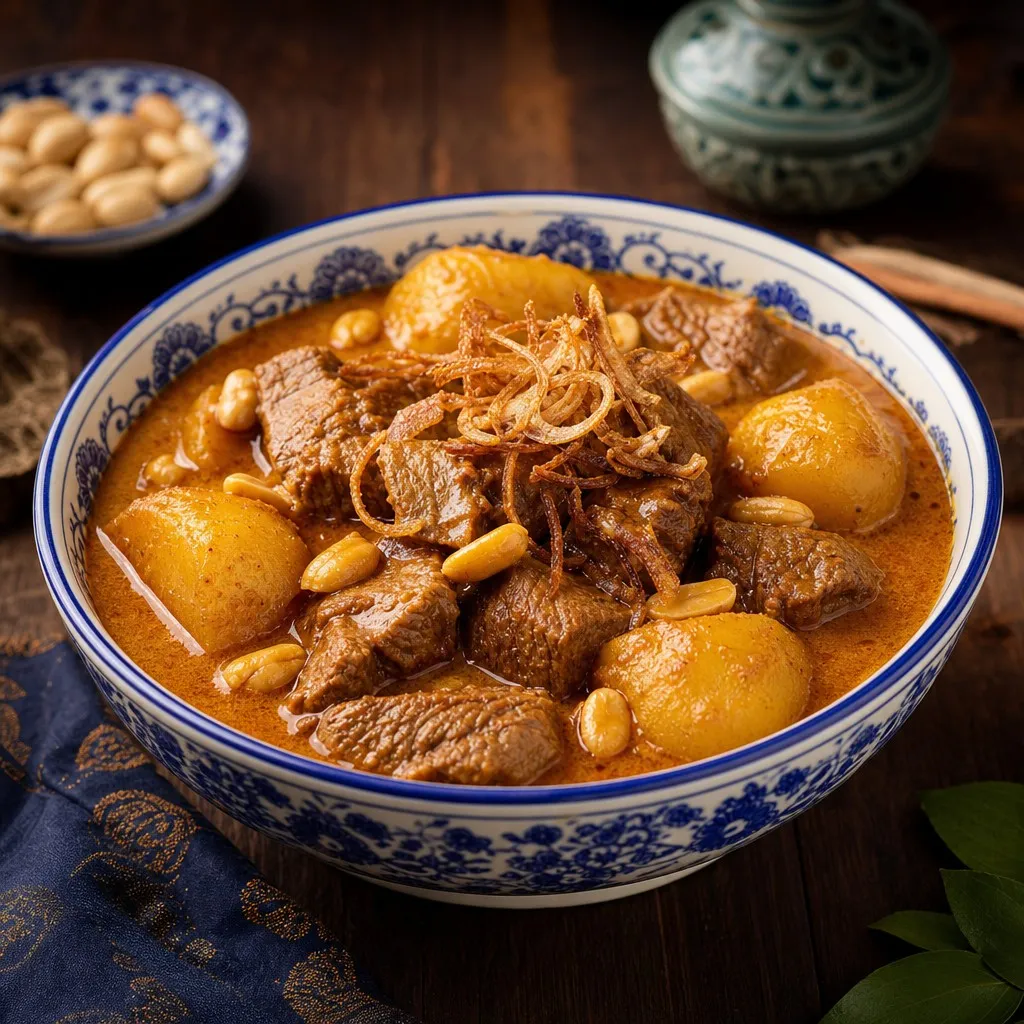
Massaman curry is unlike any other Thai curry. It is mild, deeply aromatic, and built around a spice blend (cinnamon, cardamom, cloves, star anise, cumin) that has more in common with a Persian or Indian kitchen than a typical Thai one. Where green curry is sharp and herbal, massaman is slow, warm, and rich. The meat is braised until it falls apart. The peanuts and potato make it substantial. The tamarind adds just enough sourness to keep everything in balance.
It is the one Thai curry that almost everyone likes, including people who do not normally eat spicy food. On a heat scale of 1 to 10, a well-made massaman sits at about 1–2. That mildness is not a compromise. The complexity in massaman comes from the depth of its spice paste and the time given to cooking, not from chilli heat.
In 2011, CNN Travel voted massaman the world's most delicious food. That is a bold claim, but it speaks to something real: massaman curry has a flavour profile that appeals across cultures, and there is a reason it is one of the most recognised Thai dishes internationally. It is also one of the most historically interesting: its origins stretch back 400 years and involve Persian merchants, a royal court, and the spice trade.
The history: how a Persian spice trade shaped a Thai classic
The name "massaman" is a corruption of the Persian and Arabic word mosalmân, meaning Muslim. That tells you most of what you need to know about where this dish came from.
In the 17th century, during the Ayutthaya period, Persia and Siam had active diplomatic and trading relations. The city of Ayutthaya, then the capital of Siam and one of the most prosperous trading ports in Asia, attracted merchants from across the Middle East and South Asia. Persian Shiite Muslim traders were permitted to settle within the city walls, and they brought their spice knowledge with them: cardamom, cinnamon, cloves, star anise, cumin, bay leaves, nutmeg. These were not ingredients that existed in the Thai culinary tradition at the time.
What happened next is the interesting part. Thai cooks took those Persian spices and combined them with the aromatics already central to Thai cooking (dried chillies, lemongrass, galangal, kaffir lime leaves, shrimp paste, shallots, garlic) and built a paste that was entirely new. Neither Persian nor Thai, but something produced by the collision of the two traditions.
The cooking technique that came with it was equally unusual for Thailand. Persian cooking relied on slow braising: long, gentle cooking that breaks down tough cuts of meat and allows spices to fully meld. Thai cooking at the time (and still today) generally favours quick stir-frying over high heat. The patience that massaman demands (45 minutes to over an hour of simmering) was a Persian contribution that the Thai kitchen absorbed and kept.
Because of its Muslim origins, traditional massaman avoids pork, which is haram in Islam. Beef, specifically slow-cooking cuts like brisket or chuck, is the most traditional protein. Chicken is also common. You will not find pork massaman in authentic southern Thai cooking, where the Muslim community has preserved and sustained this dish most faithfully for the past four centuries.
Can't decide what to eat tonight?
Take our 60-second quiz and we'll pick for you
What's in massaman curry?
For a contrasting curry experience, our Thai Black Pepper Beef Stir Fry delivers heat through pepper rather than spice paste. It's quick, hot, and nothing like massaman at all.
The massaman curry paste is where the dish's character is established. It contains dried chillies (far fewer than in green or red curry, since this is not a paste built for heat), shallots, garlic, lemongrass, galangal, kaffir lime leaves, roasted coriander seeds, roasted cumin, roasted cardamom, cinnamon, cloves, white pepper, and shrimp paste. The roasting of the whole spices before they are ground is essential: it deepens and rounds their flavour considerably.
Beyond the paste, the key ingredients are coconut milk, which provides the body and richness of the sauce; beef (brisket or chuck) or chicken thighs, using cuts that benefit from long, slow cooking (lean cuts will dry out); waxy potato, which holds its shape best since floury varieties dissolve and muddy the sauce; onion, added whole or in large pieces and braised until soft; roasted peanuts, added towards the end so they keep their texture rather than cooking to mush; tamarind paste for sourness, which is what distinguishes massaman from Panang (Panang uses lime instead); fish sauce as the salt element; and palm sugar to balance the tamarind.
The combination of potato, onion, and peanuts in a curry is unusual in the Thai repertoire. These are all markers of Malay and Indonesian influence (peanuts arrived in South-East Asia via Portuguese traders), layered on top of the Persian spice base. For more on how Thai cooking absorbs outside influences, see an introduction to Thai food.
How is massaman different from other Thai curries?
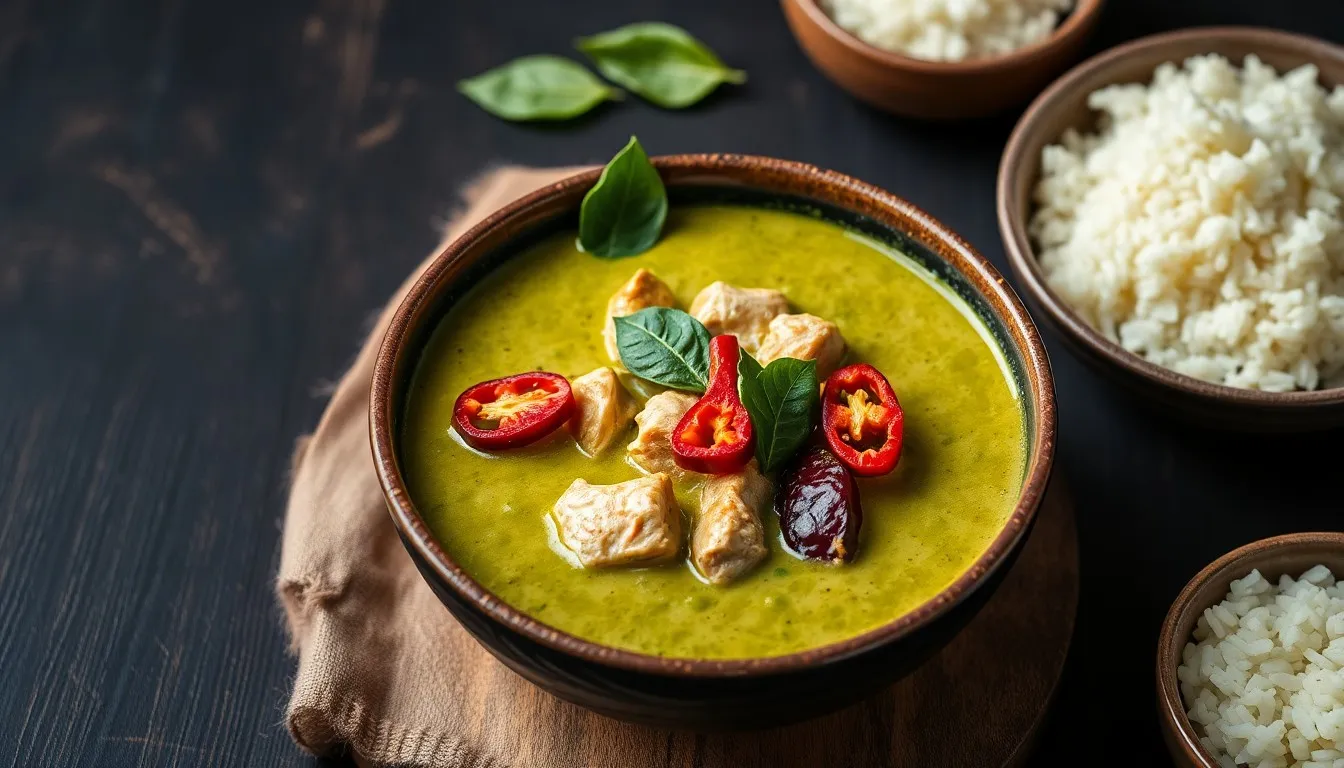
Set massaman next to a green curry and the differences are immediate. Green curry is bright, fresh, and assertively spiced with heat. Massaman is dark, slow, and warm with dried spices. They use some of the same base aromatics (lemongrass, galangal, kaffir lime leaves) but the overall profiles are entirely different.
| Curry | Heat (1–10) | Coconut milk | Key spices | Texture | Protein |
|---|---|---|---|---|---|
| Massaman | 1–2 | Yes | Cinnamon, cardamom, cloves | Thick and rich | Beef or chicken |
| Panang | 3–4 | Yes | Dried chillies, kaffir lime | Thick and creamy | Beef or chicken |
| Red | 5–6 | Yes | Dried red chillies | Medium body | Chicken, prawn, beef |
| Green | 6–7 | Yes | Fresh green chillies | Medium-thin | Chicken, seafood, tofu |
Massaman also has a longer cooking time than any other Thai curry. Green curry can be on the table in 20 minutes. Massaman needs 45 minutes to an hour at minimum, and a longer cook is not a problem; it is an advantage. The meat becomes more tender, the spices integrate further, and the sauce thickens and concentrates. It reheats extremely well, which means leftovers are actually better than the first serving.
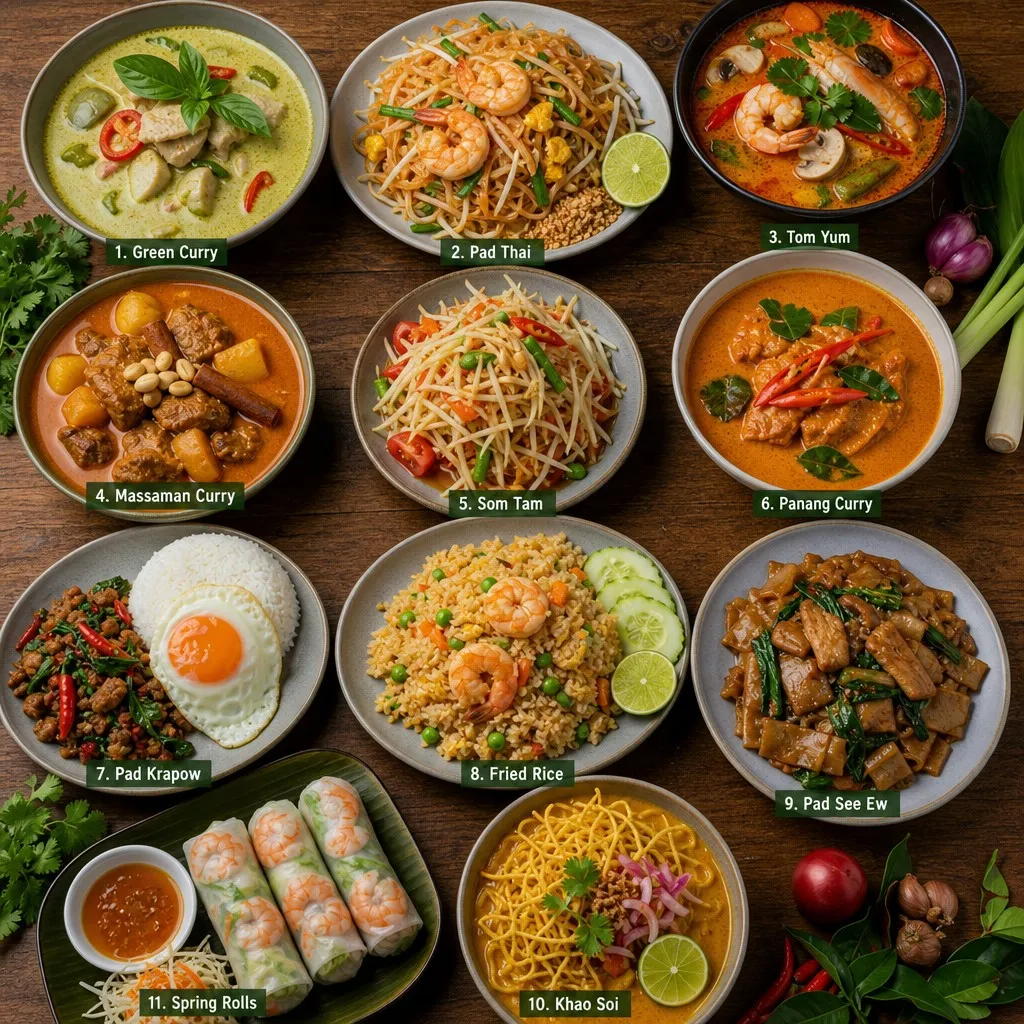
For more on how the major Thai curries compare, see the guide to the 10 most popular Thai dishes.
Is massaman curry spicy?
No. Massaman is the mildest curry in the Thai repertoire: milder than red, milder than Panang, considerably milder than green. The warmth in a massaman comes from the dry spices: cinnamon, cardamom, and cloves deliver a gentle heat that sits in the back of the throat, nothing like the sharp chilli-forward heat of a green curry.
The paste uses only a small number of dried chillies (compared to 15 or more in a green curry paste), and those chillies are there primarily for colour and a low background warmth, not to make the dish hot. A well-made massaman sitting at 1–2 on a 1–10 heat scale is accurate.
This makes massaman the most accessible Thai curry for people who do not enjoy spicy food, including children. If someone tells you they want to eat Thai food but cannot handle spice, massaman is the answer. Serve it with jasmine rice and there is nothing to worry about.
How to make massaman curry
Making a good massaman is mostly about patience. The technique is not complicated, but it cannot be rushed.
- Fry the paste in coconut cream. Separate the thick cream from the top of the coconut milk tin and fry it in a heavy pan or wok over medium heat. Add the massaman paste and fry, stirring constantly, for 5–10 minutes until the paste is very fragrant and the oil separates out around the edges. This step cannot be skipped: it is what develops the flavour of the paste. A raw-tasting paste makes a flat-tasting curry.
- Add the meat. Add your beef or chicken and stir to coat it in the paste. Cook for 2–3 minutes so the meat picks up colour.
- Build the sauce. Add the remaining coconut milk, tamarind paste, fish sauce, and palm sugar. Stir to combine and bring to a gentle simmer.
- Add potato and onion. Add these now so they have time to cook fully during the long simmer.
- Slow-cook. Simmer on low heat for 45–60 minutes, partially covered, until the meat is tender enough to break with a spoon. Beef brisket may need closer to 90 minutes. Do not rush this; the long cook is non-negotiable.
- Add peanuts. Stir in the roasted peanuts in the last 5 minutes of cooking. They should be warm and slightly softened, but not mushy.
Taste before serving and adjust: more fish sauce if it needs salt, more tamarind if it needs sharpening, a little more palm sugar if the tamarind is too dominant. The balance between salt (fish sauce), sour (tamarind), and sweet (palm sugar) is what defines a well-made massaman.
Serve with jasmine rice. If you want to consider whether the dish fits into a balanced diet, take a look at whether Thai food is healthy. Massaman is on the richer end of the spectrum due to the coconut milk and peanuts, but its ingredients are largely whole and unprocessed.
Frequently asked questions
Is massaman curry spicy?
No. It is Thailand's mildest curry. The warmth comes from dry spices like cinnamon and cardamom rather than chillies. On a heat scale of 1–10, a properly made massaman sits at about 1–2. It is the Thai curry most suitable for people who do not enjoy spicy food.
What does massaman curry taste like?
Rich, slightly sweet, aromatic and warming. The Persian spice blend (cinnamon, cardamom, cloves) gives it a distinctive warmth that differs from the fresh-chilli heat of green or red curry. The peanuts and coconut milk add richness. Tamarind gives a mild background sourness that keeps the dish from feeling heavy.
Is massaman a southern Thai dish?
Massaman originated in central Thailand (Ayutthaya) through Persian merchants in the 17th century, but it is now strongly associated with southern Thailand, where the Muslim community has kept the traditions alive for generations. The southern version tends to be more intensely spiced, with a higher proportion of dry spices in the paste.
Why does massaman curry have peanuts?
Peanuts are a feature of Malay and Indonesian-influenced cooking that spread through South-East Asia via trade routes; they arrived in the region via Portuguese traders in the 16th century. In massaman, they add texture and a mild richness that complements the slow-cooked meat and balances the coconut milk. A massaman without peanuts is incomplete.


Comments