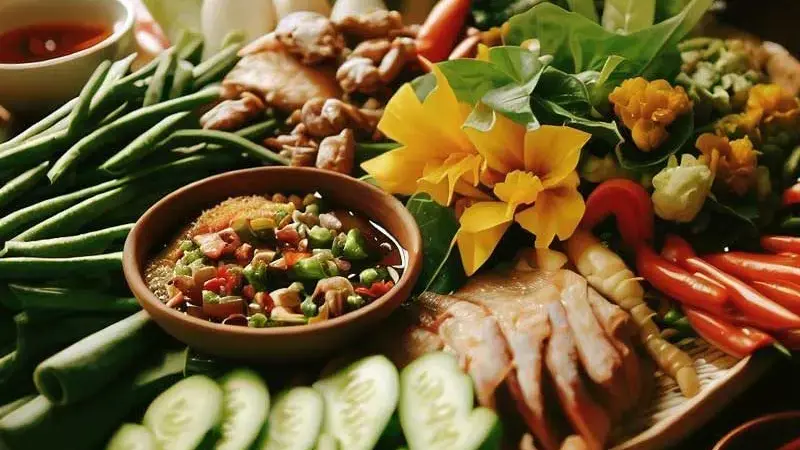
Exactly how healthy is Thai food?
After three generations of cooking Thai food, I've stopped answering "is Thai food healthy?" with a simple yes or no — it depends entirely on what you order. Some dishes are high in sugar or deep-fried; others are among the lowest-calorie options of any cuisine. The herbs and spices used throughout Thai cooking (galangal, turmeric, lemongrass, Thai holy basil) have recognised health benefits. Here’s a closer look at the main components.
The heart of Thai cuisine: jasmine rice

Thais eat jasmine rice with almost every meal, so its nutritional profile matters when assessing how healthy Thai food is overall.
Jasmine rice is a fragrant long-grain rice that is almost entirely carbohydrate, with minimal protein and fat. It’s naturally gluten-free, which makes it suitable for anyone with gluten sensitivities.
It has less fibre than brown rice, and a higher glycaemic index, meaning it raises blood sugar faster. Pairing it with protein, healthy fats and fibre-rich vegetables (which is exactly how Thai meals are built) softens that impact.
In short: jasmine rice is a perfectly healthy staple in moderation, but if blood sugar is a concern for you, watch the portion size rather than skipping it entirely.
Concise Overview of Thai Jasmine Rice
| Attribute | Description |
|---|---|
| Type | Long-grain rice |
| Aroma | Fragrant and distinctive |
| Macronutrients | Mainly carbohydrates with minimal protein and fat |
| Fibre content | Lower than brown rice |
| Glycaemic index | Higher than brown rice; raises blood sugar faster |
| Portion control | Moderation recommended to manage calorie intake |
| Best paired with | Protein, vegetables and fibre-rich sides |

Are Thai curries healthy?
Thai curries are far more popular in Thai restaurants abroad than they are in Thailand itself. Nutritionally, they follow a similar pattern regardless of colour: the coconut milk base adds significant calories and fat, while the vegetables and herbs contribute vitamins and minerals.
The role of coconut milk in Thai food
Coconut milk is the base of most Thai curries. It is calorie-dense, so portion size matters. The fat in coconut milk is primarily saturated, though its health impact is still debated.
Vegetables
Thai curries typically include peppers, bamboo shoots, aubergine, and other vegetables, which add fibre, vitamins, and minerals.
Protein
Chicken, prawns, and tofu are the most common proteins in Thai curries, all lean options that keep the overall calorie count reasonable.
Spices and Health Benefits
Turmeric has well-documented anti-inflammatory properties: its active compound curcumin has been studied extensively, and the NHS Eatwell Guide recognises herbs and spices as part of a balanced diet. In Thailand, food safety and nutrition labelling are overseen by the Thai FDA (Ministry of Public Health). Ginger aids digestion. Chilli peppers contain capsaicin, which has been linked to improved metabolism. These aren’t added for health reasons in Thai cooking, but they contribute positively.

Here’s a table summarising the nutritional information and health aspects of a typical Thai Green Curry:
| Aspect | Description |
|---|---|
| Key ingredients | Coconut milk, green chillies, lemongrass, basil, vegetables, protein (chicken, prawns, tofu) |
| Flavour profile | Aromatic, herb-infused, moderately spicy |
| Nutritional highlights | Vitamins, minerals and antioxidants from the herbs and vegetables; coconut milk provides the creaminess and most of the fat |
| Health benefits | Turmeric in the curry paste may have anti-inflammatory properties; basil and lemongrass may aid digestion |
| Watch out for | Coconut milk adds calories and fat; portion size matters |
| Lighter choices | Lean protein, less paste for less heat, extra vegetables |
| Serving suggestion | Pair with rice and vegetable sides for a balanced meal |

Is Thai food good for you – my top 5 healthiest Thai dishes
Avoid dishes loaded with sugar or deep-fried, and Thai food can be genuinely healthy. Here are the top 5 healthiest choices — and if you'd like to cook lighter Thai food at home, you'll find plenty more healthy Thai recipes on Sunkissed Kitchen.
1. Som Tum (Green Papaya Salad)
Made from shredded green papaya, tomatoes, green beans, peanuts, lime juice, and chillies, Som Tum runs at 100–150 calories per serving and contains no added fat. It's also one of the easiest healthy Thai dishes to make at home.
2. Tom Kha Gai (Coconut Chicken Soup)
Lean chicken in a coconut milk broth, flavoured with galangal, lemongrass, and kaffir lime leaves. Richer than broth-based soups due to the coconut milk, but still moderate at 300–400 calories per serving.
3. Yam Nua (Thai Beef Salad)
Lean beef strips tossed with fresh herbs, lime juice, fish sauce, and chillies. High in protein and around 250–350 calories per serving.
4. Pla Nueng Manao (Steamed Fish with Lime)
Whole fish (typically snapper or sea bass) steamed and served with a lime, garlic, and fish sauce dressing. Steaming keeps calories low at 200–300 per serving.
5. Pad Pak Boong (Stir-Fried Morning Glory)
Morning glory stir-fried with garlic and chilli. A standard side dish in Thailand, high in vitamins A and C, and only around 100–150 calories per serving.
Top 10 Healthiest Thai Foods With Average Calorie Count:
| Thai Dish | Average Calorie Count |
|---|---|
| Som Tum (Green Papaya Salad) | 100-150 calories |
| Tom Kha Gai (Coconut Chicken Soup) | 300-400 calories |
| Yam Nua (Thai Beef Salad) | 250-350 calories |
| Pla Nueng Manao (Steamed Fish with Lime) | 200-300 calories |
| Pad Pak Boong (Stir-Fried Morning Glory) | 100-150 calories |
| Tom Yum Goong (Spicy Prawn Soup) | 200-300 calories |
| Gaeng Jued (Clear Soup with Vegetables) | 100-150 calories |
| Larb Gai (Chicken Salad) | 250-350 calories |
| Pad Pak (Stir-Fried Vegetables) | 100-150 calories |
| Gang Keow Wan Gai (Green Curry with Chicken) | 300-400 calories |
For the full macro, fat and sodium breakdown of each dish, see the detailed nutrition comparison below.
Can't decide what to eat tonight?
Take our 60-second quiz and we'll pick for you
Obesity in Thailand vs the west
Thailand’s obesity rates remain lower than those in most Western countries. The rise in overweight individuals in recent decades is largely attributed to the spread of Western fast food in urban areas, not to traditional Thai cooking. For specific guidance on calorie counts, see my article on the lowest calorie Thai food. If you have dietary requirements, you may also want to know is Thai curry gluten-free.
Portion size and dish choice matter. Traditional Thai home cooking, centred on rice, vegetables, fresh herbs, and lean proteins, is generally nutritious. Deep-fried dishes and coconut-heavy curries are the main exceptions. Rather than rigid food rules, an intuitive eating approach that means eating when you're hungry and stopping when you're full sits naturally alongside Thai food's emphasis on balance and shared meals.
The sodium paradox: healthy-sounding dishes can be salt bombs
Thai food presents a nutritional paradox: dishes marketed as "healthy" (som tum, tom yum, steamed fish) are often loaded with hidden sodium from fish sauce, soy sauce, curry pastes, and seasoning sauce. A single serving of som tum can contain 800–1,200mg of sodium, close to half the recommended daily limit (2,300mg in the US; the WHO advises staying under 2,000mg), despite having only 100–150 calories and no oil.
Where the sodium hides: Fish sauce alone adds 300–500mg per tablespoon. Curry paste bases (used in soups and curries) contribute 400–600mg per tablespoon. Soy sauce adds 900mg per tablespoon. Combine these in a single dish and sodium accumulates quickly.
Managing sodium: If blood pressure is a concern, request "mai phed" (not spicy) sauces on the side, ask for dressing to be drizzled sparingly, or request fresh fish sauce instead of pre-mixed pastes. At home, reduce fish sauce by 25% and compensate with lime juice for sourness. These modifications don't sacrifice flavour significantly but can halve sodium intake.
Ordering Thai food for health: restaurant tactics
Thai restaurants are far more accommodating to dietary requests than many cuisines. Here's how to optimise your order for health:
Key phrases to use:
- Mai wan (not sweet): tells the chef to reduce added sugar and sweet sauces
- Nam man nit noi (less oil): requests lighter cooking
- Kruang prung kang (sauce on the side): lets you control the portion
- Sod sai (vegetables inside): requests extra vegetables instead of protein
- Gai sod (fresh chicken): avoids pre-prepared fried versions
Ordering strategies: Choose steamed or stir-fried over curry-based (less coconut milk). Order salads (yam) rather than pastes (gaeng). Request extra rice to balance a richly-sauced dish. Split a curry between 2–3 people rather than ordering individual portions; curries are large and meant for sharing. Most Thai restaurants will modify dishes on request; they're used to diners with preferences.
The health benefits of Thai herbs and spices: what the research says
The herbs and spices that define Thai flavour aren't just delicious; they have documented health effects, though it's important to understand realistic doses.
Turmeric (curcumin): A typical Thai curry contains 200–400mg of turmeric. Anti-inflammatory studies on curcumin use 500–1,000mg doses; thus, eating one curry provides meaningful anti-inflammatory compounds, though not a pharmaceutical dose. Pairing turmeric with black pepper (which appears in curry pastes) increases bioavailability by up to 2,000%.
Ginger (galangal and fresh ginger): Thai curries and soups use 1–3 teaspoons of galangal, providing roughly 100–300mg. Research supports ginger for nausea and digestion at 500–2,000mg; Thai portions are modest but contribute meaningfully, especially over repeated meals.
Chilli peppers (capsaicin): Bird's eye chillies contain 50,000–100,000 Scoville units. Capsaicin has been linked to modest metabolic increases (4–5%) and improved satiety. A Thai dish with 2–3 chillies provides 15–30mg of capsaicin, enough to boost metabolic rate slightly and enhance feelings of fullness.
Thai basil (holy basil) and lemongrass: These aromatics contain volatile oils with antimicrobial and antioxidant properties, though evidence is mostly in-vitro. In traditional Thai medicine, they're valued for digestion and inflammation; modern research is limited but not contradictory.
Realistic takeaway: Thai herbs and spices provide documented health benefits at typical serving sizes, particularly for inflammation and digestion. They're not substitutes for medical treatment but meaningfully contribute to a healthy diet when consumed regularly.
Detailed nutrition comparison: macros and sodium side-by-side
How to read the table below: Calories reflect typical restaurant portions. Sodium is the key variable; even low-calorie dishes can exceed daily limits. Protein-to-calorie ratio indicates satiety: dishes with higher protein percentages keep you fuller longer.
| Dish | Calories | Protein (g) | Fat (g) | Sodium (mg) | Fibre (g) |
|---|---|---|---|---|---|
| Som Tum (Green Papaya Salad) | 120 | 3 | 4 | 900–1,200 | 3 |
| Tom Yum Goong (Spicy Prawn Soup) | 250 | 18 | 8 | 1,100–1,400 | 2 |
| Tom Kha Gai (Coconut Chicken Soup) | 350 | 25 | 18 | 800–1,000 | 2 |
| Yam Nua (Thai Beef Salad) | 300 | 28 | 15 | 950–1,150 | 3 |
| Pla Nueng Manao (Steamed Fish with Lime) | 240 | 32 | 9 | 700–900 | 1 |
| Pad Pak Boong (Stir-Fried Morning Glory) | 130 | 4 | 7 | 600–800 | 3 |
| Gaeng Keow Wan Gai (Green Curry with Chicken) | 420 | 30 | 25 | 800–1,000 | 2 |
| Larb Gai (Chicken Salad) | 280 | 26 | 14 | 1,000–1,200 | 2 |
Key insights from the table: Salads (som tum, yam nua, larb) are low in calories but high in sodium; offset this by requesting sauce on the side. Steamed dishes (pla nueng manao) offer the best sodium-to-calorie ratio. Curries (gaeng keow wan) are calorie-dense but protein-rich, making them satisfying in smaller portions. All dishes exceed 600mg sodium per serving, so limit yourself to one sodium-heavy meal per day if managing hypertension.
For a closer look at what's really in your food, see our guide on Does Thai Food Have MSG. It covers what's natural and what isn't, which might surprise you.
Sources
Healthy eating guidance: NHS Eatwell Guide; Thai FDA (Ministry of Public Health); WebMD glycaemic index.
Nutrition and health references: WHO: Sodium reduction; NIH NCCIH: Turmeric; NIH NCCIH: Ginger; Meta-analysis: capsaicinoids in red pepper and thermogenesis.
Frequently Asked Questions
Is Thai food healthy?
Whether Thai food is healthy depends on what you order. Some dishes are high in sugar or deep-fried; others are among the lowest-calorie options of any cuisine. The herbs and spices used throughout Thai cooking (galangal, turmeric, lemongrass, Thai holy basil) have recognised health benefits.
Are Thai curries healthy?
Thai curries follow a similar nutritional pattern regardless of colour: the coconut milk base adds significant calories and fat, while the vegetables and herbs contribute vitamins and minerals. Chicken, prawns, and tofu are the most common proteins — all lean options that keep the overall calorie count reasonable.
What are the healthiest Thai dishes?
The top 5 healthiest Thai dishes are Som Tum (green papaya salad), Tom Kha Gai (coconut chicken soup), Yam Nua (Thai beef salad), Pla Nueng Manao (steamed fish with lime) and Pad Pak Boong (stir-fried morning glory), ranging from around 100–400 calories per serving.
Is jasmine rice healthy?
Jasmine rice is a carbohydrate-rich staple in Thai cuisine and is naturally gluten-free. It has a higher glycaemic index than brown rice, but it can be part of a balanced diet when complemented with fibre-rich foods and eaten in moderation.



Comments