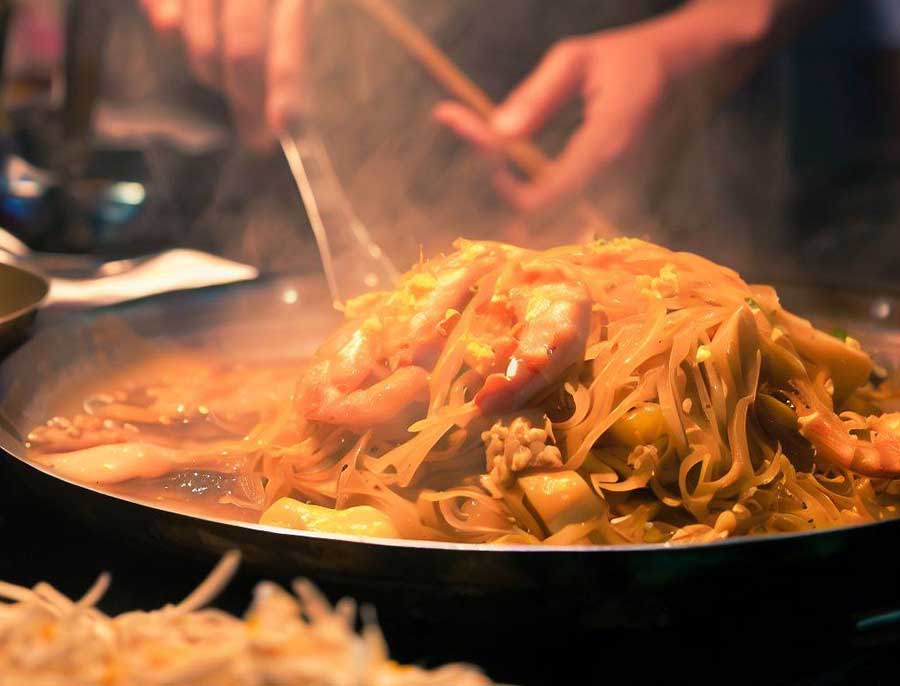
Sticky, clumpy pad thai is the single most common problem people bring to me, and the good news is that it is almost never your fault as a cook: it is a handful of small, fixable mistakes. When the noodles glue themselves into one sad lump instead of sliding around the wok in glossy, separate strands, the cause is nearly always too much water in the noodle, not enough heat in the pan, or too much sauce added too soon. Fix those three things and your pad thai will behave.
I cook pad thai by the hundred at our pop-up events, and I have made every one of these mistakes myself. Here is exactly why it happens and how to get it right.
The quick answer
Pad thai turns sticky and clumpy when the rice noodles absorb too much water before they hit the wok, when the pan is not hot enough to fry rather than stew them, or when wet sauce sits on cool noodles and turns to glue. The fix: soak the noodles in cool water until just bendy (never boil them soft), get your wok properly hot, and add the sauce in one go to noodles that are already moving, then keep them moving.
First, the science: why rice noodles clump at all
It helps to understand what is actually happening, because once you do, every fix below makes sense. Rice noodles are made of two kinds of starch: amylose, which is long and straight and keeps strands firm and separate, and amylopectin, which is branched and sticky and makes things cling together. Good pad thai noodles are made from high-amylose rice for exactly this reason.
When a noodle gets too hot or sits in water too long, that starch breaks down on the surface and leaches out. That loose surface starch is glue, pure and simple; it is the same stuff that makes the water cloudy when you over-soak or boil. It coats the strands and welds them to each other and to the pan. Then, as the noodles cool, the starch re-tightens (cooks call this retrogradation) and the clump sets like concrete. That is exactly why pad thai that sat for ten minutes is stickier than pad thai served straight from the wok.
So almost everything that goes wrong comes down to one of two things: too much loose surface starch, or too much trapped water. Keep those two ideas in your head and the rest is easy.
Cause 1: you over-soaked (or boiled) the noodles
This is the big one. Dried flat rice noodles for pad thai should be soaked in cool or lukewarm water until they are pliable but still firm, bendy like a fresh shoelace with a little bite left in the centre. They are not meant to be cooked soft before they go in the wok. They finish cooking in the pan, in the sauce.
If you boil them, or soak them in hot water, or leave them soaking too long, they swell up, turn mushy and leach starch. That loose surface starch is the glue that makes everything clump together. Once a noodle is waterlogged it has nowhere to put the sauce, so the sauce just coats the outside and the strands stick to each other instead.
Fix: soak in cool water until the noodles are pliable but still firm, drain well, and if they are ready before you are, toss them with a teaspoon of oil and leave them loose. They should still be slightly underdone when they go in; the wok does the rest.
The doneness test I use: wrap a single strand around your finger. If it bends right round without snapping but still has a little resistance (like a fresh shoelace), it is ready. If it flops limply, it has gone too far; if it cracks, give it longer. That is the soaking test only. The three tests for the finished dish, colour, texture and gloss, are in how to tell when pad thai is properly cooked.
Soaking time depends on how thick your noodles are and the water temperature. As a rough guide for dried flat rice noodles:
| Noodle width | Cool / room-temp water | Warm water (not boiling) |
|---|---|---|
| Thin (about 3mm) | 15–20 min | 5–10 min |
| Medium (about 5mm) | 25–30 min | 10–15 min |
| Wide | 30–45 min | 15–20 min |
Always start checking early, because brands vary and an extra five minutes is the difference between firm and mushy. Whatever the packet says, trust the finger test over the clock.
Cause 2: your wok (or pan) isn't hot enough
Pad thai is a fast, high-heat stir-fry. The heat is what drives the water out of the noodles and lets them fry rather than steam. A cool pan does the opposite: the noodles sit and stew in their own moisture, the starch goes gluey, and you end up pushing a sticky mass around the pan.
Most home hobs are far weaker than a street vendor's roaring burner, so you have to work with that. Get the pan genuinely hot before anything goes in, and don't try to cook a huge batch at once.
Fix: use your widest, heaviest pan or a wok, get it smoking-hot before adding oil, and cook one or two portions at a time. A big pile of noodles drops the pan temperature instantly and steams instead of fries.
Cause 3: too much sauce, added too early
Pad thai sauce (tamarind, fish sauce, palm sugar) is mostly liquid and sugar. Pour a lot of it onto noodles that aren't hot and moving, and it pools, cools, and turns sticky as the sugar thickens. The noodles soak it up unevenly and clamp together. If the trouble is the flavour of that sauce rather than the amount of it, see why pad thai tastes too sweet or too sour.
Can't decide what to eat tonight?
Take our 60-second quiz and we'll pick for you
Fix: add the sauce all at once to noodles that are already sizzling and moving, then keep tossing so it coats evenly and the liquid cooks off fast. If anything, use slightly less sauce than you think; you can taste and add a splash more, but you can't take it back out. Pile on too much sauce or oil and you swing the other way, into greasy pad thai instead of clumpy.
Cause 4: you stopped moving the noodles
"Stir-fry" is a literal instruction. The moment noodles sit still on hot metal with sauce on them, the sugars catch and they weld together, to the pan and to each other. Constant movement is what keeps the strands separate and glossy.
Fix: keep the noodles in near-constant motion with a spatula or by tossing the pan. Lift and fold from the bottom rather than mashing down. If they start sticking, a tiny splash of water loosens them; just a splash.

Cause 5: you didn't rinse off the surface starch
Remember the surface starch from earlier (the glue)? When you drain your soaked noodles, that loose starch is still clinging to them. If you go straight into the wok, it sets the moment the heat hits and the strands bond. A quick rinse washes it away.
Fix: after soaking, drain and give the noodles a brief rinse under cold water until the water runs clear rather than cloudy, then drain well again. This is doubly important with cheaper noodles, which tend to carry far more surface starch (more on that below). Then toss the drained noodles with a teaspoon of neutral oil and spread them loose rather than leaving them in a tight pile, where they will start sticking before they ever reach the pan.
Does the noodle brand really matter?
It does, more than people expect. Cheaper rice noodles tend to be dustier with surface starch straight out of the packet, so they clump faster and need a more thorough rinse. Better noodles (usually the ones marked "Product of Thailand") are cleaner, more consistent and far more forgiving if your timing isn't perfect.
You don't need to spend a fortune, but if you have fought sticky pad thai with one brand again and again, try a different one before you blame your technique. Look for flat rice sticks (sen lek) of an even width, ideally around 3–5mm.
Fresh noodles vs dried noodles

Most of this guide assumes dried noodles, because that is what most people cook with at home. Fresh rice noodles behave very differently and catch a lot of people out.
Fresh noodles are already soft, so they need barely any soaking: a 30-second dip in warm water to loosen them, or sometimes nothing at all before they go straight into a hot wok. They are also more delicate and far quicker to turn mushy, so they want even higher heat, faster cooking and a very gentle hand. If you soak fresh noodles the way you would dried ones, you will end up with a sticky paste. Dried noodles are more forgiving and easier to get right, which is why I usually recommend them for anyone still finding their feet.
How to rescue pad thai that's already sticky
All is not lost mid-cook. If your noodles are clumping in the pan right now, crank the heat up immediately, because gentle heat is the enemy here. Add a small splash of water (a tablespoon), let the steam loosen the clump, then toss hard to separate the strands. A few drops more oil helps the strands slide apart and adds gloss. Keep them moving until the extra moisture cooks off and the noodles look shiny rather than wet.
Reviving sticky, clumped leftover pad thai
Cold pad thai from the fridge is always a solid clump. That is the retrogradation from earlier setting hard overnight, and it is completely normal and easy to undo. Start by microwaving the clump for ten to twenty seconds; that softens it just enough to break it apart with a fork. Then finish in a hot pan with a splash of water (a tablespoon), a few drops of oil, and high heat, keeping it moving the whole time. The steam loosens the strands and the heat drives off the excess water so it crisps up rather than going soggy. Avoid long, low reheating: gentle warming just lets the noodles re-absorb moisture and stay gummy, the same mistake as cooking on a cool pan in the first place.
The chef's checklist for glossy, separate noodles
- Soak noodles in cool water until bendy but still firm (never boil them).
- Drain well and toss with a teaspoon of oil.
- Have everything prepped and to hand, because pad thai cooks in two or three minutes.
- Get the pan properly hot before you start.
- Cook just one or two portions at a time.
- Add the sauce in one go to moving noodles; use slightly less than you think.
- Keep the noodles moving the whole time.
Get the noodle soak and the heat right and everything else falls into place. For a different noodle dish with the same high-heat technique, try our drunken noodles (pad kee mao).
Frequently asked questions
Should I rinse pad thai noodles after soaking?
Yes. After soaking, give the drained noodles a quick rinse under cold water until the water runs clear, then drain again. This washes off the loose surface starch that glues the strands together once the heat hits. It matters most with cheaper noodles, which carry more of it.
Should I boil pad thai noodles or soak them?
Soak them, never boil. Boiling cooks the noodles soft and releases a flood of starch that turns everything gummy. Soak in cool or warm (not boiling) water until pliable but still firm, then finish them in the wok in the sauce.
Why is my pad thai mushy?
Mushiness comes from too much water: over-soaked or boiled noodles, too much sauce, a pan that isn't hot enough to drive the moisture off, overcrowding, or letting the finished dish sit too long. Soak less, use high heat, cook small batches and serve straight away.
How long should I soak dried pad thai noodles?
Roughly 15–20 minutes for thin noodles and 25–45 minutes for medium-to-wide, in cool water (less in warm). Times vary by brand, so check early and trust the finger test: a strand should wrap around your finger without snapping but still feel firm.
How do I keep pad thai noodles from sticking together?
Soak until just bendy (don't boil), rinse off the surface starch, toss the drained noodles with a little oil, get the pan properly hot, cook one or two portions at a time, add the sauce in one go, and keep the noodles moving the whole time.
Why is restaurant pad thai never sticky but mine is?
Restaurants cook over ferocious heat, one or two portions at a time, with everything prepped and to hand so each batch takes under three minutes. That high heat drives the water off fast before the noodles can stew and clump. At home, mimic it with your hottest pan and small batches.
Are fresh noodles or dried noodles better for avoiding stickiness?
Dried noodles are more forgiving and easier for beginners. Fresh noodles taste wonderful but are delicate and turn mushy fast; they need barely any soaking (a 30-second dip or none) and very high heat. If fresh noodles keep going sticky on you, switch to dried while you nail the technique.
How do I fix leftover pad thai that has clumped solid?
Microwave it for 10–20 seconds to soften the clump, break it up with a fork, then finish in a hot pan with a splash of water and a few drops of oil, tossing constantly. Avoid slow, gentle reheating; that just keeps it gummy.
For a stir-fry that stays loose and glossy, our Thai Black Pepper Beef Stir Fry uses the same high-heat technique with less oil. The principle is identical, just swap the noodles for rice.


Comments