
Two types of people ask me about oily pad thai: those whose version is too greasy, and those wondering why restaurant pad thai has that distinctive glossy, almost orange-tinted richness their home version never quite matches. The answer to both is the same: oil and heat, in the right ratio.
I use more oil at our pop-up events than most home recipes would suggest. So does every pad thai vendor I have watched in Thailand. The difference is that at street-stall heat, the oil transforms into gloss rather than sitting as grease. At home hob temperatures, the same amount just feels heavy. Once you understand this, everything else falls into place.
The quick answer
Thai street vendors use 2–3 tablespoons of oil per portion, which is three to four times more than most home recipes suggest. At 50,000+ BTU that oil superheats instantly and creates the glossy, wok-kissed coating that makes restaurant pad thai so distinctive. At home hob temperatures (8,000–15,000 BTU), the same oil has no heat to transform it and just makes the dish greasy. The fix is maximum heat and one or two portions per batch.
What actually happens to oil at very high heat
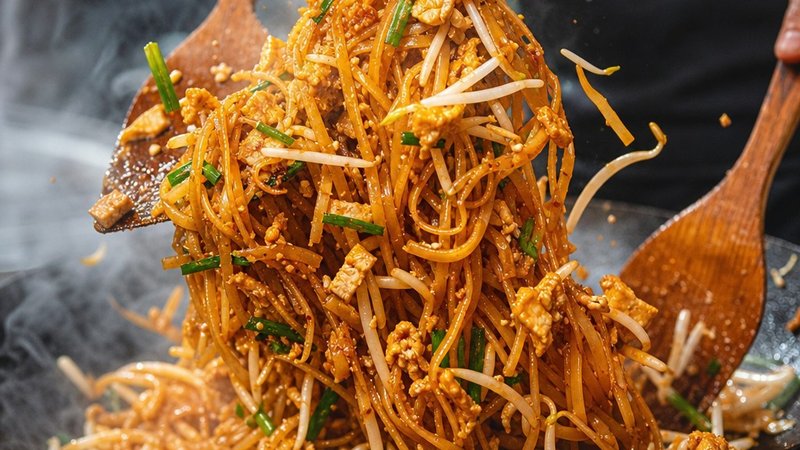
When oil hits a pan hot enough to smoke, it partially vaporises into a fine aerosol that binds to the surface of whatever it touches, while the Maillard reaction browns the food at the pan interface. The result is what Thai cooks call wok hei (literally "wok breath"), the smoky, caramelised quality that makes restaurant stir-fries taste different from home versions. At lower temperatures none of this happens: the oil stays liquid, has no way to bind and drive off, and just sits there as visible grease.
Why heat, not oil, is the variable that matters

Rice noodles always carry moisture, and what changes everything is what that moisture does when it meets the oil.
When the wok is properly hot, any moisture coming off the noodles flashes straight to steam, evaporating on contact. The oil never gets the chance to cool, so it stays integrated with the noodles as a thin, even film, and that film is the gloss you are after.
When the wok is not hot enough, the moisture does not evaporate; it drops the pan temperature further. Now the oil has nothing to bind to and nowhere to go, so it separates out and pools at the bottom, and as you toss the noodles they drag through it and pick it up as grease.
Heat is the primary variable, not quantity. It is not how much oil you use but whether the wok is hot enough to keep it integrated rather than separated. The same two tablespoons can finish as a glossy coat or a greasy pool depending entirely on temperature.
How much oil does a Thai street vendor actually use?
Watch a pad thai vendor work and count the oil: a single portion gets two to three tablespoons, sometimes more. That is not indulgence but the correct amount for the technique. At the temperature of a commercial wok burner (50,000 BTU or more), the oil is transformed instantly and each portion cooks in under two minutes. Most home recipes that say "one teaspoon of oil" are optimistic, because at home-hob temperatures they give dry, stuck noodles, a different problem, and adding more oil while keeping the heat low simply gives greasy ones.
| Street stall | Home kitchen | |
|---|---|---|
| Oil per portion | 2–3 tablespoons | Often 1 tsp – 1 tbsp |
| Burner power | 50,000+ BTU | 8,000–15,000 BTU |
| Cooking time per portion | Under 2 minutes | Often 5–10 minutes |
| Oil behaviour | Partially vaporises → gloss | Stays liquid → grease |
The six causes of greasy pad thai at home
1. Not enough heat
This is the root cause of most greasy home pad thai. If the pan is not genuinely hot, to the point where you see wisps of smoke before the oil even goes in, the oil will not transform. Get your widest, heaviest wok as hot as your hob will allow before adding anything, usually two to three minutes on maximum heat.
2. Too much in the pan at once
Every ingredient you add drops the pan temperature. Tip in a large pile of noodles, beansprouts, egg and protein at once and it plummets so fast the pan cannot recover, which is the same separation as before, where the food steams and the oil pools instead of frying. Cook two portions at most per batch, one is better, and keep the heat on maximum throughout.
3. Wrong oil
Pad thai needs a neutral, high-smoke-point oil: vegetable, sunflower, rice bran or refined groundnut oil all work well. Olive oil has a lower smoke point and a flavour that clashes with the tamarind, fish sauce and palm sugar. Unrefined sesame oil (the dark, fragrant kind) is a finishing condiment, not a cooking oil. A few drops at the end for aroma is fine, but frying in it makes the dish taste wrong and feel heavy.
4. The egg goes in wrong
The egg is not just a protein addition. It is a structural element. Scrambled in the hot pan until just set, then folded through the noodles, it coats them, absorbs some of the oil and helps bind the sauce. Add it at the wrong moment, or undercook it, and it cannot play this role, so the oil has nowhere to bind and sits as grease. For the exact timing, see the sequence further down.
5. Noodles releasing surface starch
Over-soaked rice noodles release a lot of loose surface starch, which combines with oil and moisture into a gummy, greasy-feeling coating rather than a clean gloss. Soak the noodles until pliable but still firm (never boil them), rinse briefly to wash off surface starch, then toss with a teaspoon of oil before they go in. For the full guide to noodle texture, see our article on why pad thai goes sticky and clumpy.
6. Wet noodles going into the wok

This one is missed by almost everyone, and it ties straight back to the heat mechanism. The water clinging to soaked rice noodles is a hidden cause of oiliness. You drain them, but they go in still dripping, and all that surface water drops the wok temperature sharply the moment they land.
The pan cools, the oil separates and pools, and you get grease instead of gloss. You can do everything else right and still end up with a greasy plate, simply because the noodles carried too much water in with them. After soaking, drain them in a colander and shake off as much water as you can. Really shake it hard, or pat them briefly with kitchen paper. Drier noodles let the wok hold its heat, and that is half the battle.
How to get the glossy restaurant look at home
You will never fully replicate a street vendor's pad thai on a domestic hob, because the heat is simply not there, but you can get much closer than most home versions. Three things make the biggest difference:
- Prep everything before you start. The whole dish cooks in under three minutes. Soak and drain the noodles, pre-mix the sauce, crack the egg, and have the protein and garnishes to hand. Stop to measure anything mid-cook and you have lost control of the heat.
- Get the pan properly hot first. Two to three minutes on maximum heat with no oil yet. When a flicked-in drop of water evaporates in under a second, it is ready.
- Use 1.5–2 tablespoons of neutral oil per portion. More than a home recipe and less than a street stall, which makes it a sensible compromise for lower heat.
The correct order to add everything
Sequencing matters more than people realise. Each stage protects the heat for the next, and getting the order wrong reintroduces moisture at the worst moment, which is how grease creeps back in. At our pop-up events I cook these in one fluid sequence, every time:
- Heat the wok until it smokes. Dry and empty, on your highest setting.
- Add the oil, swirl it round, wait 10 seconds so it comes up to temperature.
- Add the garlic (and shallot if using) and fry for 20 to 30 seconds, until fragrant but not browned.
- Add the protein, cook it through, then push it to the sides to keep the centre hot.
- Add the drained noodles. Spread them flat against the wok and leave them untouched for 30 to 60 seconds, then toss.
- Push everything to the sides, crack the eggs into the bare centre, scramble briefly, then fold into the noodles before they fully set.
- Push to the sides again, add the sauce to the bare hot wok surface, let it sizzle for 5 seconds, then toss everything together.
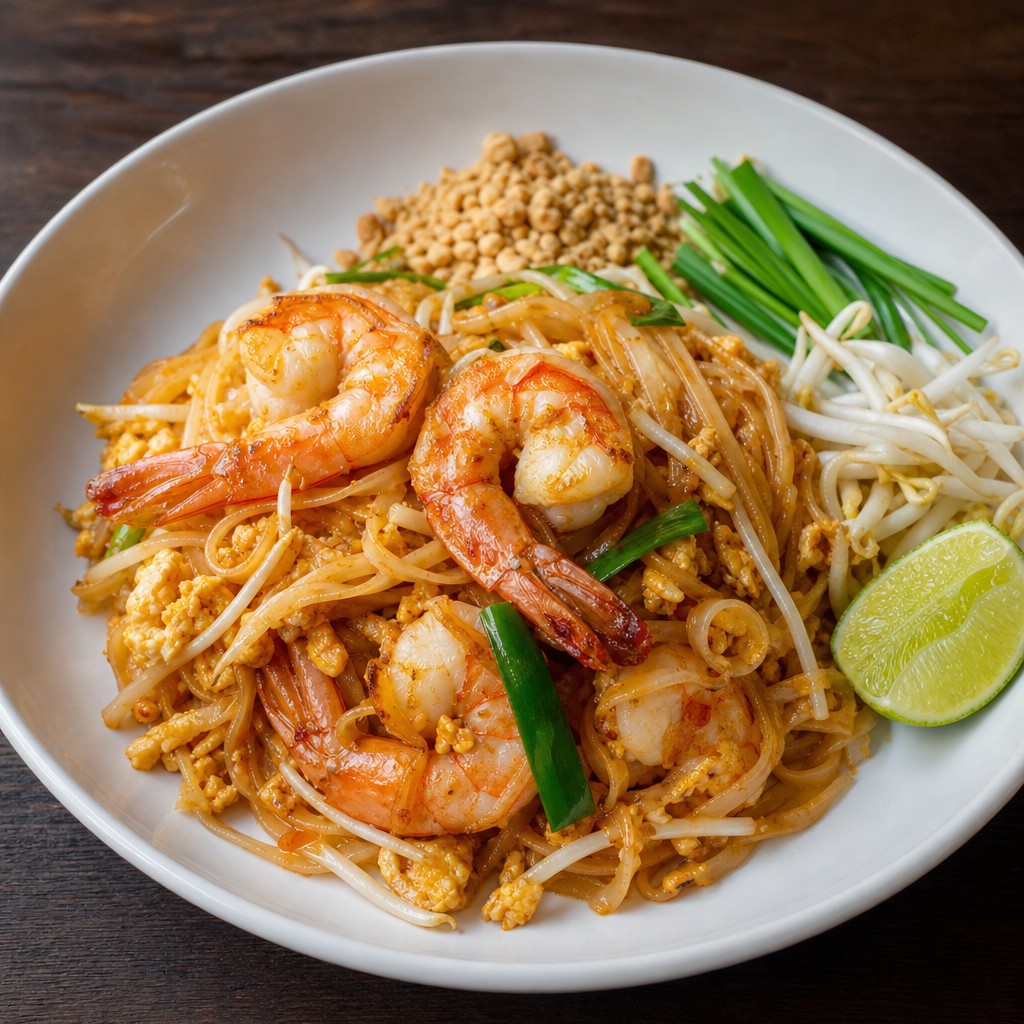
- Off the heat: spring onions, bean sprouts, crushed peanuts and a wedge of lime.
Step seven is the one that matters. The most common sequencing mistake is adding the sauce too early, tipping it over the noodles while everything is still piled in the middle of the wok. That introduces a slug of liquid when the wok may already have cooled, and the dish steams and pools oil instead of frying. Add the sauce to a bare, screaming-hot patch of wok and it hisses and reduces on contact, glazing the noodles rather than stewing them.
Can't decide what to eat tonight?
Take our 60-second quiz and we'll pick for you
This is the streamlined version of the method in our full prawn pad thai recipe, where you will find exact quantities and timings.
What about the orange colour?
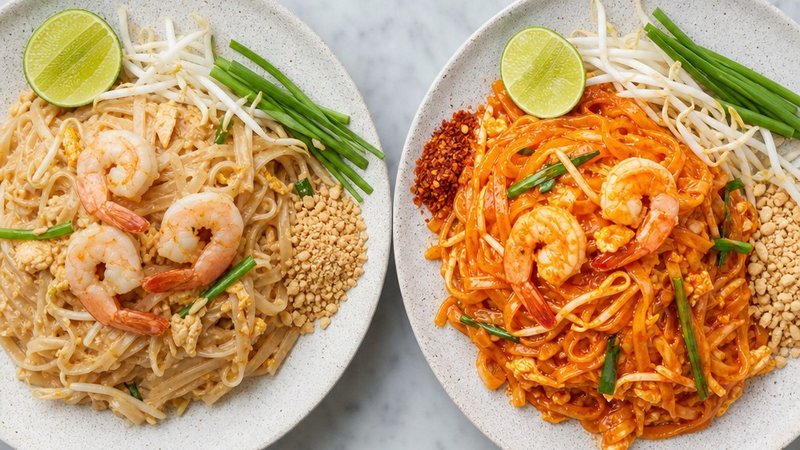
The distinctive orange tint of restaurant pad thai comes from tamarind paste reacting with high heat, not from extra oil. If yours looks pale or brown rather than orange, the issue is the sauce ratio or cooking temperature, not oiliness. We cover this in our guide to why restaurant pad thai is orange.
The emergency rescue if it is already greasy
If the dish is already on the plate looking slick, you cannot re-fry your way out without overcooking the noodles. Tip the finished pad thai onto a plate lined with a few sheets of kitchen paper and leave it for about 30 seconds. The paper draws off the surface oil without touching the flavour, because the seasoning has already bonded to the noodles, so all you lose is the loose grease on top. Then slide it onto a clean plate to serve.
Be honest about what this is, though. It is a rescue, not a fix: it saves the plate in front of you but does nothing about the underlying cause, which is almost always heat. If you reach for the kitchen paper every time, the answer is a hotter wok, smaller batches and drier noodles next time.
Frequently asked questions
Why is my pad thai so oily?
The most common home-cooking cause is too much oil combined with not enough heat. At street-stall temperatures, oil superheats and partly vaporises. It coats the noodles and then drives off, leaving gloss rather than grease. At home hob temperatures, the oil just sits there. The fix is maximum heat and smaller portions per batch.
How much oil do Thai restaurants actually use for pad thai?
A Thai street vendor typically uses 2–3 tablespoons of oil for a single portion of pad thai, far more than most home recipes suggest. The key is that ferocious heat (50,000+ BTU commercial burners versus 8,000–15,000 BTU home hobs) transforms that oil rather than leaving it as grease.
What oil should I use for pad thai?
Use a neutral, high-smoke-point oil: vegetable, sunflower, rice bran or refined coconut oil. Avoid olive oil (wrong flavour profile, lower smoke point) and unrefined sesame oil (for finishing and flavour only, never as the frying oil). The right oil stays neutral and can withstand high heat without burning.
Why does my pad thai feel greasy when restaurant pad thai doesn't?
The difference is wok hei, which is the effect of very high heat on oil and food. At high enough temperatures, oil partially vaporises and binds with the surface of the noodles, creating gloss. At lower temperatures, it just coats everything and pools as grease. Cook smaller batches over your highest heat setting to get closer to the restaurant effect.
Does the egg step affect the oiliness of pad thai?
Yes. The egg is supposed to hit the hot pan first and be scrambled before the noodles are added. Properly cooked egg absorbs some of the oil and helps bind the sauce to the noodles. If the egg is undercooked or added at the wrong time, it does not do this job and the oil has nowhere to go.
Can overcrowding the pan make pad thai greasy?
Absolutely. Adding too much to the pan at once drops the temperature dramatically. The noodles then steam rather than fry, and the oil has no heat to transform it and it just sits around the steaming mass, which feels greasy. Cook one or two portions at most per batch, even if it takes multiple rounds.
Is pad thai supposed to be oily?
It should be glossy, not greasy. Authentic street-style pad thai has a sheen from the high-heat cooking process, and the noodles look richly coated rather than wet or pooling in oil. If your pad thai has visible oil collecting at the bottom of the plate or the noodles feel slippery rather than glossy, the heat was insufficient.
How do I get the glossy restaurant look at home?
Use your widest, heaviest pan. Get it smoking-hot before any oil goes in. Cook maximum two portions at a time. Have all ingredients pre-measured and to hand because the whole dish takes under three minutes. Add the egg first, scramble it partially, push it to the side, then add the noodles and move them constantly. The constant movement plus high heat is what creates gloss rather than grease.
For a stir-fry that stays glossy without drowning in oil, try our Thai Black Pepper Beef Stir Fry. It uses the same high-heat technique but with far less fat.

Comments