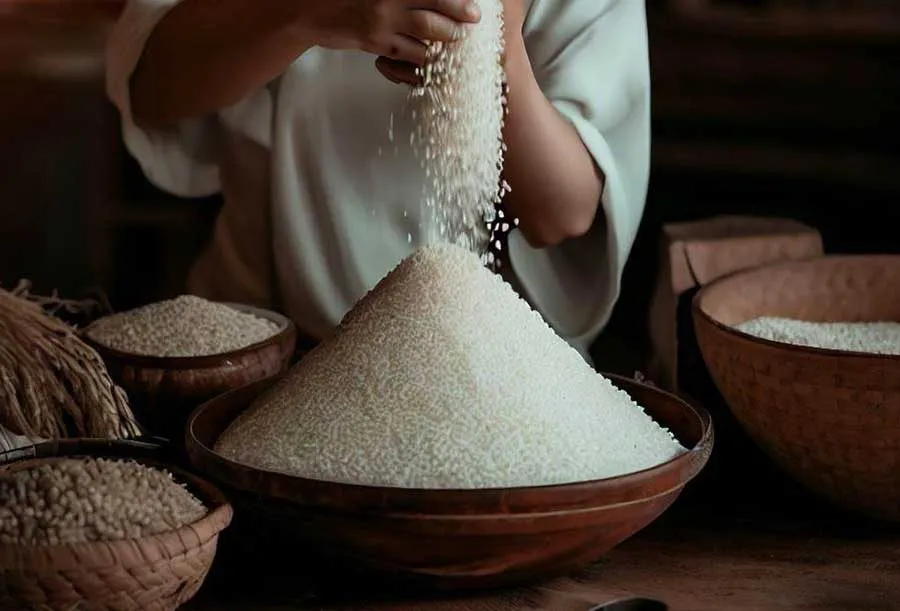
Choosing the correct rice is important
The only rice to use for sticky rice is glutinous rice — also labelled as sweet rice or waxy rice. Despite the name, glutinous rice contains no gluten; the word refers to its adhesive quality when cooked. Regular jasmine rice or long-grain rice will not become sticky no matter how it is cooked, because the starch composition is fundamentally different.
Glutinous rice, scientifically known as Oryza sativa var. glutinosa, is primarily grown in various Asian countries, including Thailand, Laos, Cambodia, Vietnam, and parts of China. It has been cultivated for thousands of years and holds a special place in the culinary traditions of these regions.
The grains of glutinous rice are short and round, with a high starch content that sets it apart from regular long-grain or medium-grain rice varieties. This higher starch content is responsible for the sticky consistency when cooked, making it ideal for dishes where a cohesive, glutinous texture is desired.
In Thai cuisine, sticky rice is used in both savoury and sweet dishes: from the Isaan staple of sticky rice eaten with grilled meats, to mango sticky rice as a dessert. It needs to be soaked for several hours before steaming to allow the grains to absorb water and cook evenly. See below for popular Thai dishes that use it, or see the full guide on how to make sticky rice.

Why glutinous rice is the best rice for sticky rice, and not jasmine rice
Jasmine rice cannot be substituted for glutinous rice. The two are structurally different: jasmine rice has a low amylopectin starch content and cooks into separate, fluffy grains; glutinous rice has a high amylopectin content that makes the grains fuse together when cooked. Here are the key differences:
On grain shape: jasmine rice is long-grain, slender, and stays separate and fluffy when cooked. Glutinous rice is short-grain and round; it fuses together into a sticky, cohesive mass.
On texture: jasmine rice is light and non-sticky, useful as a side or base for curries. Sticky rice is chewy and holds together, which is what makes it right for eating alongside grilled meats or using in desserts where you want the rice to clump.
On flavour: jasmine rice has a subtle floral aroma and a faint nuttiness. Sticky rice is milder and slightly sweeter, but the flavour is secondary to the texture.
On culinary use: jasmine rice is versatile across cuisines and dishes. Sticky rice is used specifically where the stickiness matters, in traditional Thai desserts, street food, and Isaan rice dishes.
Glutinous rice is the only rice that works for sticky rice. The table above summarises the differences. If you want to learn about the other staple, see my guide on how to cook jasmine rice.
Summary of the differences between sticky and jasmine rice
| Characteristic | Jasmine Rice | Sticky Rice (Glutinous Rice) |
|---|---|---|
| Grain Variety | Long-grain, slender and elongated | Short-grain, round and plump |
| Texture when Cooked | Light and fluffy, grains remain separate | Sticky and cohesive, grains clump together |
| Flavour | Subtle floral aroma, nutty flavour | Mild, neutral with a slight sweetness |
| Culinary Uses | Versatile, used in a variety of savoury and sweet dishes | Primarily used in dishes where stickiness is desired, including desserts and some savoury dishes |
| Preferred Regional Usage | Common in Southeast Asian cuisines | Predominantly featured in various Asian countries’ culinary traditions, with specific applications |
5 popular Thai dishes that use sticky rice
Mango Sticky Rice (Khao Niew Mamuang)

A beloved Thai dessert consisting of sweet glutinous rice topped with ripe mango slices and drizzled with a creamy coconut sauce. See our step-by-step guide for making it at home without a steamer.
Sticky Rice with Grilled Pork (Khao Niew Moo Ping)

A popular street food dish featuring marinated pork skewers, grilled to perfection, and served alongside sticky rice as a delicious and satisfying snack.
Sticky Rice with Northern Thai Curry (Khao Soi)

A speciality in Northern Thailand, khao soi is a coconut curry soup served with chicken or beef and accompanied by sticky rice to soak up the flavourful broth.
Sticky Rice with Grilled Sticky Rice Sausage (Sai Krok Isaan)

This northeastern Thai dish features fermented pork sausage, known as Sai Krok Isan, which is grilled until slightly crispy and served with sticky rice, fresh vegetables, and optional spicy dipping sauce.
Sticky Rice Stuffed in Bamboo (Khao Lam)

Sticky rice is stuffed into bamboo tubes along with coconut milk, sugar, and sometimes beans or taro. The bamboo tubes are roasted over an open flame until the rice is cooked and infused with smoky flavours, resulting in a fragrant dessert or snack.
Sticky rice FAQ
What is sticky rice, and why is it called “sticky”?
Sticky rice, also known as glutinous rice or sweet rice, is a type of rice that becomes sticky and glutinous when cooked. It’s called “sticky” because the cooked grains cling together, creating a cohesive and chewy texture. Despite its name, sticky rice does not contain gluten.
Can't decide what to eat tonight?
Take our 60-second quiz and we'll pick for you
What does sticky rice taste like?
Sticky rice has a mild, neutral flavour with a slightly sweet undertone. Its primary appeal is its unique texture, rather than a strong taste. The mild flavour makes it versatile for both sweet and savoury dishes.
How is sticky rice different from regular rice?
Sticky rice is different from regular rice, such as long-grain or medium-grain varieties, in terms of its starch content and texture. Sticky rice has higher amylopectin starch content, which makes it sticky and cohesive when cooked. In contrast, regular rice varieties have a lower amylopectin content and result in separate, non-sticky grains.
What are some popular dishes made with sticky rice?
Sticky rice is used in a wide range of dishes, including:
- Mango Sticky Rice (Khao Niew Mamuang)
- Sticky Rice with Grilled Pork (Khao Niew Moo Ping)
- Sticky Rice with Northern Thai Curry (Khao Soi)
- Sticky Rice with Grilled Sticky Rice Sausage (Sai Krok Isan)
- Sticky Rice Stuffed in Bamboo (Khao Lam)
Can you substitute regular rice for sticky rice in recipes?
No, sticky rice cannot be directly substituted for regular rice in recipes because they have different textures and cooking requirements. Sticky rice is best used in dishes specifically designed for its unique properties, while regular rice varieties are better suited for most other rice-based dishes.
How is sticky rice prepared and cooked?
To prepare sticky rice, it is typically soaked in water for several hours or overnight to allow the grains to absorb moisture fully. Then, it can be steamed, boiled, or cooked in a bamboo steamer, depending on the recipe. Steaming is a common method for achieving the desired sticky texture.
Is sticky rice gluten-free?
Yes, sticky rice is naturally gluten-free. It is a safe option for individuals with gluten sensitivities or celiac disease.
Where can I buy sticky rice?
Sticky rice is available in many Asian grocery stores and some well-stocked supermarkets. You may find it labelled as “sweet rice” or “glutinous rice.” It is typically sold in bags or bulk bins. If you're living in England and looking for sticky rice, our Thai survival guide to food in England explains where to find Thai ingredients in UK supermarkets.
What are some traditional ceremonies or festivals where sticky rice is used?
Sticky rice holds cultural significance in various Asian countries and is often used in ceremonies, festivals, and special occasions. For example, in Thailand, sticky rice is offered to monks during almsgiving ceremonies, and it plays a central role in the Thai New Year (Songkran) celebrations.
Can sticky rice be used in desserts and savoury dishes?
Yes, sticky rice is incredibly versatile and can be used in both sweet and savoury dishes. It can be the foundation for traditional desserts like mango sticky rice or utilized in savoury dishes such as Thai sticky rice with grilled meats and dipping sauces.
Are there any health benefits associated with sticky rice?
Sticky rice, like other types of rice, is a good source of carbohydrates. It provides energy and is gluten-free. However, it is essential to consume it in moderation as part of a balanced diet because it is calorie-dense due to its higher starch content.
What are some common misconceptions about sticky rice?
One common misconception is that sticky rice contains gluten because of its name, but it is gluten-free. Another misconception is that it is unhealthy due to its stickiness, but it can be a part of a healthy diet when consumed in moderation and as part of well-balanced meals.
What is the best rice for sticky rice?
The only rice to use for sticky rice is glutinous rice — also labelled as sweet rice or waxy rice. Regular jasmine rice or long-grain rice will not become sticky no matter how it is cooked, because the starch composition is fundamentally different.



Comments