Written by Manaow Prasatthong, 3rd Generation Thai Chef
When a recipe says "Thai basil," it usually means one of three distinct herbs, and which one it means changes the dish completely. The confusion between Thai basil and holy basil is one of the most common mistakes in home Thai cooking in the UK, and it is why so many homemade versions of pad krapow gai taste slightly off. The basil families look similar but they are not the same thing, and the difference is not subtle once you know what to taste for.
Thai basil is also one of the 20 most common ingredients in Thai food, but only if you know which type the dish actually needs.
Thai basil, holy basil and sweet basil: what's the difference?
There are three types you will encounter in Thai cooking, and they behave differently in the kitchen. Thai basil (horapa / โหระพา) is the anise-flavoured basil used in curries and some stir-fries. Holy basil (krapow / กะเพรา) is the peppery, clove-like basil used in pad krapow gai. Lemon basil (manglak / แมงลัก) is a lighter, citrusy variety used mainly as a fresh garnish.
The table below summarises the key differences:
| Feature | Thai Basil (Horapa) | Holy Basil (Krapow) | Italian Sweet Basil |
|---|---|---|---|
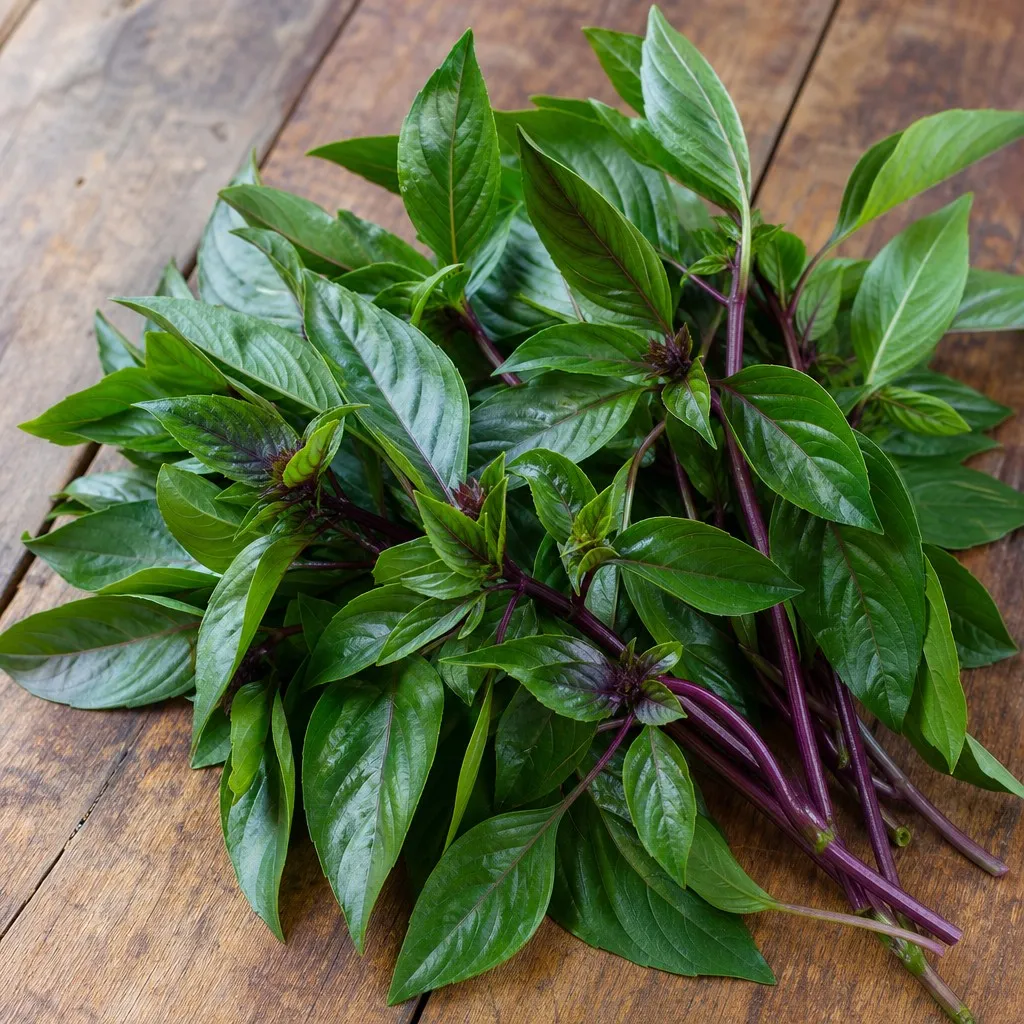
| Appearance | Dark green, glossy leaves; purple stems and flowers | Slightly lighter green; serrated leaves; no purple stems | Bright green, large soft leaves; green stems |
| Flavour | Anise/liquorice, peppery finish | Peppery, clove-like, intense | Sweet, mild, clove-like, delicate |
| Heat tolerance | Good: holds up to cooking | Good: wilts and darkens quickly but flavour intensifies | Poor: add only at the very end |
| Main Thai uses | Green curry, red curry, stir-fries, garnish | Pad krapow gai, pad krapow dishes | Not traditionally used; substitute only |
| UK availability | Asian supermarkets, some M&S and Waitrose, Ocado | Specialist Asian supermarkets only; grow your own | Every supermarket, widely available |
Thai basil (horapa): the curry basil
Thai basil is what most UK Asian supermarkets and some mainstream supermarkets sell when they label something "Thai basil." It has dark green, slightly glossy leaves with distinctly purple stems, and small purple flowers appear if the plant is left to run. The flavour is unmistakably anise-forward with a peppery finish, bolder and more aromatic than Italian sweet basil, and with none of that sweetness.
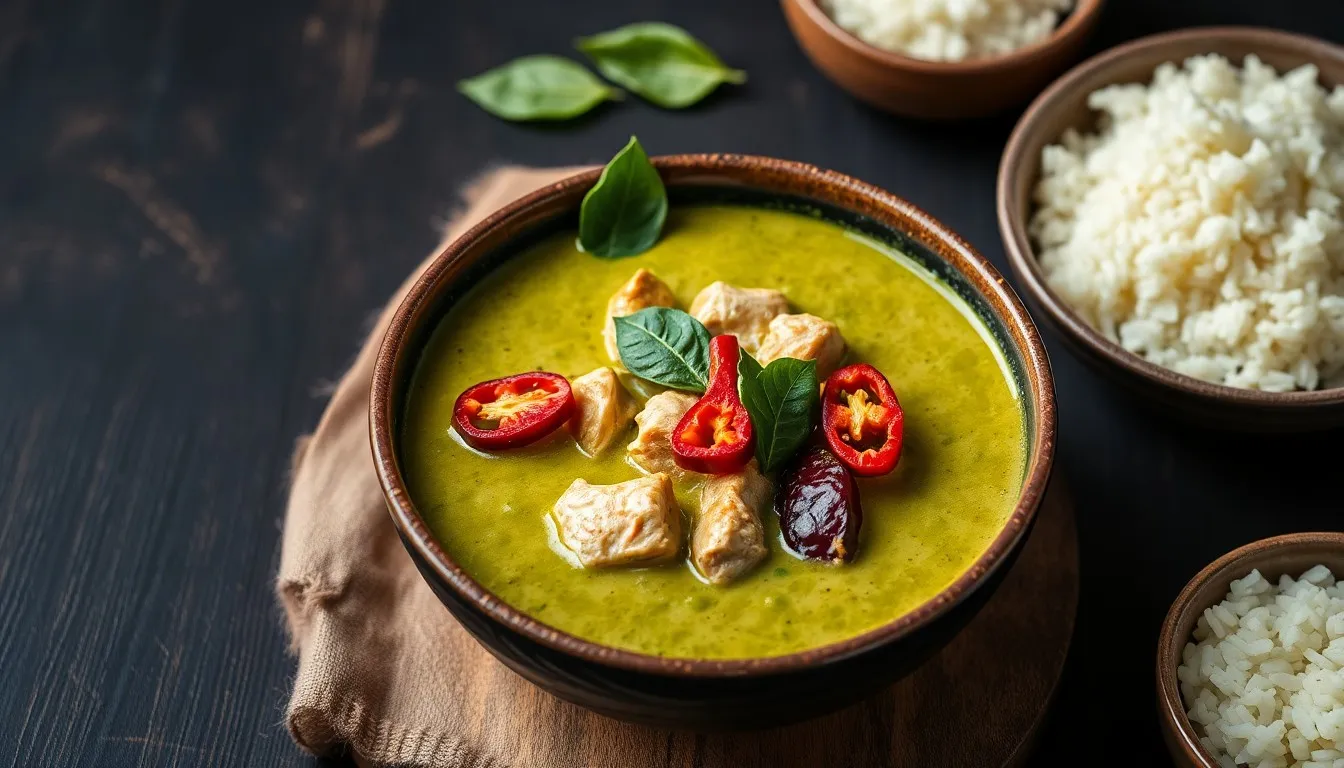
The key practical difference from Italian basil is that horapa holds up to heat. You can stir it through a curry in the last minute of cooking and it will retain both its colour and a good amount of its flavour. Stir it into a Thai green curry just before serving: the heat wilts it gently and integrates it into the sauce. In red curry, the same approach works. It is also used as a garnish on finished dishes.
Holy basil (krapow): the stir-fry basil
Holy basil is the basil that gives pad krapow gai its name ("krapow" is literally the Thai word for this herb). It is not the same as Thai basil, despite what many recipe websites suggest. The leaves are slightly lighter green, more serrated at the edges, and the plant has no purple stems. The flavour is completely different: peppery, clove-like, and intensely savoury in a way that becomes stronger when the herb hits a hot wok.
Can't decide what to eat tonight?
Take our 60-second quiz and we'll pick for you
When you order pad krapow at a Thai restaurant in Thailand, holy basil is what they use. In most UK Thai restaurants, Thai basil (horapa) is used instead because fresh holy basil is simply not available. The dish still tastes good, but it tastes different. If you have eaten pad krapow in Thailand and wondered why the UK version seems slightly off, this is very likely the reason.
Holy basil wilts quickly and darkens in the pan; this is normal and expected. It goes in at the very end of cooking, typically in the last 30 seconds, and is tossed through the hot wok until just wilted. The intensified peppery flavour that comes from this brief cooking is the defining characteristic of a proper pad krapow.
Thai basil vs Italian basil
Italian sweet basil is what you find in every UK supermarket: the fresh basil sold in pots next to the tomatoes. It has large, soft, bright green leaves and a mild, sweet, clove-like flavour. It wilts almost instantly when it hits heat and loses most of its flavour if cooked for more than a few seconds.
Can you use Italian basil instead of Thai basil? Yes, in an emergency. Use slightly more than the recipe specifies, and add it at the very last moment, not mid-cook. The dish will taste sweet where it should taste anise-peppery, and the texture will be softer, but it will still work. It is a reasonable substitute in curries where the basil is there as much for colour and freshness as for flavour.
What Italian basil cannot do is replace holy basil in pad krapow. The flavour profiles are too different. If you make pad krapow with Italian basil, you get a pleasant chicken stir-fry; you do not get pad krapow.
Where to buy Thai basil in the UK
Thai basil (horapa) is reasonably easy to find. Most Asian supermarkets stock it fresh. Ocado carries it regularly. Some M&S Simply Food and Waitrose branches stock it in the fresh herbs section, though availability varies by branch. Sainsbury's and Tesco rarely stock it fresh, but their larger stores occasionally carry it alongside other specialist herbs.
Holy basil (krapow) is a different matter. Fresh holy basil is hard to find anywhere in the UK outside of specialist Asian supermarkets in larger cities. If you are in London, Manchester, or Birmingham, a well-stocked Chinese or Thai supermarket may carry it. For everyone else, growing your own is the most reliable option. Seeds are available online from Thai Food Online (thai-food-online.co.uk) and specialist herb suppliers such as Victoriana Nursery Gardens. Holy basil grows well in pots on a sunny windowsill during summer months.
Growing Thai basil at home is straightforward. Seeds are available from most garden centres. Both varieties prefer warmth and a sheltered sunny spot. Harvest regularly by cutting stems back to the first pair of leaves and the plant will keep producing throughout the growing season.
Thai basil substitutes
For Thai basil (horapa): Italian basil is the closest widely available substitute. To approximate the anise note, add two or three fresh mint leaves alongside the Italian basil; this brings back some of the aromatic complexity without being exactly right. Use this combination in curries rather than in dishes where the basil flavour is central.
For holy basil (krapow): Thai basil is the best substitute, even though it is not authentic. To get closer to holy basil's peppery clove character, add a small amount of fresh mint to Thai basil (roughly one mint leaf for every five or six basil leaves). It will not taste the same as the real thing, but it is a better approximation than plain Thai basil or Italian basil alone.
Frequently asked questions
Is holy basil the same as Thai basil?
No. They look similar but are different varieties with distinct flavours. Holy basil (krapow) is peppery and clove-like; Thai basil (horapa) has a sweet anise note. Pad krapow gai is made with holy basil. If a recipe calls for Thai basil in pad krapow, it is compromising on authenticity because holy basil is harder to find in the UK.
Can I substitute Italian basil for Thai basil?
In a pinch, yes. Italian sweet basil lacks the anise flavour and does not hold heat as well. Add it at the very end of cooking and use slightly more than the recipe says. The dish will taste different but still work. See the substitutes section above for ways to get closer to the flavour profile.
Where can I find holy basil in the UK?
Fresh holy basil is hard to find. Your best option is a specialist Asian supermarket in a larger city, or growing your own (seeds are available online from Thai Food Online and other herb suppliers). In most UK Thai restaurant dishes, Thai basil is used in place of holy basil because fresh holy basil is not available to them either.
Can you grow Thai basil at home?
Yes, and easily. Thai basil grows well on a sunny windowsill or outside in summer. Seeds are available from most garden centres. It does better in warmth than the Italian variety and will keep producing leaves if you harvest regularly rather than letting it run to flower.



Comments