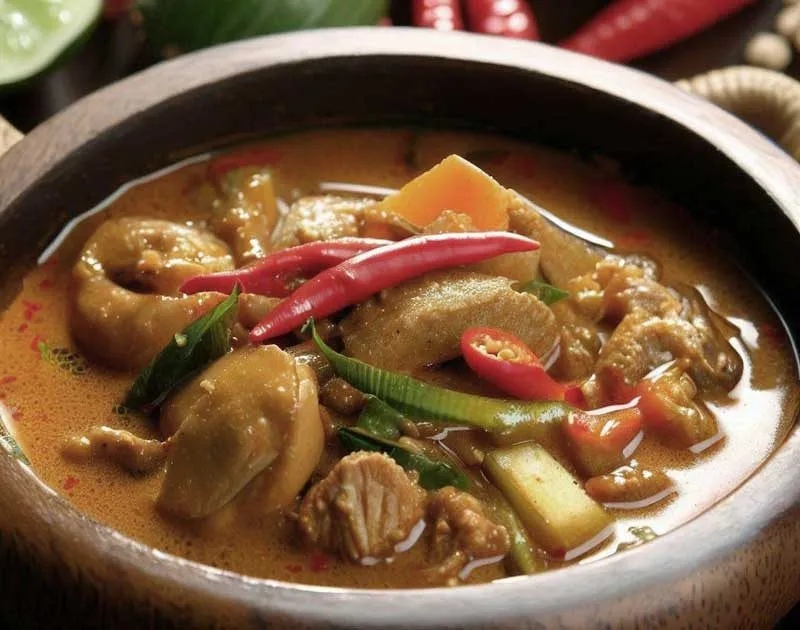
Most Thai curries are gluten free. The core ingredients (curry paste, coconut milk, vegetables and meat) contain no gluten. The risk comes from certain condiments and commercially prepared products that may include additives. Here is what to watch out for. If you're also wondering about the broader nutritional picture, see my post on whether Thai food is healthy.
Understanding Gluten Allergies
People with celiac disease or gluten sensitivity need to be careful even with small traces of gluten, which can trigger significant digestive and immune reactions. Thai food is generally a safer option than many cuisines, but it is not automatically gluten free, and a few specific ingredients need checking.

Thai Curries: Are Thai Curries Gluten Free?
The answer is yes, most Thai curries are gluten free. Unlike many Western dishes that use flour as a thickener, Thai curries are built on curry paste and coconut milk, neither of which contains gluten in their natural form. That said, there are a few ingredients worth checking carefully.
The Key Ingredients of a Thai Curry: Curry Paste & Coconut Milk

Thai Curry Pastes
In most cases, traditional Thai curry paste is gluten-free. The core ingredients of Thai curry paste, such as lemongrass, ginger, garlic, and spices, are naturally gluten-free.
This makes the majority of Thai curry pastes safe for individuals who are gluten-conscious or have gluten sensitivities.
However, it’s important to exercise caution when purchasing pre-packaged curry paste, as some commercially available options might include additives or thickeners that could potentially contain gluten.
Always read the label carefully and look for products that explicitly state that they are gluten-free if you have gluten allergies or sensitivities.
If you’re unsure or have concerns about a specific brand or type of curry paste, you can also consider making your own curry paste at home using fresh ingredients to ensure its gluten-free status.
Typical Ingredients Used in Thai Curry Pastes:
| Ingredient | Flavour and Role in Curry Paste | Gluten |
|---|---|---|
| Lemongrass | Adds citrusy aroma and flavour | Gluten-free |
| Galangal | Offers earthy and slightly spicy notes | Gluten-free |
| Garlic | Provides depth and pungency | Gluten-free |
| Shallots | Imparts sweetness and complexity | Gluten-free |
| Dried Red Chillies | Infuses heat and a deep red colour | Gluten-free |
| Coriander Seeds | Enhances overall depth of flavour | Gluten-free |
| Cumin Seeds | Adds warm and nutty undertones | Gluten-free |
| Shrimp Paste (Kapi) | Brings umami and depth to the paste | May contain traces |
| Kaffir Lime Zest | Contributes citrusy and herbal brightness | Gluten-free |
| Thai Basil Leaves | Offers an aromatic, fresh element | Gluten-free |
| White Pepper | Adds subtle heat and depth | Gluten-free |
| Salt | Balances flavours and enhances overall taste | Gluten-free |
Thai Coconut Milk:

Pure, unsweetened coconut milk is naturally gluten free because it contains only coconut flesh and water. It forms the base of most Thai curries, which is one reason those curries are generally safe for people avoiding gluten.
Watch out for: Pre-packaged coconut milk sometimes contains emulsifiers, stabilisers or thickeners that may include gluten, so always check the label. Some Thai restaurants in the West also add flour-based thickeners to their curries to reduce costs. If you have celiac disease, ask the staff to confirm with the kitchen that no flour thickeners are used, because a verbal assurance is not enough.
Typical Ingredients Used in Thai Coconut Milk:
| Ingredient | Role in Coconut Milk | Gluten-Free |
|---|---|---|
| Coconut Flesh | The main source of the milk | Gluten-Free |
| Water | Used to extract the coconut milk | Gluten-Free |
| Emulsifiers | Often added to prevent separation | Depends on source (check label) |
| Stabilizers | Maintains consistency and texture | Depends on source (check label) |
| Preservatives | Extends shelf life | Depends on source (check label) |
| Sweeteners | May be added for flavoured versions | Usually Gluten-Free |
Please be aware that the status of certain additives (like emulsifiers, stabilizers, and preservatives) can vary depending on the source and manufacturer. Always check the label or contact the manufacturer if you have specific concerns about gluten content.
Hidden Sources of Gluten in Thai Cooking
Whilst Thai curries are naturally gluten-free, several common Thai condiments and cooking practices can introduce gluten. Understanding where it hides matters for anyone with celiac disease or gluten sensitivity.
Soy Sauce and Tamari
This is the biggest hidden source of gluten in Thai cooking. Standard soy sauce is made from fermented soybeans and wheat, and contains significant gluten. Many Thai restaurants use standard soy sauce without question. If you have celiac disease, this alone can make a curry unsafe.
Gluten-free alternatives:
- Tamari: soy sauce made without wheat. Widely available and specifically labelled "gluten-free". Flavour is slightly different but acceptable in curries.
- Coconut aminos: made from coconut sap. Lower sodium than soy, slightly sweeter. Works well in Thai cooking.
- Fish sauce: already prominent in Thai cooking and naturally gluten-free (though check your specific brand).
Oyster Sauce
Many Thai stir-fries and some curry-adjacent dishes use oyster sauce. Standard oyster sauce often contains wheat flour as a thickener. You must check the label, as it is not automatically gluten-free. Brands to look for: Megachef, Dynasty, or any explicitly labelled "gluten-free".
Flour-Based Thickeners in Restaurants
Some Western Thai restaurants (particularly cheaper establishments) thicken their curries with wheat flour instead of relying on the natural body of coconut milk and curry paste. This is done to reduce costs and speed up cooking. If you have celiac disease, always ask the kitchen directly whether they use flour thickening. Don’t assume "curry" means naturally thickened.
Cross-Contamination
Many Thai restaurants share preparation surfaces, woks, and utensils between dishes. If a curry is cooked on a surface that was recently used for a wheat noodle dish, cross-contamination is possible. For strict celiac disease management, inform the kitchen and ask them to use clean equipment.
Shopping Guide: Gluten-Free Thai Curry Paste Brands
Thai curry and gluten FAQ
Is Thai curry paste gluten free?
Traditional Thai curry paste made from scratch is gluten-free (lemongrass, galangal, chillies, garlic). However, commercially produced pastes may contain additives, fillers, or thickening agents that contain gluten. Always check the label for gluten-free certification or contact the manufacturer.
Is coconut milk gluten free?
Pure coconut milk is naturally gluten-free (coconut flesh + water only). Some brands add emulsifiers or stabilisers that may contain gluten—always read the label. Thai restaurants sometimes add flour-based thickeners to coconut curry, so ask the kitchen for confirmation.
What hidden sources of gluten are in Thai food?
Main sources: (1) Soy sauce—standard tamari contains wheat; use tamari or coconut aminos. (2) Oyster sauce—often contains wheat flour; verify with brand. (3) Fish sauce—pure fish sauce is gluten-free, but some brands add fillers. (4) Flour-based thickeners used in Western Thai restaurants. (5) Cross-contamination in shared kitchen equipment.
How do I order Thai curry safely if I have celiac disease?
Ask the kitchen to: (1) Confirm no flour thickeners are added. (2) Verify all sauces are gluten-free (soy sauce, oyster sauce, fish sauce brands). (3) Confirm no cross-contamination with shared utensils/cooking surfaces. (4) Provide curry paste ingredient list if available. Request they inform you of any uncertainty rather than guess.
What sauces in Thai cooking contain gluten?
Soy sauce (regular) contains wheat—use tamari or coconut aminos instead. Oyster sauce often contains wheat flour as a thickener—check the label (Megachef and Dynasty brands are gluten-free). Fish sauce is naturally gluten-free but verify the brand. Cornstarch thickeners are gluten-free; wheat flour thickeners are not.
What brands of Thai curry paste are certified gluten-free?
Mae Ploy (red, green, yellow pastes) are gluten-free and clearly labelled. Maesri (range of pastes) are gluten-free. Thai Kitchen brand pastes are gluten-free. Always check the label or contact the brand directly, as formulations can change. When in doubt, make your own paste from fresh ingredients.
Can I make Thai curry at home if I'm gluten-free?
Absolutely. Make your own curry paste from scratch (lemongrass, galangal, chillies, garlic, shallots, shrimp paste). Use pure coconut milk, fish sauce (check brand), and for soy sauce use tamari or coconut aminos. Cornstarch or arrowroot can thicken if needed. Home-cooked gives you complete control.
Are oyster sauce and fish sauce gluten-free?
Fish sauce (pure) is naturally gluten-free—check your brand has no additives. Oyster sauce often contains wheat flour thickener—look for gluten-free brands (Megachef, Dynasty, or look for 'gluten-free' labelling). Always verify the specific brand you're using rather than assuming.
If you’re making curry at home, here are brands that are confirmed gluten-free:
| Brand | Product | Gluten-Free Status | Availability |
|---|---|---|---|
| Mae Ploy | Green, Red, Yellow, Panang Pastes | ✓ Certified gluten-free | Widely available (UK supermarkets, online) |
| Maesri | Green, Red, Yellow, Panang, Massaman Pastes | ✓ Gluten-free | Asian grocers, online |
| Thai Kitchen | Green, Red, Yellow Pastes | ✓ Gluten-free | Supermarkets, health food shops |
| Thai Taste | Green, Red Pastes | ✓ Gluten-free | Online, Asian grocers |
| Thainess | Curry Pastes (various) | ✓ Gluten-free | Speciality shops, online |
| Homemade | Made from fresh ingredients | ✓ Completely gluten-free | Your kitchen |
Always read the individual product label and look for "gluten-free" certification or contact the manufacturer if unsure.
Can't decide what to eat tonight?
Take our 60-second quiz and we'll pick for you
Fish Sauce Safety: A Hidden Nuance
Fish sauce (nam pla) is naturally gluten-free because it is made from fermented fish and salt only. However, some brands add wheat-based hydrolysed vegetable protein (HVP) as a filler or flavour enhancer. This turns a naturally safe ingredient into a gluten risk.
Fish sauce brands to avoid (may contain wheat): Three Crabs, some store-brand Asian fish sauces
Fish sauce brands that are safe: Red Boat, Megachef, Rufina and Golden Boy are all pure anchovy and salt with no fillers
How to verify: Check the label. If it says only "fish, salt, water" it is safe. If the label lists "hydrolysed vegetable protein" or "wheat", skip it.
Celiac Disease vs. Gluten Sensitivity: Different Risk Levels
Not all gluten avoidance is the same. Your safety protocol depends on your condition:
Gluten Sensitivity (Non-Celiac)
Mild digestive discomfort from gluten. Risk tolerance: higher. At restaurants, focus on avoiding obvious sources (soy sauce, oyster sauce, wheat noodles). Cross-contamination from a shared utensil is unlikely to cause problems. Ordering confidence: medium.
Celiac Disease
Autoimmune reaction to gluten at any level. Risk tolerance: zero. The FDA defines "gluten-free" as ≤20 parts per million (ppm). Even a dusting of flour from a shared cutting board can trigger an immune response. At restaurants, you need dedicated prep surfaces, separate utensils, and explicit verification of all ingredients. Cross-contamination is a real risk. Ordering confidence: lower (safer to cook at home).
Restaurant safety for celiac: Ask not just "Is this gluten-free?" but "Can you prepare this using completely separate utensils and a clean cutting board?" If they hesitate, order something else.
Ordering Thai Curry at Restaurants: A Safe Approach
If you have celiac disease or gluten sensitivity, don’t rely on the restaurant to know whether their curry is gluten-free. Here’s a step-by-step approach:
Before You Order: The Vetting Checklist
- Ask to speak with the chef or kitchen manager. Not the server, because they may be guessing.
- Ask these specific questions in order:
- "Do you make your curry paste fresh, or do you use pre-made paste from a supplier/brand?"
- If pre-made: "Which brand? Can I see the label or package?" (Verify it’s a safe brand like Mae Ploy or Maesri)
- If fresh: "What ingredients do you use in your curry paste?" (Verify no wheat flour or suspicious additives)
- "What type of soy sauce do you use? Is it tamari or regular soy sauce?" (Regular soy = contains wheat)
- "What brand of fish sauce?" (Verify it is Red Boat, Megachef or Rufina, not Three Crabs)
- "Do you use oyster sauce? If so, which brand?" (Most contain wheat flour)
- "Do you add any flour as a thickener, or do you rely on the natural body of coconut milk and paste?"
- "Can you prepare this using completely separate utensils, cutting board, and cookware?" (Essential for celiac)
- "Will you use a clean wok or dedicated fryer? No cross-contact with wheat noodles or other gluten-containing dishes?"
- Red flags: If they hesitate, can’t answer, or seem to be guessing, order something else or cook at home.
- Green flags: Chef can name the specific brands they use and explain their preparation process with confidence.
Safer Curry Choices
Green, Red, and Panang curries made with fresh curry paste and coconut milk are typically safer than stir-fries (which use soy/oyster sauce) or noodle dishes (which involve flour). Tom Kha Gai (coconut soup) is often very safe because it has minimal sauce ingredients, just paste and coconut.
Making Gluten-Free Thai Curry at Home
The safest option is to make curry yourself. Here’s a simple approach:
Homemade Curry Paste (Gluten-Free)
Blend together:
- Fresh lemongrass (2–3 stalks, white part only)
- Galangal (2 cm piece) or fresh ginger
- Thai chillies (2–4, depending on heat preference)
- Garlic (3–4 cloves)
- Shallots (2)
- Kaffir lime zest (1 lime, zest only)
- Shrimp paste (kapi), 1 tsp (optional but traditional)
- Coriander seeds, 1 tsp
- Salt to taste
This makes a green curry paste. For red curry, use red chillies instead of green. The result is completely gluten-free and far fresher than store-bought.
The Curry
- Heat 1 tbsp oil in a pan and fry the curry paste for 1–2 minutes.
- Add 400 ml coconut milk and bring to a simmer.
- Add your protein (chicken, prawns, tofu) and vegetables (aubergine, peppers, Thai basil).
- Simmer for 10–15 minutes.
- Season with fish sauce (check brand) and palm sugar or honey.
- Garnish with fresh Thai basil and kaffir lime leaves.
No soy sauce, no oyster sauce and no flour, just authentic gluten-free curry.
TLDR: Is Thai Curry Gluten Free?
Authentic Thai curry is naturally gluten-free. However, hidden sources like soy sauce, oyster sauce, and flour thickeners (used in some restaurants) can introduce gluten.
For celiac disease: always ask the kitchen about sauces, thickeners, and cross-contamination. For home cooking: use certified gluten-free curry paste or make your own, use tamari instead of soy sauce, and verify your other condiments. When in doubt, cook at home.
Other Popular Thai Dishes That Are Usually Gluten Free
| Category | Gluten-Free Thai Foods |
|---|---|
| Starters | Fresh Spring Rolls |
| Chicken Satay | |
| Som Tum (Green Papaya Salad) | |
| Soups | Tom Yum (Spicy Shrimp Soup) |
| Tom Kha Gai (Coconut Chicken Soup) | |
| Gaeng Jued Woon Sen (Clear Glass Noodle Soup) | |
| Curries | Green Curry |
| Red Curry | |
| Panang Curry | |
| Massaman Curry | |
| Noodles & Rice | Pad Thai |
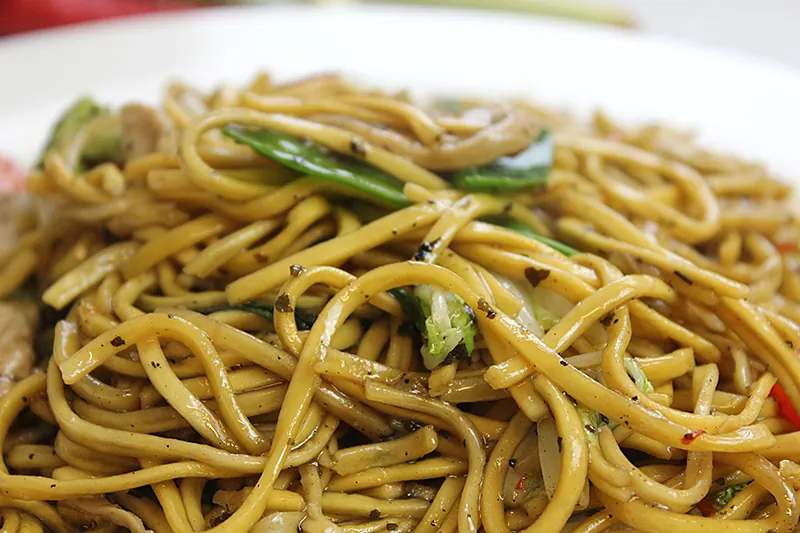
| Pad See Ew | |
| Khao Pad (Fried Rice) | |
| Pad Kee Mao (Drunken Noodles) | |
| Stir-Fries | Pad Pak (Stir-Fried Vegetables) |
| Gai Pad Med Mamuang (Cashew Chicken) | |
| Pad Prik King (Thai Red Curry Stir-Fry) | |
| Seafood | Pla Rad Prik (Crispy Fish with Chilli Sauce) |
| Hor Mok Talay (Seafood Curry Custard) | |
| Desserts | Mango Sticky Rice |
| Tub Tim Grob (Water Chestnut in Coconut Milk) | |
| Khanom Chan (Layered Thai Dessert) |

Comments