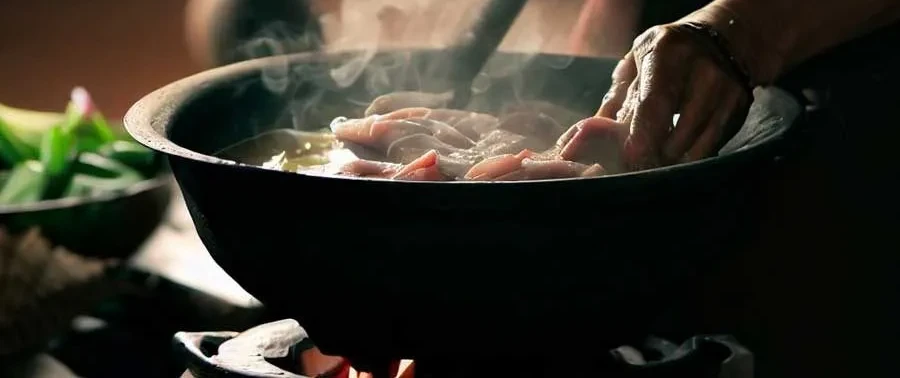
If you want to start cooking Thai food at home, start with chicken. These are the five chicken recipes I recommend to everyone who asks me where to begin; each one teaches a different technique, and every one of them is achievable on a weeknight with ingredients you can find in a UK supermarket.
Why Chicken Works So Well in Thai Cooking
Chicken is the most versatile protein in Thai cooking. It takes on marinades quickly, cooks fast over high heat, and doesn't overpower the aromatics. It also works across every cooking method: stir-fried, simmered in curry, cooked in broth, or minced and tossed with herbs. That flexibility is why so many of the best beginner-friendly Thai recipes use chicken.
One tip before you start: use chicken thigh rather than breast wherever you can. It stays juicy at the high temperatures Thai stir-frying demands, and it's more forgiving if you overshoot the cooking time by a minute. It's also what most cooks in Thailand use.
1. Pad Krapow Gai — Thai Basil Chicken
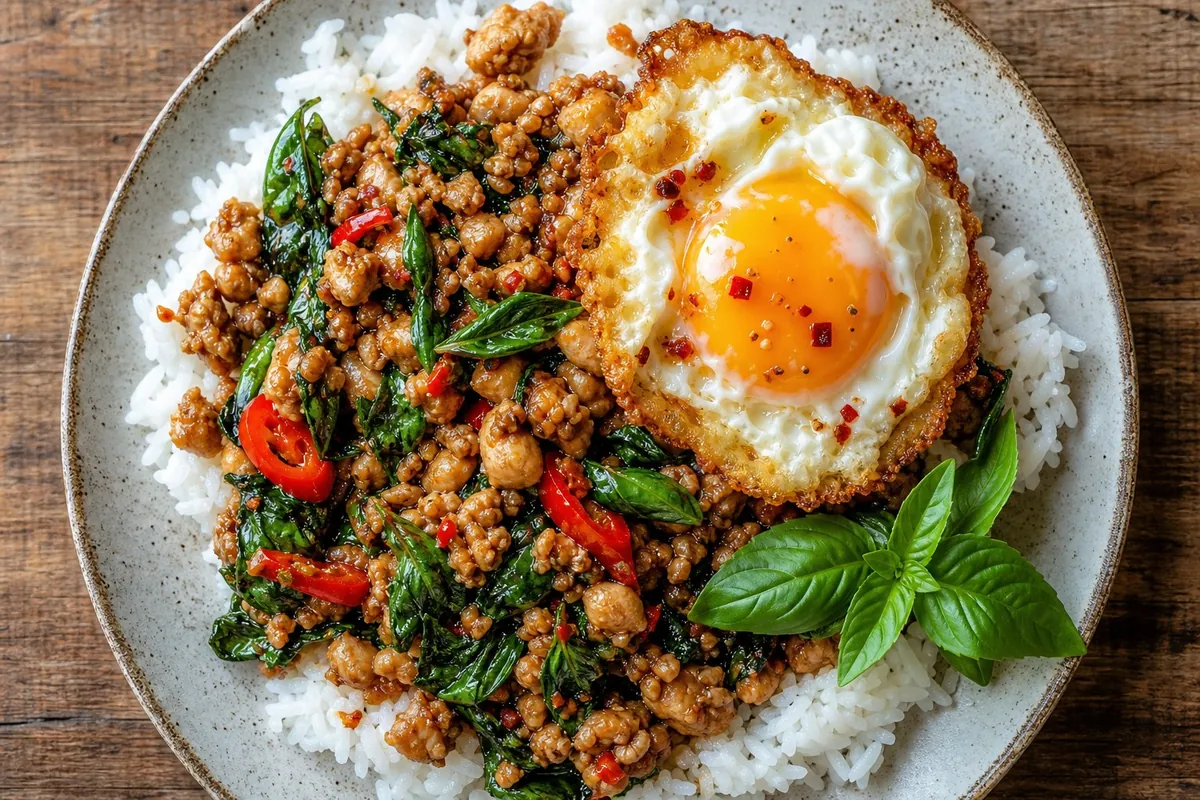
If I could only teach you one Thai dish, it would be this one. Pad krapow gai is what Thais actually eat for lunch: minced chicken stir-fried with garlic, chillies and holy basil, served over rice with a crispy fried egg on top. It's on the table in 15 minutes and uses one pan.
The dish teaches you the core Thai stir-fry rhythm: aromatics into hot oil, meat, sauce, herbs, done. Once that rhythm is in your hands, half of Thai cooking opens up. If you can't find holy basil (krapow), Thai sweet basil works (different flavour, still delicious).
Don't skip the fried egg. In Thailand it's a kai dao: cracked into properly hot oil so the white blisters and crisps at the edges while the yolk stays runny. Breaking that yolk over the spicy chicken is half the pleasure of the dish, and it softens the chilli heat beautifully.
The biggest mistake I see is drowning it in sauce. Krapow is a dry-ish stir-fry: just enough fish sauce, oyster sauce and a little dark soy to coat the chicken, not a puddle. If yours comes out swimming, halve the liquid next time and let the wok do the work.
2. Chicken and Ginger Stir-Fry — Gai Pad King
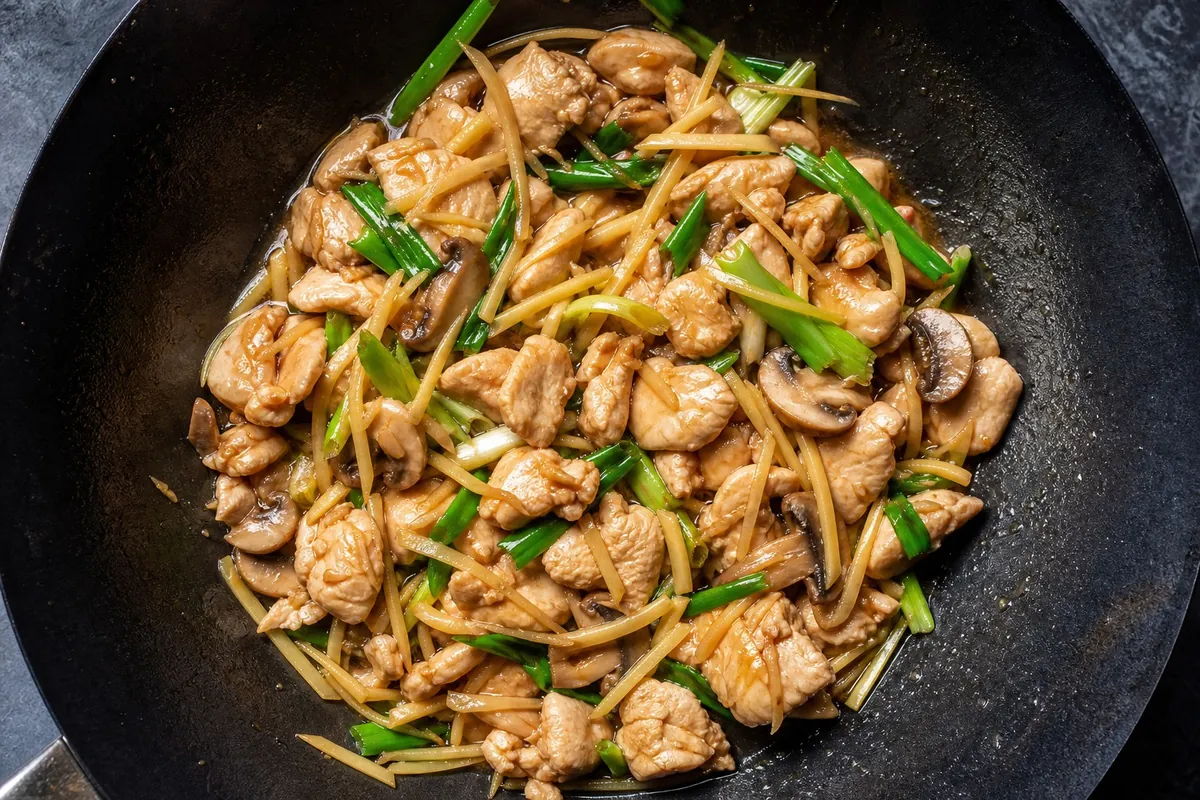
The gentlest dish on this list, and the one to cook for anyone who claims they don't like spicy food. Gai pad king is built on fresh ginger, mushrooms and spring onions in a light savoury sauce; there's no chilli in it at all unless you choose to add some.
It's also the best recipe for learning to control a wok at high heat, because nothing in it burns easily. The ginger should be cut into fine matchsticks, and don't be shy with it; it's the whole point of the dish.
The traditional version uses dried ear mushrooms, which you'll find cheaply in any Asian supermarket; they keep for years and bring a lovely slippery crunch. Button or chestnut mushrooms are a perfectly good substitute if that's what's in the fridge; the sauce carries the dish either way.
Speaking of the sauce, it leans on seasoning sauce: one of those bottles that looks mysterious on the shelf but turns up in half of Thai home cooking. Worth buying once; you'll use it far more than you expect.
3. Thai Chicken and Cashew Nut Stir-Fry — Gai Pad Med Mamuang
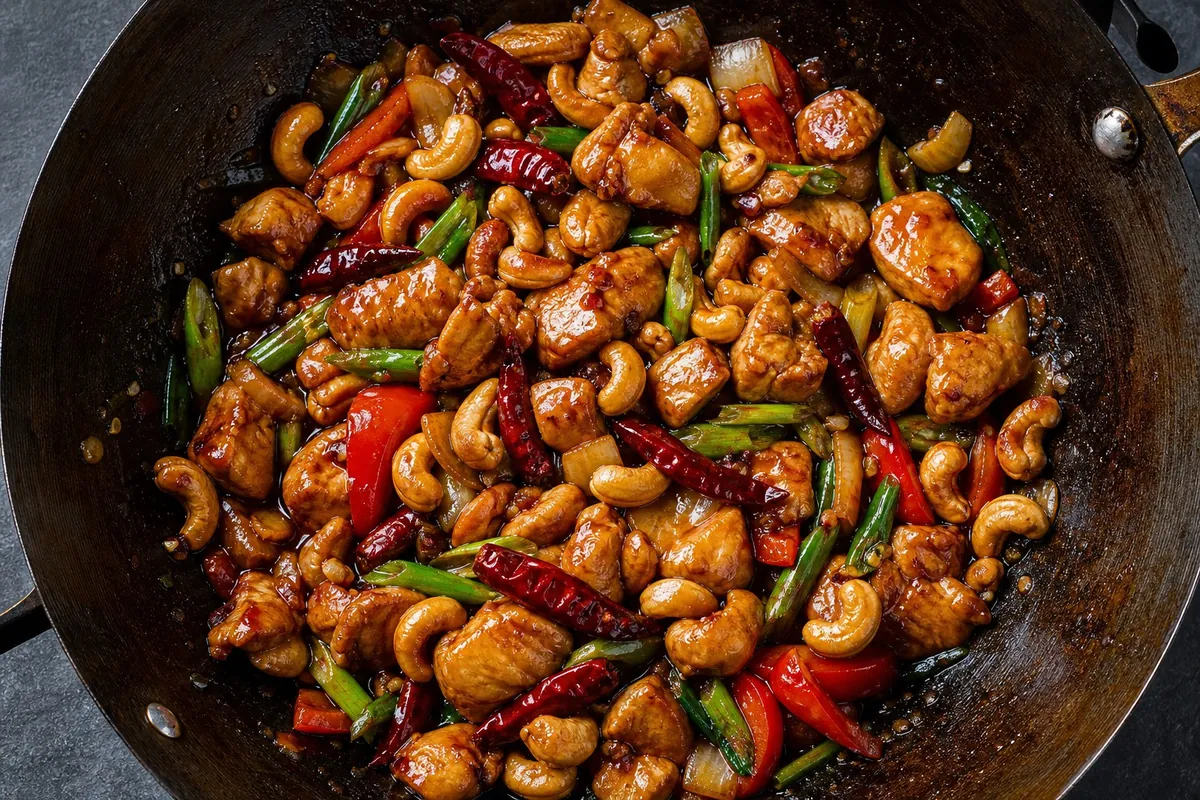
The takeaway favourite, and easier at home than you'd think. Chicken and cashew stir-fry balances tender chicken, roasted cashews and dried chillies in a glossy, slightly sweet sauce. The dried chillies look fierce but eat mild; they're fried whole for aroma, not blended into the sauce.
The trick that lifts this from good to takeaway-quality: toast the cashews in the dry wok first until golden, set them aside, and only return them at the very end so they stay crunchy.
The restaurant gloss comes from the sauce balance: oyster sauce for body, a little sugar to round it, and a splash of water so it clings rather than claggs. Get the wok properly hot before the chicken goes in and you'll get those lovely caramelised edges instead of pale, steamed meat.
Spring onion cut into chunky batons goes in right at the end with the cashews; it should still have bite when it hits the plate. Serve it over jasmine rice and you've matched any takeaway in town.
4. Thai Green Curry with Chicken — Gaeng Keow Wan Gai
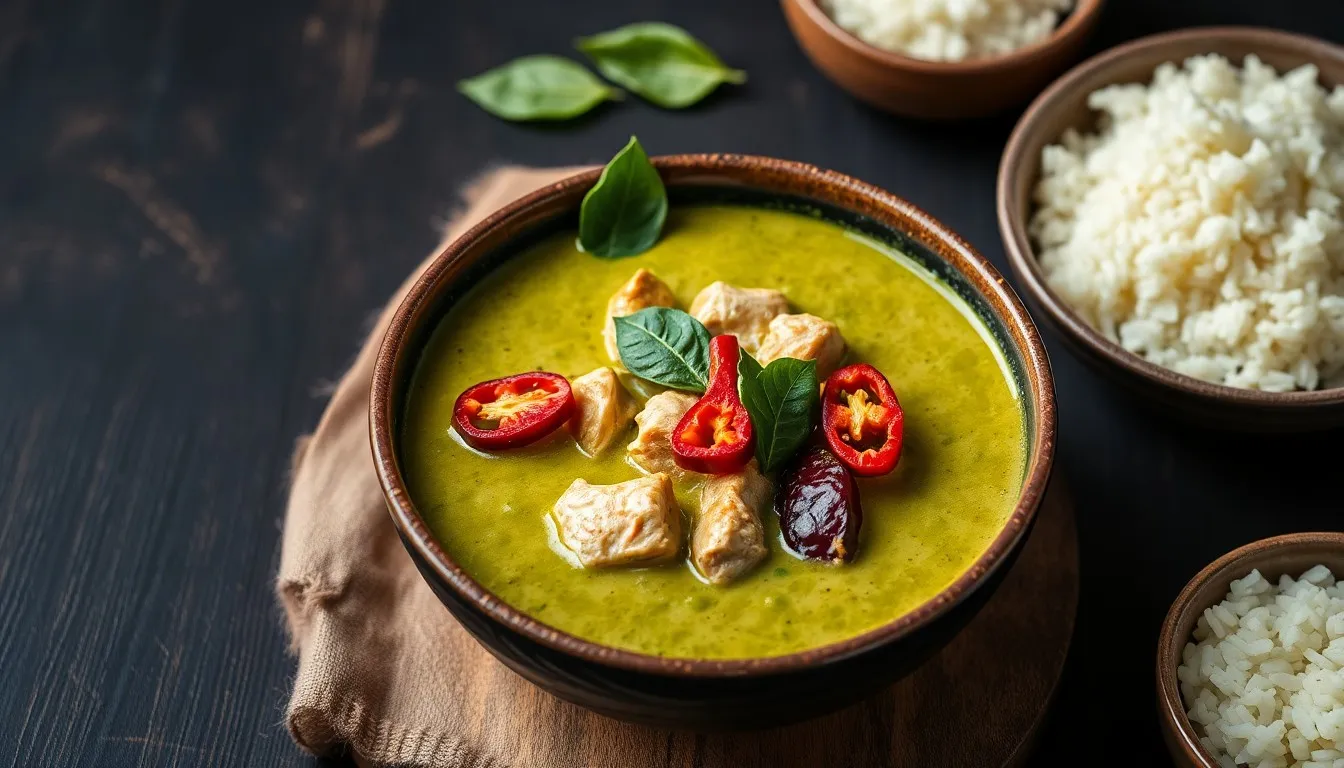
Your first Thai curry. My green curry recipe is the one my family has cooked for three generations, and it teaches the most important curry skill there is: frying the paste in coconut cream until the oil splits out before adding anything else. Skip that step and you get soup; do it properly and you get a curry with real depth.
Shop-bought paste is fine for a weeknight; even in Thailand, plenty of home cooks buy paste from the market. If you want to go further, my green curry paste guide covers making it from scratch.
For the vegetables, Thai aubergines and pea aubergines are traditional, but don't let their absence stop you; bamboo shoots from a tin, green beans or ordinary aubergine all work well. What matters is adding them late enough that they keep some texture against the soft chicken.
Finish with a handful of Thai sweet basil stirred through off the heat, and serve with plenty of jasmine rice; green curry is saucier than the stir-fries above, and the rice is there to catch every spoonful.
5. Tom Kha Gai — Coconut Chicken Soup
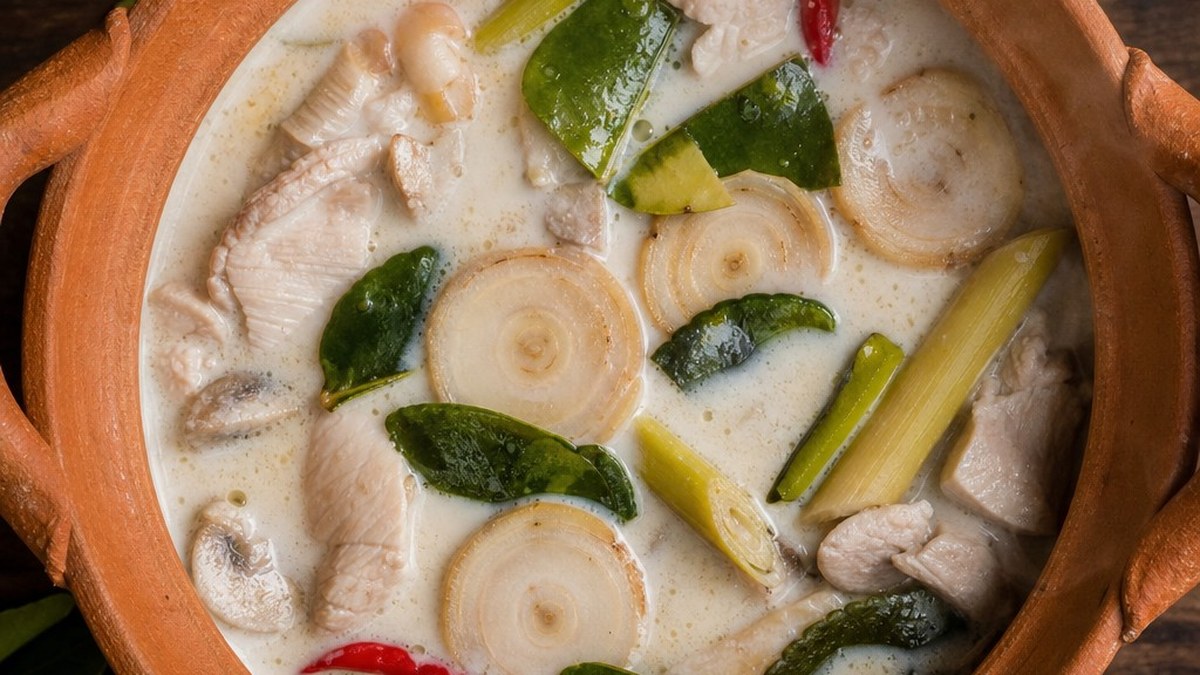
The one to cook when you want something soothing rather than fiery. Tom kha gai poaches chicken gently in coconut milk infused with galangal, lemongrass and makrut lime leaves. It's rich, aromatic and barely spicy; the chilli is there as a whisper, not a shout.
It also teaches you the most useful Thai flavour lesson: the aromatics (galangal, lemongrass, lime leaves) are there to perfume the broth, not to be eaten. Push them to the side of the bowl like Thais do.
A word on galangal: it looks like ginger but tastes nothing like it (sharper, piney, almost citrusy) and it's not optional here. The "kha" in tom kha gai literally means galangal. Most larger supermarkets now stock it fresh, and it freezes well, so buy extra.
Two rules keep the soup silky: never let the coconut milk reach a hard boil (it splits), and add the lime juice off the heat just before serving. Boiled lime turns bitter, but fresh lime added at the end makes the whole bowl sing.
Which One Should You Cook First?
| Dish | Time | Heat Level | What It Teaches |
|---|---|---|---|
| Pad Krapow Gai | 15 min | Medium-hot | The Thai stir-fry rhythm |
| Ginger Stir-Fry | 20 min | None | Wok control |
| Cashew Stir-Fry | 20 min | Mild | Sauce balance, texture |
| Green Curry | 35 min | Hot | Frying curry paste properly |
| Tom Kha Gai | 30 min | Very mild | Infusing aromatics |
If you're cooking for spice-shy eaters, start with the ginger stir-fry or tom kha gai. If you want maximum reward for minimum effort, it's pad krapow every time. When something doesn't come out right, our cooking troubleshooting guides cover the most common problems.
Three Tips That Apply to Every Recipe Here
Slice the chicken thin and even. Thai stir-fries cook in minutes, so uneven pieces mean some are dry before others are done. Slightly freeze the chicken for 20 minutes first and it slices cleanly.
Get everything ready before the heat goes on. Thai cooking is slow preparation, fast cooking. Once the wok is hot there's no time to chop anything; every ingredient should be within arm's reach.
Season with fish sauce, taste, adjust. Every Thai dish is corrected at the end: a dash more fish sauce for salt and depth, a pinch of sugar to round it, lime if it needs lifting. Restaurant cooks taste constantly; home cooks should too.
Frequently Asked Questions
What is the easiest Thai chicken recipe for beginners?
Pad krapow gai (Thai basil chicken) is the easiest place to start. It uses one pan, takes about 15 minutes, and the technique (aromatics, meat, sauce, herbs) is the foundation of most Thai stir-fries. It's also very forgiving: minced chicken is hard to overcook.
Should I use chicken breast or thigh for Thai recipes?
Thigh, wherever you can. It stays juicy at the high temperatures Thai stir-frying demands and forgives an extra minute in the pan, where breast turns dry. Thigh is also what most cooks in Thailand use. If you only have breast, slice it thin and pull it off the heat the moment it's cooked through.
Can I cook Thai chicken recipes without a wok?
Yes. A large frying pan on your highest heat works for every recipe on this page. The keys are to get the pan properly hot before the oil goes in, and to cook in batches rather than crowding the pan; crowded chicken steams instead of frying.
What ingredients do I need for Thai cooking at home?
Four bottles cover most of it: fish sauce, oyster sauce, light soy sauce and dark soy sauce. Add garlic, fresh chillies, and palm sugar (or soft brown sugar) and you can cook every stir-fry here. For the curry and soup you'll also want coconut milk, curry paste, and fresh galangal and lemongrass, all available in larger UK supermarkets or any Asian grocer.
Which Thai chicken dish is the least spicy?
Gai pad king (chicken and ginger stir-fry) contains no chilli at all unless you add it. Tom kha gai is the gentlest of the rest; the coconut milk keeps the heat to a whisper. Both are good choices for children or anyone wary of spice.



Comments