Jasmine rice is generally regarded as the most popular rice in Thailand, although sticky rice comes a very close second. Actually, in some parts of Thailand like the north and north-east, sticky rice is much more popular than Thai Jasmine rice. I can guarantee that every single person in the north-east knows how to cook sticky rice! Before you start, make sure you are using the right grain — read my guide on the best rice for sticky rice to make sure you pick the right one.
In a Hurry? Click Here to jump to the YouTube Video
So What is Sticky Rice?
Sticky rice, also known as sweet rice or glutinous rice, is a staple food that transcends borders and culinary preferences throughout Asia. While it may be most famously associated with Thai cuisine, its influence stretches far and wide across the continent. Unlike its distant cousin, Jasmine rice, sticky rice boasts a unique stickiness that defies comparison.
To the untrained eye, the difference between Jasmine rice and sticky rice might not be immediately apparent. Both varieties indeed have a certain degree of stickiness when cooked, especially when compared to the long-grain rice prevalent in Indian dishes. However, the stickiness of sticky rice is in a league of its own. It possesses a remarkable adhesive quality, allowing it to be rolled into compact, hand-held morsels.
One of the charming customs associated with sticky rice is the practice of eating it by hand. Its unique texture allows diners to effortlessly pinch it into a clump, creating the perfect vessel for dipping into a preferred sauce. You may also know it from Thailand’s most popular dessert, sticky rice and mango.

Can You Make Sticky Rice with Jasmine Rice?
A lot of people want to know how to make sticky rice with jasmine rice, but the simple answer is, no, you can’t
Jasmine rice is not the same as sticky rice, and they have different characteristics. Jasmine rice is a long-grain rice variety that is known for its fragrant aroma and slightly sticky texture when cooked, but it is not the same as glutinous or sticky rice.
Sticky rice, also known as glutinous rice or sweet rice, is a short-grain rice variety that is naturally very sticky when cooked. It has a higher starch content compared to jasmine rice, which is what gives it its characteristic stickiness.
If a recipe specifically calls for sticky rice, it’s important to use glutinous or sticky rice, not jasmine rice, to achieve the desired texture and consistency. The two types of rice are not interchangeable in recipes that rely on the stickiness of glutinous rice. Learning how to cook jasmine rice and how to cook sticky rice are two totally different subjects.

How to Cook Sticky Rice in a Steamer
Cooking sticky rice at home is pretty straightforward, and you don’t need a lot of equipment. Basically, you only need a steamer and muslin cloth!

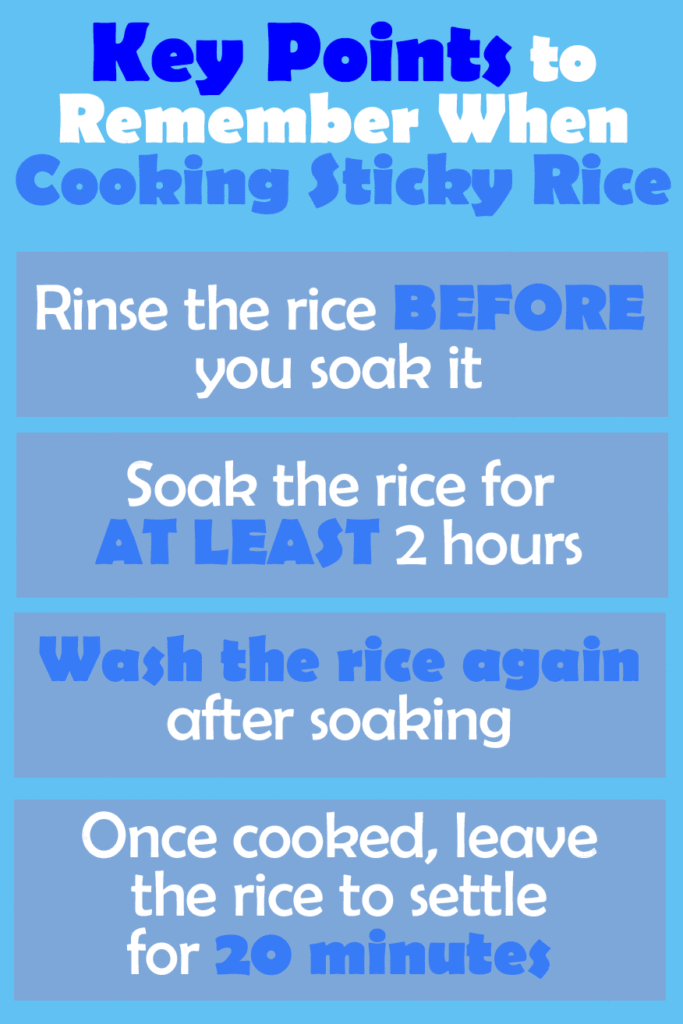
Decide on how much rice you want to cook and put it into a bowl. The next step is to wash the rice under the tap. This step is very important for sticky rice, so don’t skip it, otherwise your rice will end up in a big gloopy mess! Wash it two or three times until the water starts to become clearer.

Next, you have to leave the rice soaking in the water for at least two hours. It’s best if you can leave it to soak overnight, but if you haven’t pre-planned, then two hours is the absolute minimum you can leave your sticky rice before you start steaming it.

Once your rice has finished soaking, you need to wash it again. It’s best to use a sieve this time because you want to strain the water away afterwards. Wash the rice two or three times, and you should notice that the water has become a lot clearer. This means you have got rid of the excess starch which would have caused your rice to become over sticky. This is the most common mistake when people don’t know how to cook sticky rice properly!

Now we are finally ready to start cooking the sticky rice! Once your steamer has begun to boil, place the muslin cloth in the top of the steamer and place your sticky rice on the muslin cloth. Use your hand or a spatula to gently level the rice, then fold the muslin cloth over the rice.
It’s very important to make sure you leave some gaps around the muslin cloth so that the steam can circulate properly. If you don’t then your sticky rice will be cooked underneath but not on top!

Put the lid on and let it steam for 20 – 30 minutes. Use a fork to check it after 20 minutes. Taste a bit if you like to check whether it is ready or not. If not, put the lid back on and give it a few more minutes.
Once your sticky rice has finished cooking, lift the muslin cloth out and pour the rice into a bowl. Place a lid over the bowl and let it settle for a further 20 minutes! This resting step is crucial — it allows the starch to set and the grains to firm up slightly, improving the final texture.

Why the Chemistry Matters: Understanding Glutinous Rice
Sticky rice works because of amylose — a starch component. Glutinous rice has very low amylose (around 0–2%), whilst jasmine rice has 15–20%. Lower amylose means more starch is exposed during cooking, creating that characteristic clumping and adhesiveness. When you wash the rice, you're removing excess surface starch; too much remaining starch causes "gloopy" rice (grains dissolve and the texture becomes mushy). This is why rinsing until the water runs clear is non-negotiable.
The resting step explained: After cooking, steam continues releasing from the grains, causing them to swell slightly. The 20-minute rest allows this to complete and lets gelatinised starch set. Skip this and your rice will feel wet and separate; rushing it is the second-most common mistake after insufficient rinsing.
Troubleshooting: Why Your Sticky Rice Went Wrong
Your rice is gloopy/mushy — what happened?
Cause: Either you didn't rinse enough (excess starch remains), or you overcooked it, or you used too much water.
Fix: If already cooked: spread it on a plate and refrigerate for 1–2 hours. Cold starch firms up. Reheat gently in a steamer. If you want to try again: rinse 5–6 times (not 2–3), ensure water runs completely clear, and use exactly 1:1 rice-to-water ratio.
Your rice is crunchy — what happened?
Cause: Undercooked. The starch didn't absorb enough water.
Fix: If still in the steamer, add 2–3 tablespoons of water to the bottom pot and steam for another 10 minutes. If already plated: add water to the original steamer pot, return the rice to the muslin, and steam again for 5–10 minutes.
Your rice has a wet layer at the bottom — what happened?
Cause: Steam wasn't circulating properly (muslin cloth blocked the gaps), or the bottom pot had too much water and it splashed up.
Fix: Ensure gaps around the muslin cloth for steam circulation. Use only 2–3 inches of water in the bottom pot. Check that the steamer basket sits well above the waterline.
Can't decide what to eat tonight?
Take our 60-second quiz and we'll pick for you
Quick Alternative Methods (When You Forgot to Plan Ahead)
Sticky rice FAQ
How long do you soak sticky rice before cooking?
At least 2 hours minimum, but overnight (8–12 hours) is best. Soaking hydrates the grain evenly and reduces cooking time. If you soak overnight, the rice cooks faster and more consistently. Never skip soaking or cook without it.
Why is my sticky rice too gloopy?
You didn't wash it enough. After soaking, wash the rice 2–3 times until water runs clear—this removes excess starch. Skipping this step is the #1 reason for gluey, overcooked rice. If rice is already cooked, it cannot be fixed.
Can you cook sticky rice in a rice cooker?
Yes, but steaming produces better results. For rice cooker: use a 1:1 rice-to-water ratio, soak rice first, then cook. It works but often produces slightly wetter, less-textured rice than steaming. Steaming is the traditional method.
Can you make sticky rice in a microwave?
Yes, as a last resort. Soak rice overnight, drain well, place in microwave-safe bowl with minimal water, cover loosely, microwave on high for 10–15 minutes. Check at 10 minutes. Quality is lower than steaming, but it works in emergencies.
Why is my sticky rice crunchy on top?
Steam isn't circulating properly around the muslin cloth. Make sure you leave gaps around the edges for steam to circulate, and don't pack the cloth too tightly. Also verify water level in steamer—if too low, steam pressure drops.
What's the difference between sticky rice and glutinous rice?
They're the same thing. "Glutinous" refers to the rice's starch composition (high amylopectin), not gluten. "Sticky" describes the texture when cooked. Thai sticky rice has high starch content (up to 20% amylose) that causes grain clumping.
How long does cooked sticky rice last?
3–4 days in the fridge in an airtight container. Reheat gently with a splash of water (steamer or microwave). Freezing is possible but texture degrades—best eaten fresh. Don't leave unrefrigerated for more than 2 hours.
Why do you rest sticky rice after cooking?
The 20-minute rest allows starch to set and grains to firm slightly, improving texture. Without rest, rice is too soft and falls apart. This step is as important as cooking itself.
Rice Cooker Method (30 mins, no soaking)
Add rice and water at 1:1 ratio. Cook on standard setting. Result: slightly fluffier than steamed, less authentic texture, but fast and reliable. Works for casual weeknight meals.
Hot Soak Method (15 mins total)
Rinse rice, then soak in boiling water for 10 minutes. Drain and steam for 25 minutes (no cold soak needed). This works because hot water accelerates starch gelatinisation; you get steaming benefits in half the time. Texture is nearly identical to cold-soaked rice.
Instant Pot / Pressure Cooker (10 mins, no soaking)
Use 1:1 rice-to-water ratio, high pressure, 8 minutes. Quick release. Result: acceptable texture but slightly wetter than traditional steamed; best for lazy cooking, not for serving guests.
อยากรู้เรื่องอาหารไทยในอังกฤษไหม? ลองดูหน้า อาหารไทยในอังกฤษ ของเราสิ!
Equipment Guide: What to Buy (and DIY Alternatives)
Bamboo cone steamer (teeneung khao neow): £15–25. Best choice if cooking regularly. Insulating properties keep rice warm during serving. Drawback: cracks if not dried carefully after washing.
Metal steamer basket + pot: £20–40. More durable, easier to clean, lasts longer. Drawback: metal conducts heat, rice cools faster during serving.
DIY alternatives if you don't have a steamer: - Cheesecloth draped over a pot of boiling water with a heat-safe bowl underneath (rice sits in the bowl) - Colander lined with cheesecloth, suspended over a pot of boiling water - Rice cooker (mentioned above; less authentic but works)
Muslin cloth: Any clean cotton cloth works. Cheesecloth, old cotton tea towels, even clean linen. The goal is allowing steam through whilst supporting the rice.
Method Comparison: Speed vs. Quality
Steaming (traditional): 2+ hours soak + 25 mins steam = ~2.5 hours total. Texture: excellent. Equipment cost: low-medium. Effort: minimal.
Hot soak: 10 mins soak + 25 mins steam = ~40 mins total. Texture: nearly identical to traditional. Equipment cost: low. Effort: minimal.
Rice cooker: 0 mins soak + 30 mins cook = 30 mins total. Texture: acceptable but fluffier. Equipment cost: high (if buying new). Effort: none.
Instant Pot: 0 mins soak + 10 mins pressure = 15 mins total. Texture: acceptable but wetter. Equipment cost: medium-high. Effort: minimal.
Rice Sourcing & Quality: Does It Matter?
Yes. Thai glutinous rice (sticky rice) from the Northeast (Isaan) is considered superior to lower-grade bulk rice. Look for: short grains, uniform size, no broken pieces, clear packaging (you can inspect). Premium brands (Thai or Vietnamese) cost slightly more but cook more evenly.
Storage of uncooked rice: Keep in an airtight container in a cool, dry place. Humidity causes mould; warmth attracts insects. Properly stored sticky rice keeps for 6–12 months.
Batch Cooking & Meal Prep
You can cook 2–4 cups of rice at once in a large bamboo steamer. Cook in the morning, store in an airtight container in the fridge (keeps 4–5 days). To reheat: steam for 5 minutes, or microwave with a damp paper towel for 2–3 minutes. Cold sticky rice is also served traditionally with larb salads (no reheating needed).
Keeping rice warm for serving: Leave in the steamer basket with the lid on, or cover the serving bowl with a damp cloth. Rice stays warm and moist for 30–45 minutes this way.
Done!




Comments