
You've got everything ready for a pot of tom yum and then realise there's no galangal in the house. It happens to everyone: galangal is the one ingredient British supermarkets rarely stock. So what can you use instead? The honest answer from my kitchen is that nothing is a perfect match for galangal, but you can get a very good tom yum with the right swap. The closest everyday substitute is fresh ginger, ideally with a little extra lime and lemongrass to make up for what ginger lacks.
Here's how each option actually performs, how much to use, and how to keep your tom yum tasting like tom yum.
Why galangal is hard to replace
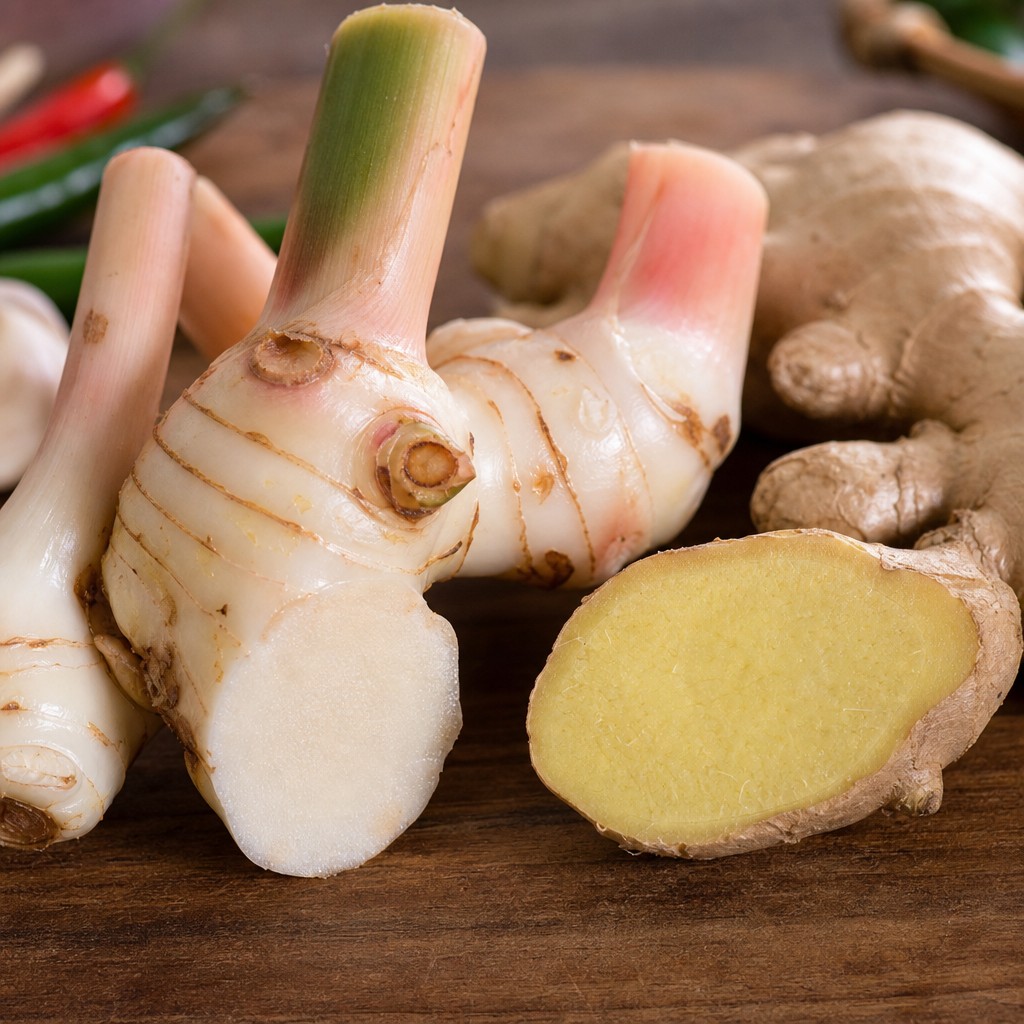
People assume galangal and ginger are interchangeable because they look similar, but they taste quite different. Galangal (kha in Thai) is sharper, more piney and citrusy, almost medicinal, with a peppery edge. Ginger is warmer, juicier and more straightforwardly spicy. In tom yum, galangal's job is that clean, perfumed, slightly resinous note that sits behind the lemongrass and lime, and that exact note is what no substitute fully delivers. To learn more about the root itself, see what is galangal.
One important point: in tom yum the galangal is sliced and simmered to flavour the broth, then left in the bowl (you don't eat it). So a substitute only needs to infuse the soup, not be pleasant to chew. That widens your options.

The best substitutes for galangal in tom yum, ranked
1. Frozen or dried galangal (the real thing, just not fresh)

If you can get galangal in any form, use it. Frozen galangal is sold in many Asian grocers and is almost as good as fresh: slice it straight from frozen. Dried galangal slices work too: soak them in warm water for 20–30 minutes first, then simmer. Galangal paste or the frozen "grated" pucks are also fine for infusing a broth. These all beat any non-galangal swap because they actually taste of galangal.
2. Fresh ginger (the everyday answer)
This is what most people reach for, and it's a reasonable stand-in. Use a little less ginger than the galangal called for (roughly two-thirds) because ginger's heat is more forward and can dominate. Slice it thinly and bruise it so it gives up its flavour to the broth. It won't have galangal's pine-citrus character, so the soup will taste a touch warmer and more "gingery", but it will still be a good tom yum.
You'll see all sorts of ratios online, from one-for-one to half, and that's because it depends on the dish. In a soup like tom yum, where the root simmers and infuses for a while, the ginger flavour builds, so I err on the lighter side (about two-thirds) and taste as I go. In a quick stir-fry there's less time to infuse, so you can go closer to equal. When in doubt, add less and adjust; you can't take ginger back out.
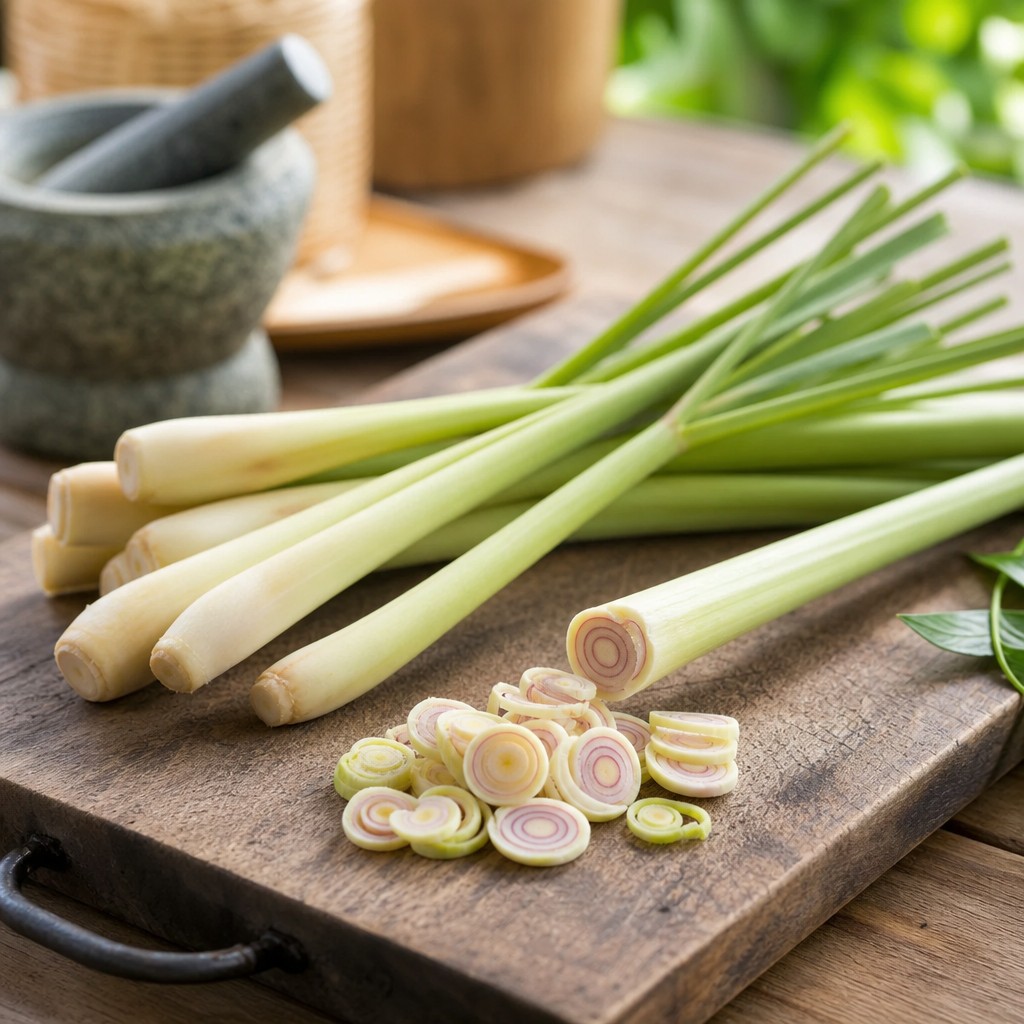
My tip: when you sub ginger, lean harder on the other aromatics: an extra stalk of lemongrass, a couple more kaffir lime leaves, and a little extra lime juice at the end. Those lift the soup back toward galangal's bright, citrusy profile.
3. Ginger plus a citrus-pine boost (the closest fake)
The nearest you'll get to galangal without galangal is to combine ginger with something citrusy and aromatic: ginger plus a strip of lime zest, or ginger plus extra kaffir lime leaf and lemongrass. The ginger covers the warmth and bite; the lime zest and lime leaf mimic galangal's perfumed, slightly piney top note. This is the swap I'd recommend if you want your guests not to notice anything's missing.
4. Fingerroot (krachai): a close cousin if you can find it

If your local Thai grocer stocks it, fingerroot (krachai, sometimes labelled Chinese keys or lesser galangal) is one of the closest matches there is. It's a relative of galangal with an earthy, peppery, faintly lemony aroma, and you can swap it roughly one-for-one. It leans a little earthier and less citrusy than galangal, so it's not identical, but it sits in the same aromatic family in a way ginger doesn't. It's most commonly sold frozen or brined outside Thailand, so it's a "nice if you have it" option rather than an everyday one.
5. A little fresh turmeric (use with care)
Fresh turmeric is a cousin of galangal and adds an earthy, faintly bitter aroma. On its own it isn't a galangal substitute and will tint the soup yellow, but a small piece alongside ginger can add a more complex, root-y depth. Use sparingly; it's easy to overdo.
What not to use
Ground ginger or galangal powder won't work: dried ground spice tastes dusty and flat in a fresh, fragrant broth, so always reach for a root if you can. Don't leave the slot empty either; a pot of tom yum without any aromatic root tastes thin and one-dimensional, and even plain ginger is far better than nothing. Watch the quantity too if you do use ginger: a heavy hand makes the soup taste like ginger tea rather than tom yum. Restraint, plus a squeeze more lime, is the fix.
Purist or pragmatic? Should you just leave it out?
Here's a debate you'll run into, and I think it's worth being honest about. Some Thai cooks feel so strongly that ginger changes tom yum's character that they'd rather you leave galangal out altogether than substitute ginger, the argument being that a ginger swap makes it taste like a gingery Chinese soup rather than Thai tom yum.
My take is more pragmatic. Tom yum still has its lemongrass, kaffir lime leaves, chilli and lime doing most of the heavy lifting, so a measured amount of ginger (with those aromatics boosted) makes a genuinely enjoyable soup, just a slightly different one. So: if you're cooking for guests who know their tom yum and you want it as authentic as possible, omit the galangal rather than force in ginger, and lean harder on the lemongrass and lime. For a weeknight bowl at home, the ginger-plus-trio swap is absolutely worth doing. Both are valid; it just depends who's eating.
How much to use
As a rule of thumb, for a pot of tom yum that calls for about 4–5 slices of galangal, use 3 slices of fresh ginger, thinly cut and bruised, plus an extra kaffir lime leaf or two and a squeeze more lime at the finish. Simmer it with the lemongrass and lime leaves to build the aromatic broth, then fish out the larger pieces before serving, just as you would galangal. For the full method, follow our easy tom yum soup recipe and simply swap the galangal for your chosen substitute.
How to never need a substitute again
The best fix is to keep galangal on hand, because it stores brilliantly. Here in the UK you won't often find it in supermarkets, but it's easy to get if you know where to look:
- Asian and Thai grocers usually carry it fresh, and almost always frozen (peeled and ready to slice); the frozen stuff keeps about 95% of fresh galangal's flavour.
- Online Thai/Asian food shops deliver fresh and frozen galangal across the UK if you don't have a grocer nearby.
- Dried galangal slices and paste are widely stocked and shelf-stable, handy as a backup even if they're a step down from fresh.
And it keeps well once you have it: fresh galangal lasts around three weeks in the fridge, and months in the freezer. The trick I use is to slice a whole knob into coins, freeze them flat on a tray, then tip them into a bag. You can drop a few frozen slices straight into your tom yum broth whenever you need them, no defrosting required. Do that once and you'll never be caught short mid-recipe again.
The bottom line
If you can find galangal in any form (frozen, dried or as a paste), use it. If not, fresh ginger is a perfectly good everyday substitute, especially with a little extra lemongrass, kaffir lime leaf and lime juice to replace galangal's citrus-pine lift. Your tom yum won't be identical, but it'll be fragrant, balanced and well worth making.
Frequently asked questions
What is the best substitute for galangal in tom yum?
If you can get galangal in any form (frozen, dried or as a paste), use that, as nothing else tastes the same. Failing that, fresh ginger is the best everyday substitute, ideally with extra lemongrass, kaffir lime leaf and lime juice to mimic galangal's citrus-pine note.
Can't decide what to eat tonight?
Take our 60-second quiz and we'll pick for you
Can I use ginger instead of galangal in tom yum?
Yes. Ginger is the most common stand-in. It's warmer and spicier than galangal and lacks the piney-citrus character, so the soup tastes a little different, but it still makes a good tom yum, especially if you boost the lime and lemongrass.
How much ginger should I use to replace galangal?
Use a bit less ginger than the galangal called for (roughly two-thirds) because ginger's heat is more forward. For 4–5 slices of galangal, use about 3 slices of ginger, thinly cut and bruised, plus an extra kaffir lime leaf and a squeeze more lime.
Is galangal the same as ginger?
No. They look similar and are related, but galangal is sharper, more piney and citrusy with a peppery, almost medicinal edge, while ginger is warmer, juicier and more straightforwardly spicy. They're not truly interchangeable, though ginger is the closest common substitute.
Can I make tom yum without galangal?
You can, but don't leave the slot empty; tom yum tastes thin and one-dimensional without that aromatic root. Use ginger (plus extra lime and lemongrass) rather than skipping it altogether.
Can I use dried or frozen galangal in tom yum?
Yes, and both are better than any non-galangal swap. Slice frozen galangal straight from frozen. Soak dried galangal slices in warm water for 20–30 minutes before simmering. Galangal paste works for infusing the broth too.
Does ground galangal powder work in tom yum?
Not well. Dried ground spice tastes dusty and flat in a fresh, fragrant broth like tom yum. A fresh or frozen root (galangal or ginger) gives a far cleaner, brighter result.
What can I add to make ginger taste more like galangal?
Pair ginger with something citrusy and aromatic: a strip of lime zest, extra kaffir lime leaves and an extra stalk of lemongrass. These approximate galangal's perfumed, slightly piney top note that ginger alone doesn't have.
What is fingerroot, and can it replace galangal?
Fingerroot (krachai, or Chinese keys) is a relative of galangal with an earthy, peppery, faintly lemony flavour. You can swap it roughly one-for-one: it's a closer aromatic match than ginger, just a touch earthier and less citrusy. It's usually sold frozen or brined at Thai grocers.
Where can I buy galangal in the UK, and how do I store it?
Asian and Thai grocers stock it fresh and (almost always) frozen, and online Thai food shops deliver nationwide; dried slices and paste are widely available too. Fresh galangal keeps about three weeks in the fridge and months in the freezer; slice it into coins and freeze flat so you can drop a few straight into the broth.


Comments