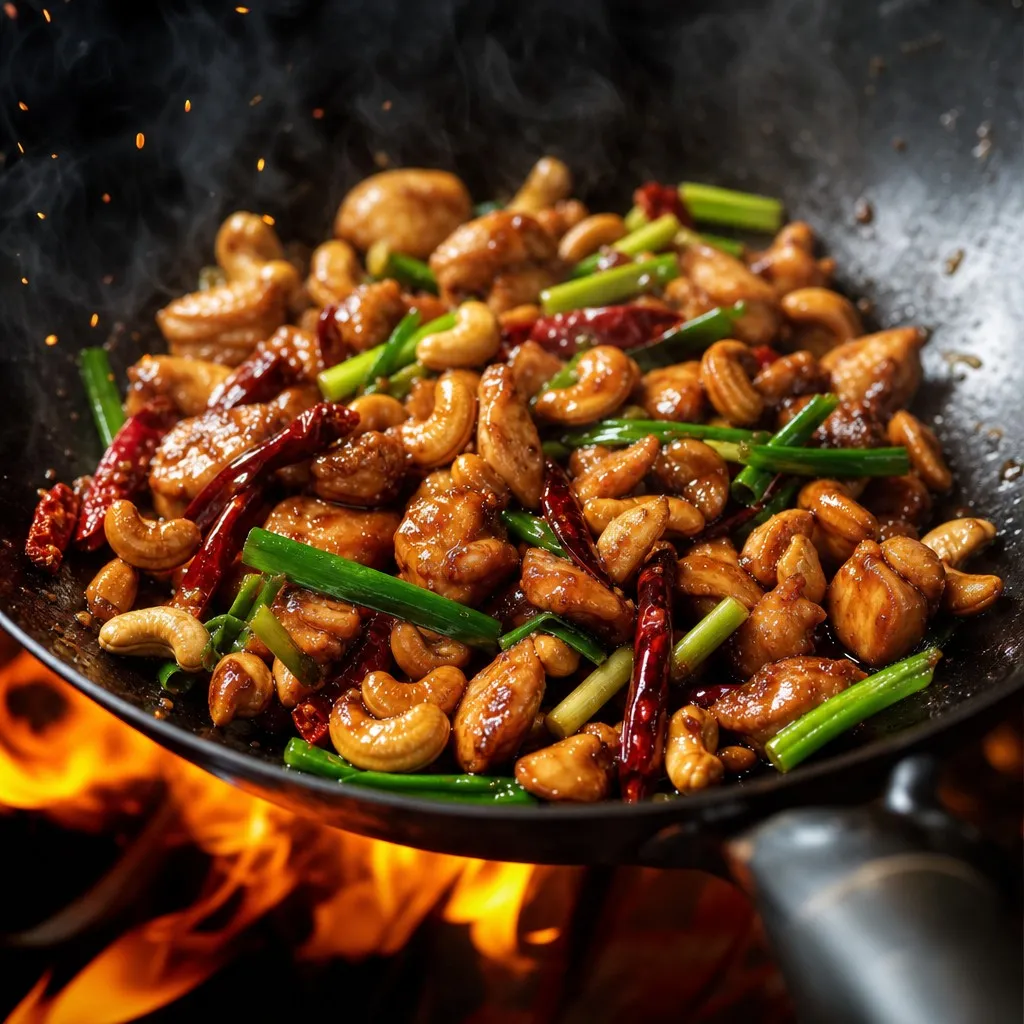
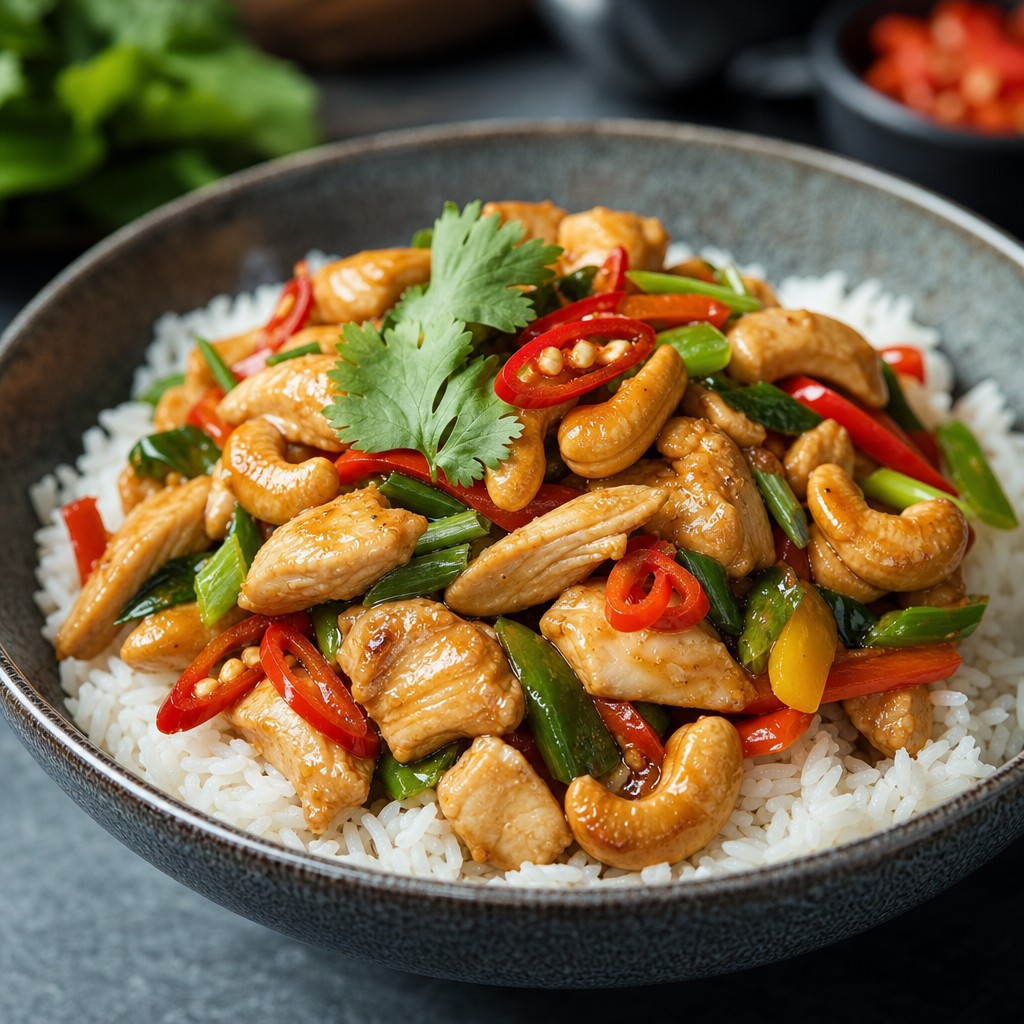
Chicken and cashew nut stir fry, or Gai Pad Med Mamuang as we call it in Thailand, is one of those dishes that's absolutely everywhere. You'll find it on every Thai restaurant menu in the UK, and for good reason. It's got everything: tender chicken, crunchy nuts, a savoury sauce, and just enough heat from the dried chillies. It's also incredibly easy to make at home.
The most important thing here is your wok and your heat. You want it screaming hot. That's what gives you the slightly charred, smoky quality, what the Chinese call "wok hei", that makes a stir fry taste like it came from a restaurant rather than your kitchen. Don't be shy with the heat.
A little tip: toast the cashews in a dry pan before you start if they aren't already roasted. It only takes a minute and it makes them taste so much better. You want them golden and slightly blistered, not pale and soft.
What Does "Gai Pad Med Mamuang Himaphan" Actually Mean?
Break it down word by word and this dish has one of the best names in Thai cooking. Gai (ไก่) is chicken. Pad (ผัด) means to stir-fry. Med (เมล็ด) means seed or stone, used for any nut. Mamuang (มะม่วง) is mango.
Then there's Himaphan (หิมพานต์). In Thai Buddhist tradition, Himavanta (Himaphan in Thai) is a mythical enchanted forest at the base of Mount Meru, the sacred mountain at the centre of the cosmos, inhabited by gods, spirits, and legendary creatures like the naga and garuda. It is not the literal Himalayan mountains; it is a parallel paradise realm from Hindu-Buddhist cosmology. The cashew nut looks a little like a small mango dangling from a tree, so Thais gave it the poetic name mamuang himaphan: the mango of that paradise forest. The full name of the dish, then, is "stir-fried chicken with the mango of paradise." Rather good, isn't it?
You'll also see it written as Kai Pad Med Mamuang, and both are correct. Thai has several competing romanisation systems and no single official standard, so Gai and Kai, Pad and Pat, Med and Met, Mamuang and Ma Muang all appear in recipe books and on menus. They all refer to the same dish.
Where This Dish Really Comes From
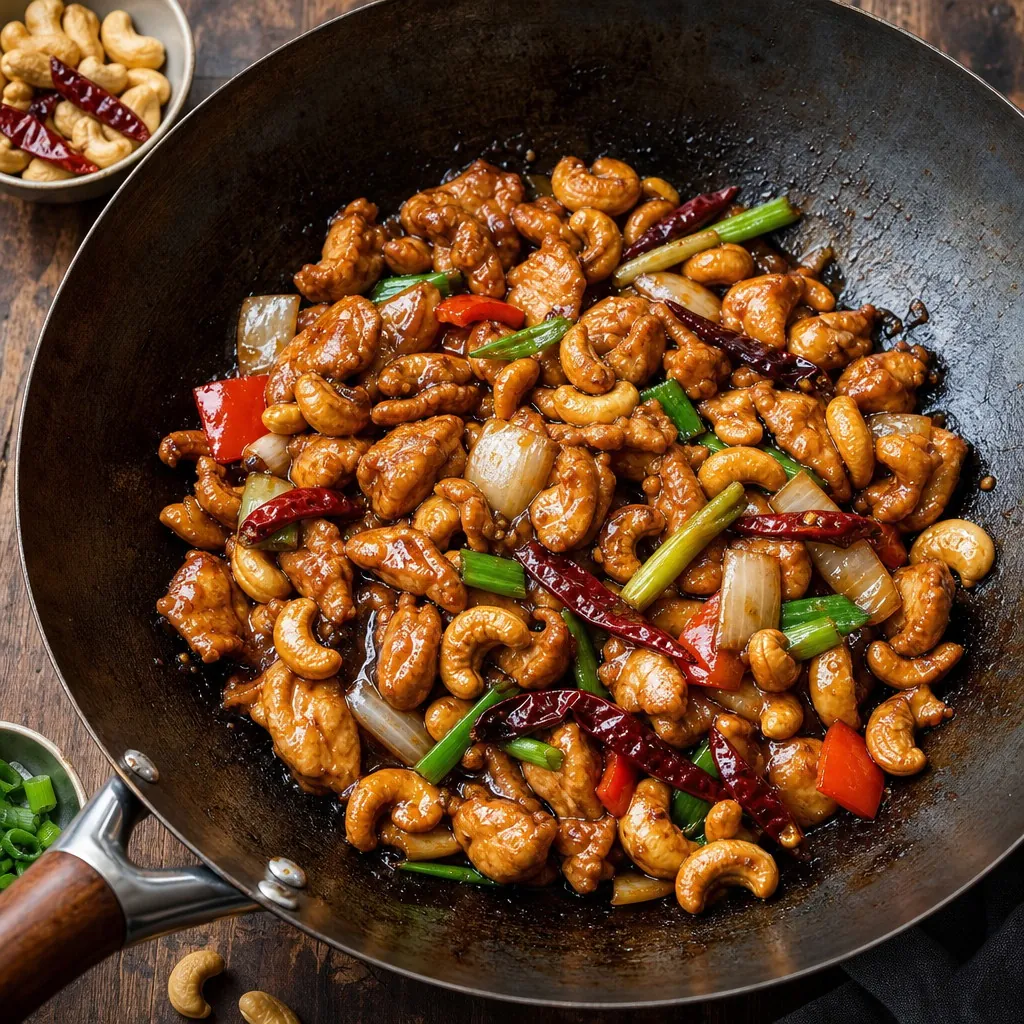
Most Thai restaurant menus won't mention this, but Gai Pad Med Mamuang isn't an ancient, purely Thai recipe. It's a Thai adaptation of a Chinese dish, specifically Kung Pao Chicken (Gong Bao Ji Ding), the Sichuan classic built around chillies, peanuts, and a punchy sauce.
Chinese communities have cooked alongside Thai families for centuries, and their influence on Thai food is profound. Thai cooks took the essential structure of Kung Pao (wok, protein, dried chillies, nuts) and made it unmistakably Thai. The peanuts became cashews, which grow abundantly in southern Thailand. The Shaoxing wine and sesame oil became fish sauce, oyster sauce, and fresh Thai chillies. What began as cultural exchange became one of the country's most beloved stir-fries.
The result is something genuinely different from its ancestor. Thai cashew chicken has a drier, more intense sauce; a fiercer, more layered heat; and a character that's distinctly Thai. Put the two dishes side by side and you'd never mistake one for the other, even if they share the same family tree.
Ingredients for Chicken and Cashew Stir Fry
- 300g chicken breast, sliced
- 100g roasted cashew nuts
- 4 dried red chillies
- 1 onion, cut into wedges
- 3 spring onions, sliced
- 2 tbsp oyster sauce
- 1 tbsp fish sauce
- 1 tbsp soy sauce
- 1 tsp sugar
- 2 cloves garlic, sliced
- Cooking oil
How to Make Thai Chicken and Cashew Stir Fry
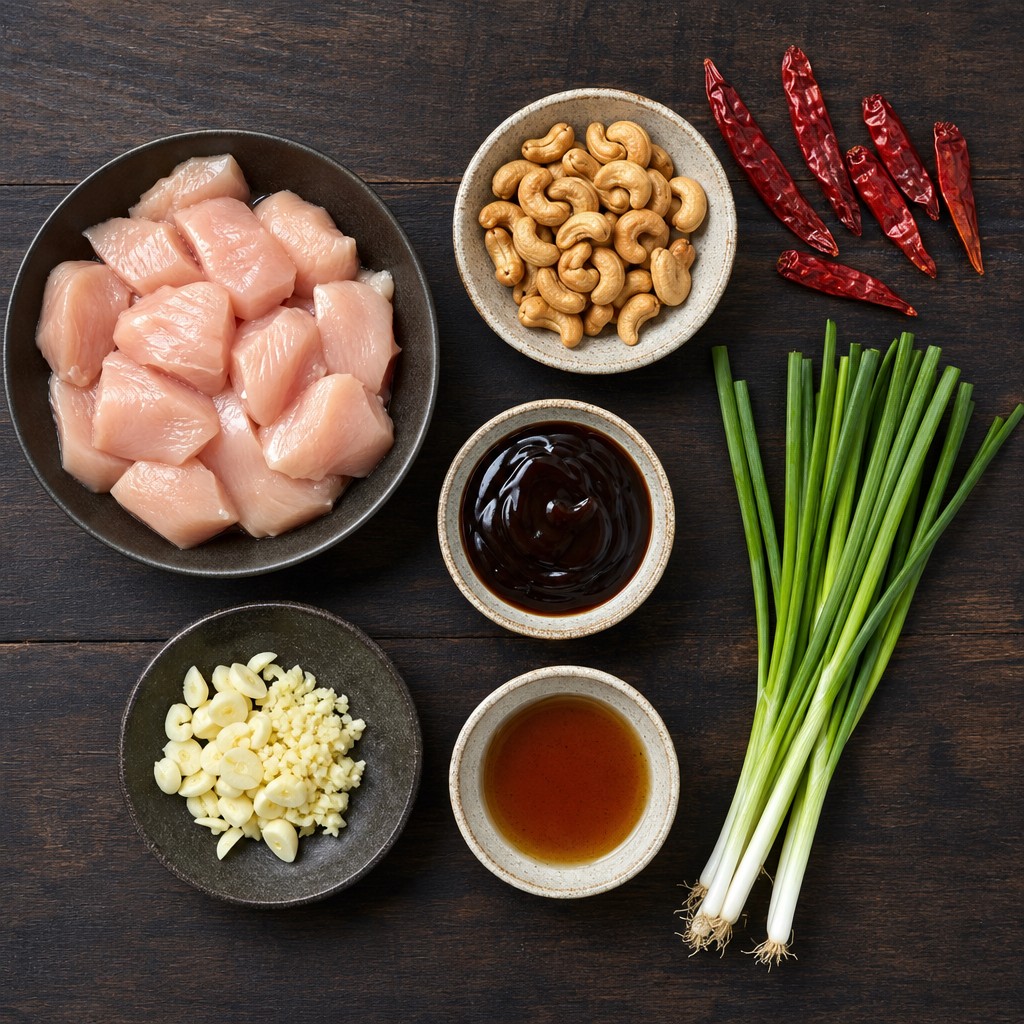
First, mix together the oyster sauce, fish sauce, soy sauce, and sugar in a small bowl. Having your sauce ready before you start means everything moves quickly once the wok is hot.
Heat your wok until it's really smoking, then add the oil. Drop in the dried chillies and fry them for about 30 seconds until they darken; this infuses the oil with heat. Take them out and set aside.
In goes the garlic, then almost straight away the chicken. Don't crowd the wok. If you're doubling the recipe, cook the chicken in two batches. Crowding drops the temperature and you get steam rather than sear, which means pale, wet chicken instead of the golden, caramelised result you're after. Keep everything moving over high heat. You want colour on the chicken, not just steam. Once it's golden and cooked through, add the onion wedges and stir-fry for another minute or two.
Pour the sauce over everything and toss to coat. Add the cashews and spring onions. Give it one final minute of high-heat stir-frying, and you're done.
Serve right away over jasmine rice. Put the fried chillies back on top as a garnish. A squeeze of fresh lime over the finished dish brightens everything up and cuts the richness of the sauce, and this is the step most home cooks skip and then wonder why their version tastes slightly flat compared to the restaurant.
The Three-Sauce Secret
The sauce for this dish uses three things, fish sauce, oyster sauce and soy sauce, and the natural question is: aren't they all just salty? They're not. Each one does something different, and the combination is what makes the sauce taste Thai rather than generically Asian.
Fish sauce is the backbone of Thai cooking. It's deeply savoury with a fermented quality that sounds alarming until it hits a hot wok and transforms into pure umami. You won't taste it as fish; you'll just taste everything else tasting more fully of itself.
Oyster sauce brings a thick, glossy sweetness and an umami depth that the other two don't have. It's what coats the chicken and gives the dish its bronzed, appetising look. Don't skip it.
Soy sauce provides a more straightforward salt note, plus a slightly caramelised flavour when it hits a scorching wok. Use light soy here, since you want flavour without too much colour.
Mix all three in a small bowl before you start. The moment your wok needs the sauce, it's ready.
If you want to get closer to what a Thai restaurant actually uses, add a tablespoon of nam prik pao (roasted chilli jam) to the sauce mixture. It's a deeply smoky, sweet-sour chilli paste sold in small jars. The Mae Ploy and Maesri brands are both good and available from Asian supermarkets and online. Nam prik pao is what gives Thai cashew chicken that darker colour and rounded depth that the fish-oyster-soy trio alone can't fully replicate. It's not a substitute for the three sauces; it's a fourth voice in the chord.
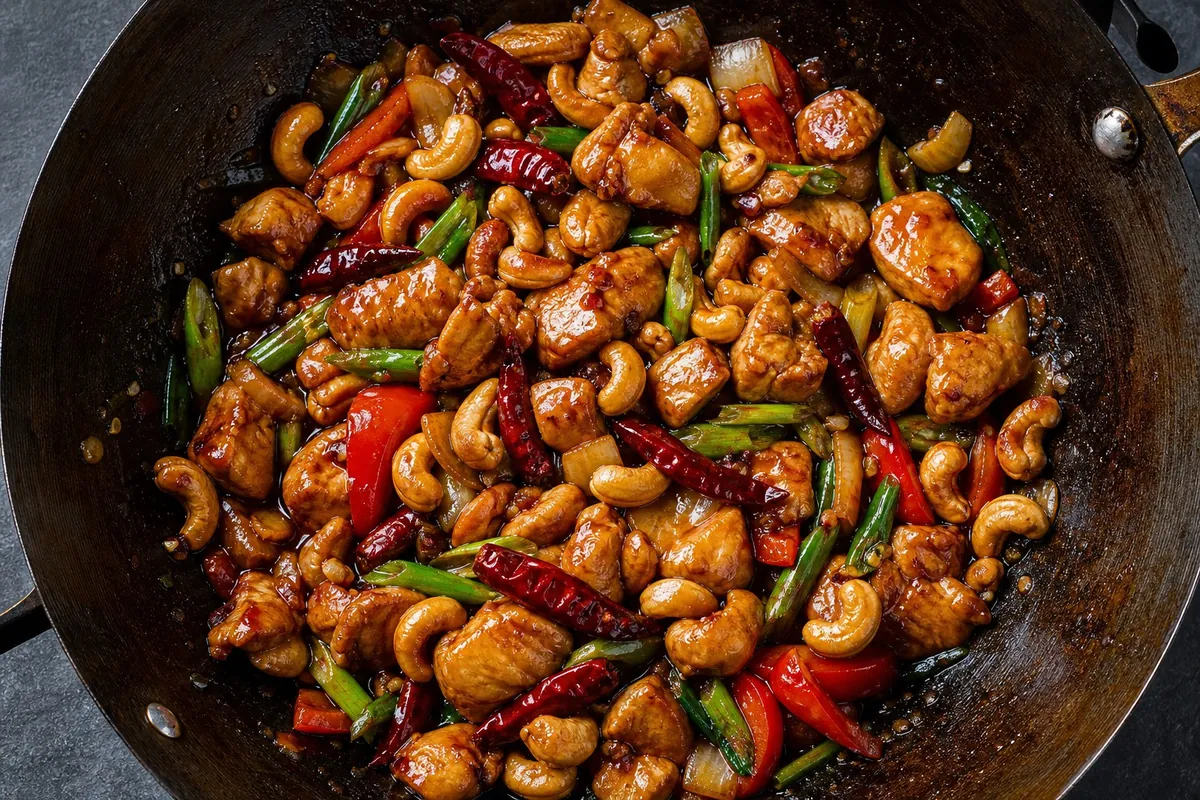
Thai Cashew Chicken vs Chinese Cashew Chicken
Because this dish evolved from a Chinese original, it's worth knowing what actually changed, especially if you've ordered "cashew chicken" in a Chinese restaurant and found it tasted completely different. It did. Here's why:
| Thai (Gai Pad Med Mamuang) | Chinese (Kung Pao / Cashew Chicken) | |
|---|---|---|
| Sauce | Drier, concentrated: coats rather than pools | Glossy and generous: more sauce, wetter finish |
| Heat | Bold, layered heat from dried chillies | Milder; Sichuan pepper gives numbing tingle rather than straight heat |
| Key sauces | Fish sauce + oyster sauce + soy sauce | Soy sauce + Shaoxing wine + dark vinegar + sesame oil |
| Nuts | Cashews, added at the very end | Peanuts in Kung Pao; cashews in Western Chinese versions |
| Sweetness | Subtle: just a teaspoon of sugar | More prominent; often a sweet-sour balance |
| Overall character | Bold, savoury, slightly dry | Sweeter, more fragrant, wetter |
About Those Dried Chillies
The big dried red chillies are fried whole in the oil before anything else goes in. They look alarming on the plate but they're not there to be eaten; frying them infuses the oil with a smoky, mild heat that seasons the whole dish. In Thailand some people do nibble them (they eat much milder than they look once fried), but feel free to push them aside. If you want genuine heat, add a sliced fresh bird's eye chilli with the garlic instead.
Substitutions and Variations
The type of cashew you use matters more than you might think. Raw, unroasted cashews give the best result, but they need a little prep. Fry them in a centimetre of hot oil for about two minutes until they're pale gold, then drain on kitchen paper and set aside. They'll look underdone but carry on cooking in their own residual heat, and they go in at the very end of the stir-fry so they finish perfectly crisp. Don't let them go dark golden in the oil; they'll be bitter by the time they hit the wok.
Ready-roasted unsalted cashews from the supermarket snack aisle work perfectly fine if you'd rather skip that step; just add them at the very end so they stay crunchy. Salted ones will throw the seasoning off.
Prawns swap in well for the chicken, and the dish is also good with just mushrooms and extra peppers for a vegetarian version; use vegetarian oyster sauce (made from mushrooms), which is stocked in most large supermarkets and any Asian grocer.
Making the Chicken Extra Tender: Velveting
If you've ever wondered why the chicken in restaurant stir-fries is so impossibly soft and silky, almost impossible to overcook, the answer is a technique called velveting. It's entirely optional here, but if you've got an extra five minutes, it's worth trying at least once.
Toss the sliced chicken with one tablespoon of cornflour and a teaspoon of soy sauce. Leave it for 15 to 20 minutes. The cornflour creates a thin protective coating that seals in moisture as the chicken hits the hot wok, and the soy sauce begins seasoning from the inside out. The result is chicken that stays genuinely tender even over fierce heat: silky rather than slightly rubbery.
Professional kitchens take this further, briefly blanching the coated chicken in hot oil before stir-frying. For home cooking, the cornflour-and-soy method alone gives you most of the benefit without the extra step.
Storing and Reheating
Keeps two to three days in the fridge, though the cashews will soften as they sit in the sauce. If you're cooking ahead deliberately, keep the toasted cashews separate and stir them in after reheating. Reheat hard and fast in a wok or frying pan; the microwave makes the chicken rubbery and the nuts chewy.
You can freeze this dish, but not with the cashews in; they lose their texture completely after freezing and thawing. Freeze the chicken and sauce in a sealed container for up to two months. Defrost overnight in the fridge, reheat in a hot wok, then stir in freshly toasted cashews just before serving. It works better than you'd expect.
What to Serve With Thai Cashew Chicken
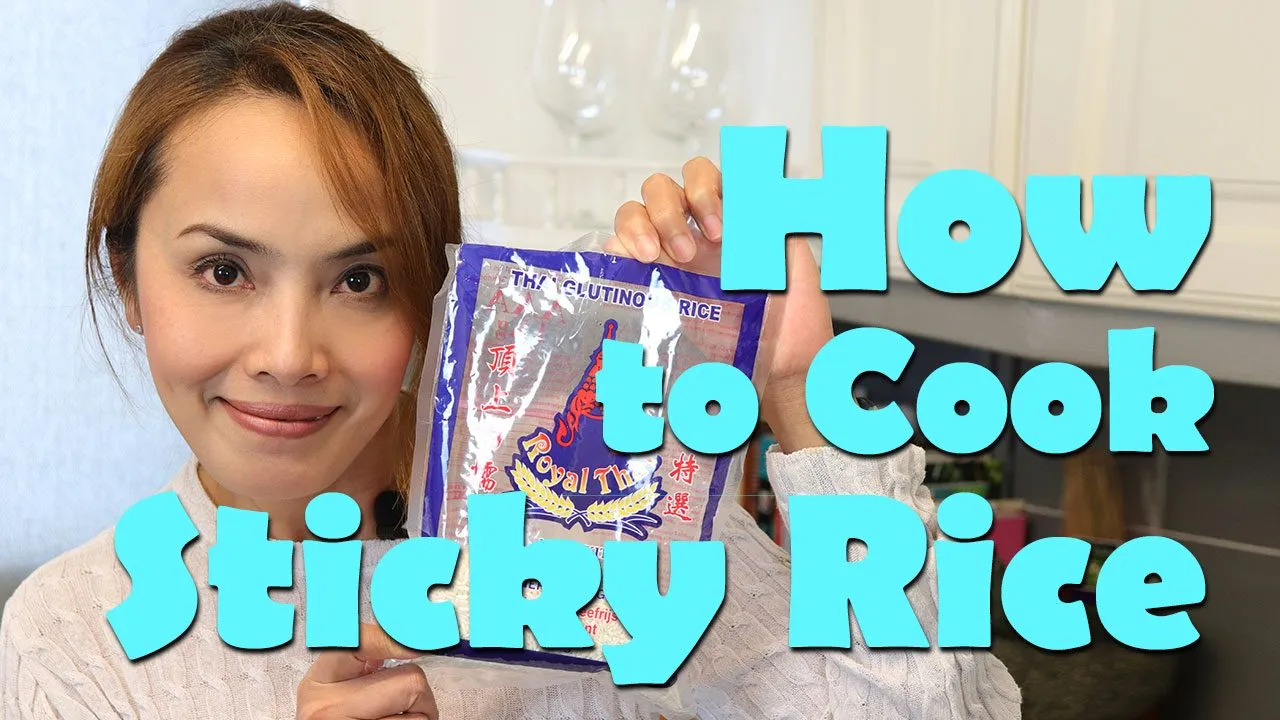
Steamed jasmine rice is the classic base, because the fragrant, lightly sticky grain soaks up the glossy sauce in a way plain rice simply can't. If you want something a little different, sticky rice works beautifully too: it clumps in your fingers and scoops up sauce in a way jasmine rice can't. Both are right.
If you're building a proper Thai spread rather than a quick weeknight dinner, a few things sit alongside this dish particularly well. Pad krapow gai (Thai basil chicken) is a natural companion. Both dishes share the same savoury intensity but taste completely different, so they complement rather than repeat each other. A simple cucumber relish, made from thinly sliced cucumber, a splash of white vinegar, a pinch of sugar and a sliced red chilli, cuts through the richness and resets the palate. A light clear soup rounds things out without competing.
For drinks, a cold lager is the go-to. Singha and Chang are both made for this kind of food: ice-cold, slightly fizzy, they lift the heat without overpowering the dish. If you'd rather have wine, a chilled dry Riesling or a rosé both handle the chilli and the umami well, because the acidity keeps pace with the sauce where a heavy red would clash. See our guide to the best beer for Thai food for more on what to drink.
Frequently Asked Questions
Is Thai cashew chicken spicy?
It's mildly to moderately spicy, depending on how you make it. The dried chillies add background warmth rather than a sharp hit. If you want more heat, add a sliced bird's eye chilli with the garlic. For milder, use fewer dried chillies, or skip them and use them only as a garnish.
Can I use chicken thighs instead of breast?
Yes, and honestly they can be better. Chicken thigh meat is juicier, more forgiving, and harder to overcook. Slice to the same thickness as breast and cook slightly longer until golden. The extra fat helps the sauce cling nicely.
How do I keep the cashews crunchy?
Add them at the very end, ideally just before you take the wok off the heat. The moment cashews sit in hot sauce they start to soften. If you're cooking ahead, keep the cashews separate and stir them in just before serving. Pre-toasting in a dry pan also helps; they go in drier and hold their crunch a little longer.
Can I make this without a wok?
Absolutely. A large, heavy-bottomed frying pan or skillet works fine. The key is getting it properly hot before anything goes in; if it's not hot enough, the chicken steams rather than sears, and you lose that slightly charred quality. Cast iron holds heat well and is a good alternative to a carbon steel wok.
What's the difference between Thai and Chinese cashew chicken?
Thai cashew chicken evolved from Chinese Kung Pao Chicken, but they're quite different now. The Thai version is drier, spicier, and uses fish sauce as a key flavour, which you won't find in Chinese versions. Chinese cashew chicken has a sweeter, glossier sauce with sesame oil and Shaoxing wine. See the comparison table above for the full breakdown. For a deeper look at how the two cuisines differ more broadly, see our guide to the differences between Thai and Chinese food.
Can I make it vegetarian?
Yes, swap the chicken for firm tofu or a mix of mushrooms and peppers. Use vegetarian oyster sauce (made from mushrooms, which most large supermarkets stock) and replace the fish sauce with a splash of light soy or a touch of seasoning sauce. The texture changes, but the flavour profile stays recognisably the same.
Why are there three different sauces in the recipe?
Each does something different. Fish sauce is the umami backbone, fermented and deeply savoury. Oyster sauce adds sweetness, gloss, and a thick coating consistency. Soy sauce brings a cleaner saltiness with a slight caramelised note when it hits the wok. Together they create a sauce that's layered and complex in a way none of them could achieve alone.
What does "Himaphan" mean?
Himaphan (หิมพานต์) refers to the mythical Himavanta forest from Thai Buddhist cosmology, a paradise realm at the base of Mount Meru, inhabited by divine beings and legendary creatures like the naga and garuda. It is not the literal Himalayan mountains; it is a parallel world of the gods. The cashew nut resembles a small mango hanging from a tree, so Thais gave it the poetic name mamuang himaphan: "the mango of paradise." The full dish name translates as "stir-fried chicken with the mango of paradise."
Is this dish healthy?
It's a reasonably balanced dish, high in protein from the chicken, with healthy fats and minerals from the cashews. The main things to watch are the sodium from the sauces and the oil used in cooking. The dried chillies are genuinely good for you: capsaicin has anti-inflammatory properties and gives your metabolism a mild boost. Serve over jasmine rice for a complete meal.
Should I use raw or roasted cashews?
Either works, but they behave differently. Raw cashews benefit from a quick fry in hot oil, about two minutes until pale gold, then drained on kitchen paper. They go in at the end of the stir-fry and finish perfectly crisp with a richer, slightly deeper flavour. Ready-roasted unsalted cashews are quicker and equally good; just make sure they go in at the very last moment before serving. Avoid salted cashews, which will overseason the dish, and dark-roasted cashews, which turn bitter once reheated in the wok.
Can you freeze chicken and cashew stir fry?
Yes, but leave the cashews out before you freeze it. They turn rubbery and completely lose their texture once frozen and thawed. Freeze the chicken and sauce together in a sealed container for up to two months. Defrost overnight in the fridge, reheat hard and fast in a wok, then stir in freshly toasted cashews just before serving.
Can I add vegetables?
Yes, this dish takes vegetables well. Bell peppers (any colour) are the most natural addition: they go in with the onion and add sweetness and crunch. Baby corn, water chestnuts, broccoli florets, snow peas, and shimeji mushrooms all work. The rule is cut them to a similar size as the chicken pieces and add them in order of how long they take to cook: harder vegetables first, leafy or tender ones close to the end. Don't add so many that you dilute the sauce; the chicken-to-vegetable ratio should stay roughly equal.
Why does my cashew chicken look pale, not dark and glossy?
Two reasons. First, your wok may not be hot enough. Without proper searing heat, the chicken doesn't caramelise and the sauce doesn't reduce to a glaze. Second, you may be missing dark soy sauce. Standard (light) soy keeps things lighter in colour; adding a teaspoon of dark soy to the sauce mixture gives you that mahogany, restaurant-brown colour. You can also add a tablespoon of nam prik pao (roasted chilli jam) to the sauce, whose deep amber colour and natural sugars improve both the look and the flavour noticeably.
Why is my sauce too thin and watery?
The most common cause is adding the sauce before the wok is properly screaming hot, or crowding the chicken so it steams and releases moisture rather than searing. Fix it by boiling off the excess liquid over the highest heat you have, which only takes a minute. Next time, mix a teaspoon of cornflour into the sauce before you start: it thickens on contact with the wok and gives you that glossy, clinging consistency rather than a watery puddle.
Why is my chicken tough and rubbery?
Usually it's overcooked, cut too thick, or it went into a wok that wasn't hot enough and ended up steaming instead of searing. Chicken breast is particularly unforgiving, because a minute too long takes it from tender to chewy. Slice it no thicker than 5mm, make sure the wok is genuinely smoking before anything goes in, and consider the velveting technique in the section above: a coating of cornflour keeps the chicken silky even over fierce heat. Thigh meat is far more forgiving if breast consistently disappoints you.
Can I make this ahead of time?
Yes, with one rule: keep the cashews separate until the moment of serving. The chicken and sauce can be cooked a day ahead and kept in the fridge, though the cashews turn soft the moment they absorb any moisture. Reheat everything hard and fast in a very hot wok rather than the microwave, which makes the chicken rubbery. Stir in freshly toasted cashews just before you bring it to the table.
What goes well with this dish?
Steamed jasmine rice is the classic accompaniment; the subtle floral flavour of Thai jasmine rice balances the bold, concentrated sauce perfectly. For a fuller Thai spread, serve it alongside pad krapow gai (Thai basil chicken), a simple cucumber salad, or a light clear soup. Serve immediately while the cashews are still crunchy.
Can I make Gai Pad Med Mamuang without a wok?
Yes. A large, heavy-bottomed frying pan or skillet works fine. The key is getting it properly hot before adding anything — if it's not hot enough, the chicken steams rather than sears.
What is the difference between Thai and Chinese cashew chicken?
Thai cashew chicken (Gai Pad Med Mamuang) is drier, spicier, and uses fish sauce as a key flavour. Chinese cashew chicken has a sweeter, glossier sauce with sesame oil and Shaoxing wine. The Thai version evolved from Chinese Kung Pao Chicken but developed its own distinct character.
Can I make this dish vegetarian?
Yes — swap chicken for firm tofu or mushrooms. Use vegetarian oyster sauce (made from mushrooms) and replace fish sauce with light soy or seasoning sauce.
What does Himaphan mean in Gai Pad Med Mamuang Himaphan?
Himaphan (หิมพานต์) refers to the mythical Himavanta forest in Thai Buddhist cosmology — a paradise realm at the base of Mount Meru, not the literal Himalayas. Cashews are called mamuang himaphan (mango of paradise) because they resemble small mangoes. The full dish name means stir-fried chicken with the mango of paradise.
Is Gai Pad Med Mamuang healthy?
It's a reasonably balanced dish — high in protein from chicken, with healthy fats and minerals from cashews. The dried chillies contain capsaicin, which has anti-inflammatory properties and gives metabolism a mild boost.
Why does the recipe use three different sauces?
Each sauce does something different. Fish sauce provides deep umami. Oyster sauce adds sweetness, gloss and coating consistency. Soy sauce brings clean saltiness with a caramelised note when it hits the hot wok. Together they create a layered, complex sauce.
Can I make Thai cashew chicken ahead of time?
Yes, with one rule: keep the cashews separate until the moment of serving. The chicken and sauce can be cooked a day ahead and kept in the fridge. Reheat hard and fast in a very hot wok — not the microwave. Stir in freshly toasted cashews just before you bring it to the table.
Watch The Video


Comments