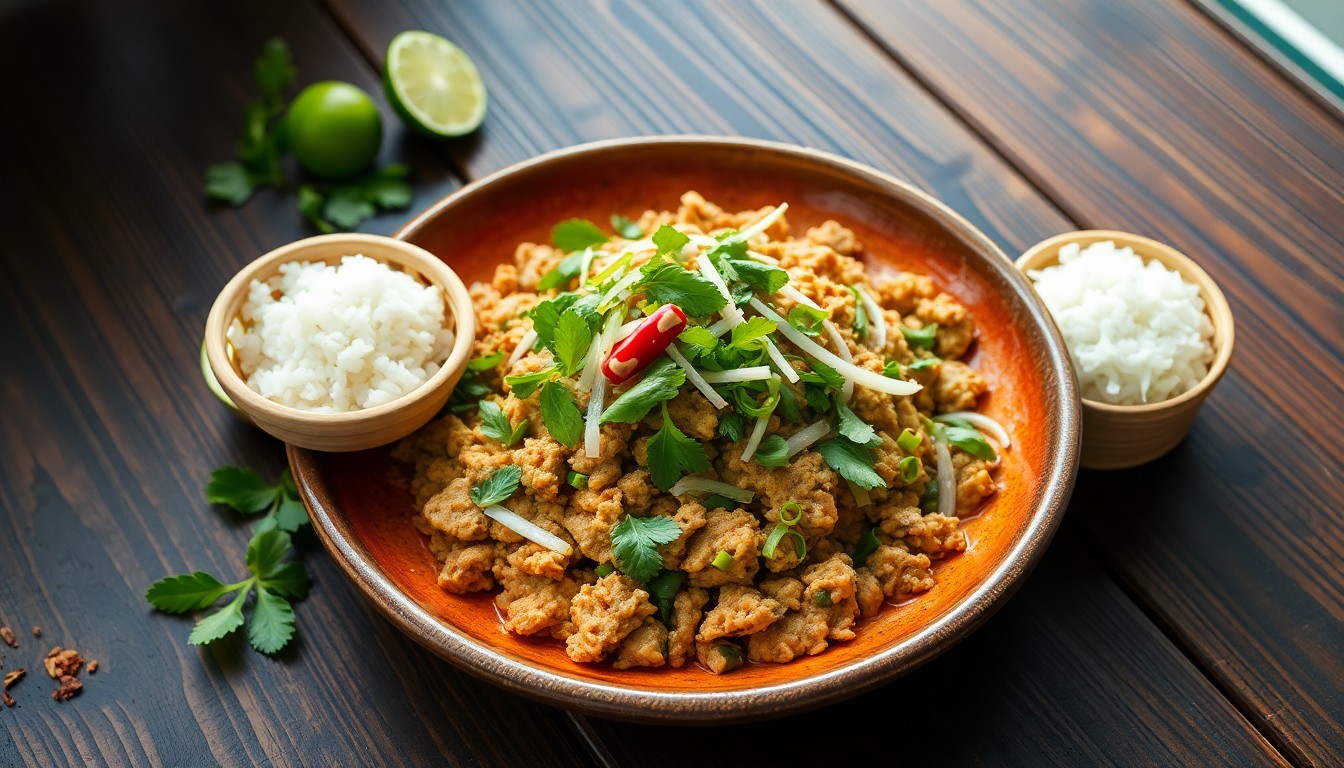
There's a sound that means dinner is close in any Isaan kitchen: the dry, papery rustle of sticky rice grains being shaken across a hot pan until they turn the colour of weak tea. That's khao kua, and it's the heart of larb. Get it right and you have a minced pork salad that's bright, sour, salty, gently spicy, and shot through with a nutty crunch you can't get any other way. Skip it and you have seasoned mince.
Larb (you'll also see it written laab, which is closer to how it actually sounds) is one of those dishes that rewards a little understanding before you cook. It comes together in 35 minutes with no special kit beyond a pan and something to grind rice in. But knowing why you toast the rice, why the herbs go in cold, and why you taste-and-adjust rather than measure to the millilitre is the difference between a good larb and one that makes a Lao grandmother nod.
What Is Larb?
Larb is the national dish of Laos, and the word laab means luck. It's eaten at weddings, at Lao New Year, and at ceremonies where you want good fortune on your side — the name itself is a blessing you can put on a plate. From Laos it crossed into northeastern Thailand, the region known as Isaan, on the back of shared Lan Xang Kingdom heritage, which is why the larb you'll eat in Khon Kaen and the larb you'll eat in Vientiane are cousins rather than strangers.
It's an old dish, older than most people assume. The earliest known reference turns up in a Chinese document from 1751, and the French traveller Étienne François Aymonier wrote a full description of it in 1883. The Lao royal chef Phia Sing (1898–1967) recorded traditional larb recipes, which places it firmly in the royal kitchen — fitting, because meat was once a luxury and larb was a dish of the aristocracy. Today it's an everyday staple you'll find at any roadside spot, but its standing hasn't faded: in 2026 Laos submitted larb to UNESCO for Intangible Cultural Heritage designation. Not many weeknight dinners carry that kind of weight.
Isaan Larb vs Northern Thai Larb Muang
This is where most UK recipes leave you in the dark, so let me clear it up. There are three larbs worth knowing, and they are genuinely different dishes.
The one in this recipe is Isaan larb: fish sauce, lime juice, chilli flakes, and a pinch of sugar. It's bright and sour-forward, punchy, the kind of flavour that wakes your whole mouth up. This is the larb most people picture.
Northern Thai Larb Muang is another animal entirely. It throws out the fish sauce and lime and builds its flavour from a roasted dry-spice blend instead: cumin, coriander seed, Szechuan pepper, cinnamon, star anise. The result is earthy and warm rather than sour and sharp. If you order larb in Chiang Mai expecting the tangy version, this is what arrives, and it surprises people every time.
Then there's traditional Lao larb, the original. It typically omits sugar altogether and uses padaek: an unfiltered fermented fish sauce, thick with sediment, far funkier and deeper than the clear stuff in a bottle. My recipe follows the Thai Isaan convention with a pinch of sugar and filtered fish sauce, because that's what balances best for most palates and what you can actually buy in a British supermarket. But now you know what you're adjusting away from.
One last thing while we're clearing up myths: those neat lettuce cups you see in Western Thai restaurants are a restaurant invention. Real larb is scooped up with sticky rice in your fingers, not folded into a leaf.
How to Make Toasted Rice Powder (Khao Kua)
If you make one component well, make this one. Khao kua isn't a garnish; it's structural. The coarse grains absorb the excess juices that pork and lime throw off, they carry seasoning into every bite, and they give larb its signature faint crunch. Without it the dish is wet and one-note.
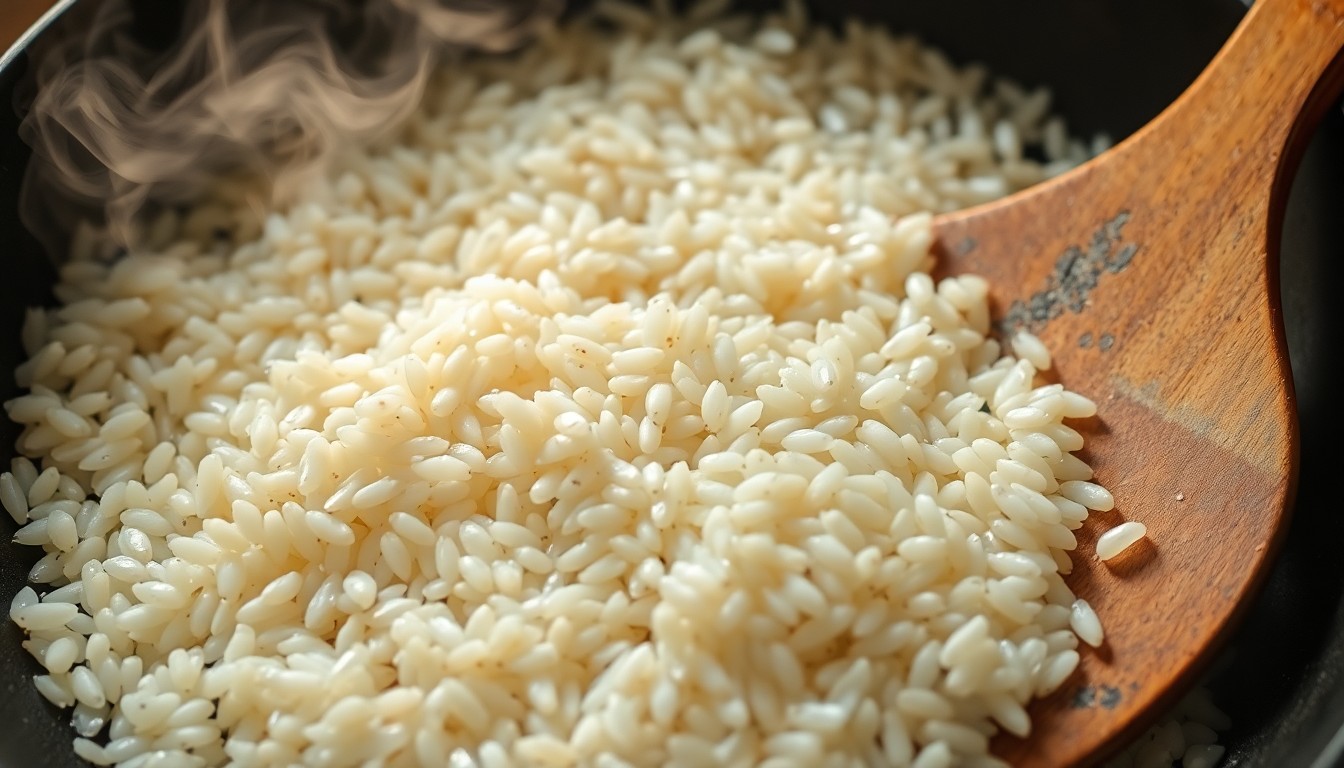
Use uncooked Thai sticky rice: glutinous rice, the same kind you'd steam to eat alongside. Not jasmine, not basmati; they toast unevenly and the flavour is flatter. Spread the grains in a dry pan over low-medium heat and keep them moving for 12 to 15 minutes. You're waiting for two signals: the grains turning an even golden-yellow, and a smell that's unmistakably nutty, like popcorn drifting from the next room. Don't rush it with high heat or you'll get scorched outsides and raw centres.
Let it cool completely before grinding: hot rice goes gummy under a pestle. Then grind to the texture of coarse, damp sand. This is the part people get wrong. Too fine and it turns pasty, claggy, unable to do its job. Too coarse and it won't distribute through the salad. Wet sand is the target. A pestle and mortar gives you the most control; a spice grinder works if you pulse rather than blitz.
My standing advice: make a double or triple batch. Khao kua keeps in an airtight jar for up to three months, and having it ready is the single biggest reason I'll cook larb on a Tuesday without thinking twice.
What Goes In, and Where to Find It
The shopping list is short and the herbs do a lot of the talking.
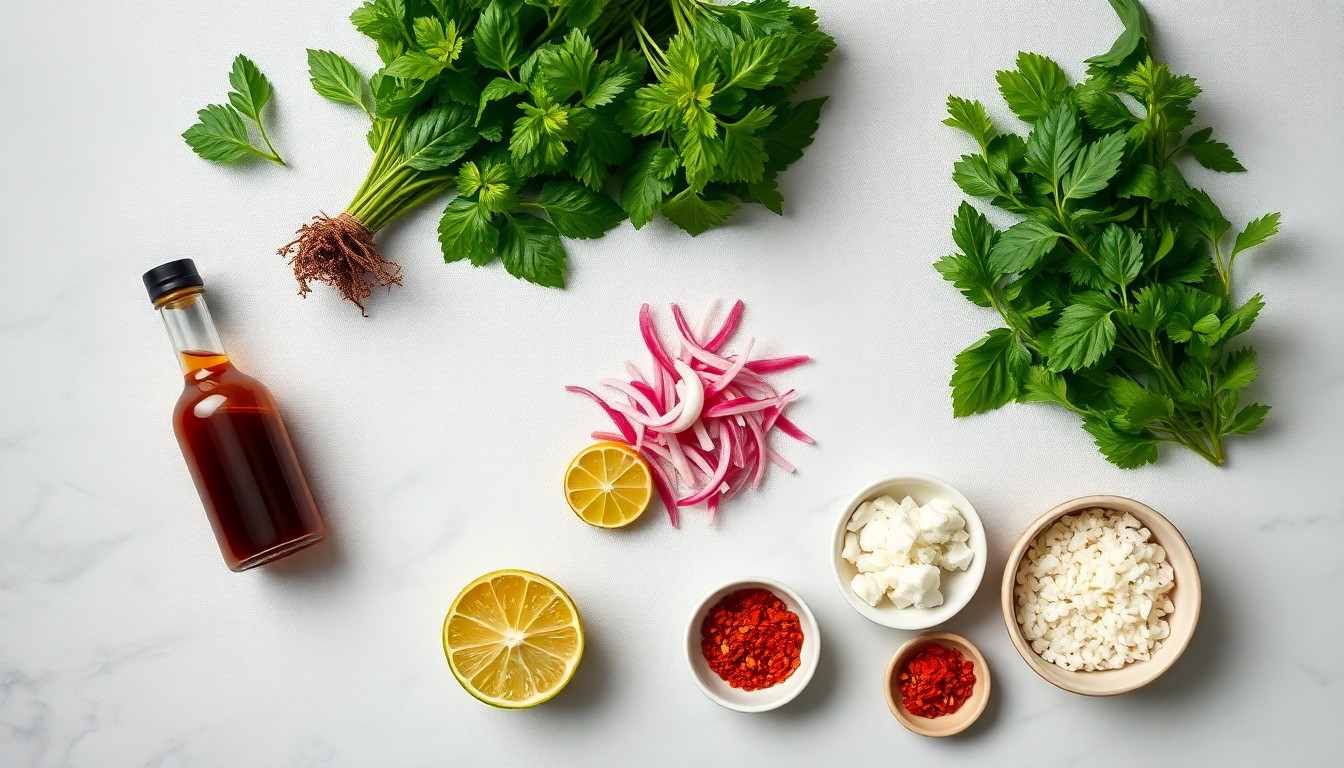
Minced pork is the classic choice: go for around 20% fat, because lean mince cooks dry and larb wants a little richness to push against the lime. Thai shallots, spring onions, fresh mint, and fresh coriander are the core herbs, and the mint isn't optional; it's what makes larb taste like larb rather than a generic mince salad. Culantro (long coriander, the sawtooth-leaved herb) is traditional and adds a deeper, more savoury note, but it's hard to find in the UK. An extra handful of mint is a fair stand-in.
For fish sauce, the Squid and Megachef brands on British supermarket and Asian-shop shelves both do the job well. Sticky rice you'll find in any Thai or Chinese grocer, often labelled glutinous or sweet rice, and a bag lasts forever. The balance you're chasing is fish sauce for salt and umami, lime for acid, chilli flakes for heat, and just a pinch of sugar to round the edges, none of them in charge.
My family’s recipe: The one component I never skip is the toasted rice powder — khao kua isn’t a garnish, it’s structural. Grind it to the texture of damp sand so it carries the seasoning through every bite. And the mint is not optional; without it, larb is just a generic mince salad.
Print
Larb Recipe: Authentic Thai Isaan Minced Pork Salad
Ingredients
- 400g minced pork (ideally 20% fat for flavour and moisture)
- 3 tbsp uncooked Thai sticky rice (glutinous rice), for khao kua
- 1 tbsp dried chilli flakes (prik bon), plus more to taste
- 2 tbsp fish sauce, plus more to taste
- Juice of 2 limes (about 4 tbsp), plus more to taste
- 1 tsp caster sugar
- 3 Thai shallots (or 1 small banana shallot), very thinly sliced
- 2 spring onions, finely sliced
- 25g fresh mint leaves (about 1 large handful), plus extra to garnish
- 20g fresh coriander (leaves and tender stalks), roughly chopped
- To serve: steamed sticky rice, raw white cabbage wedges, long beans, lime wedges
Instructions
- Make the khao kua: place the sticky rice in a dry frying pan over low-medium heat. Toast for 12–15 minutes, stirring constantly, until every grain is golden-yellow and smells nutty like popcorn. Remove from heat and leave to cool completely, then grind in a mortar and pestle or spice grinder to a coarse, sand-like powder — not fine flour. Set aside.
- Cook the pork: set a dry wok or large saucepan over medium heat. Add the minced pork and 2 tablespoons of water. Cook for 4–5 minutes, breaking the meat into small pieces with a spoon, until just cooked through and no longer pink. Remove from heat immediately.
- Season while warm: stir in the khao kua, chilli flakes, fish sauce, lime juice, and sugar. Mix well so every piece of pork is coated — the residual warmth helps the seasonings absorb fully.
- Rest and cool: allow the mixture to stand for 3–5 minutes until it drops from hot to warm.
- Add the herbs: add the sliced shallots, spring onions, mint leaves, and coriander. Toss gently to combine without bruising the herbs.
- Taste and adjust: try a spoonful and adjust seasoning — add more lime juice for sourness, more fish sauce for saltiness, or more chilli flakes for heat. The finished larb should taste sour-forward, with salty, sweet, and spicy balanced behind it.
- Serve immediately, spooned onto plates alongside steamed sticky rice, raw white cabbage wedges, long beans, and extra mint. Use the sticky rice to scoop up the larb.
Tips
- Cook the pork in water, not oil. A splash of water in a dry pan steams and gently fries the mince at once, keeping it tender. High-heat frying in oil makes it tough and greasy, which fights everything larb stands for.
- Add the herbs only once the meat is warm, never hot. Stir mint and coriander into a steaming pan and they wilt to a sad, muddy brown within seconds. Let the pork drop to warm or room temperature first, and the herbs stay bright green and fragrant.
- Taste with a spoon and a clear target. The ideal is sour ahead of salty, with sweet and spicy in support. If it tastes flat, it's usually short on lime. If it's harsh, a touch more sugar settles it. Adjust, taste, adjust again.
- Season the meat while it's still warm, before it cools. The residual heat helps the fish sauce and rice powder absorb instead of just sitting on top.
- It's a salad, not a stir-fry. Serve larb lukewarm or at room temperature. Piping hot from the pan is a genuine mistake, not a shortcut.
Variations
- Larb gai (chicken): swap in 400g minced chicken and cook it 2–3 minutes longer to be sure it's fully done. Lighter than pork and just as good.
- Other proteins: duck, beef, and even firm white fish all take to the same treatment. Each shifts the character a little; the method stays identical.
- Vegan larb: crumble firm tofu and combine it with finely minced shiitake mushrooms for body and savour, then season with a vegan fish sauce or light soy. It's a proper version, not a consolation prize.
- Dial the heat: ½ teaspoon of chilli flakes keeps it gentle; 1–2 teaspoons gives you honest Isaan heat that makes you reach for the sticky rice.
- No sticky rice for the khao kua? Jasmine rice will toast and grind into a usable powder, slightly less nutty, but it works in a pinch.
Storage
Larb is quietly brilliant for meal prep, as long as you respect one rule: keep the herbs out until the end. The seasoned pork mixture, without any fresh herbs, can be cooked hours ahead and refrigerated; toss through the shallots, spring onions, mint, and coriander only just before serving.
Leftovers keep for two days in the fridge. Eat them cold or at room temperature. Don't microwave, which steams the herbs limp and dulls the whole thing. And keep that jar of khao kua topped up; with toasted rice powder already in the cupboard, larb is never more than half an hour away.



Comments