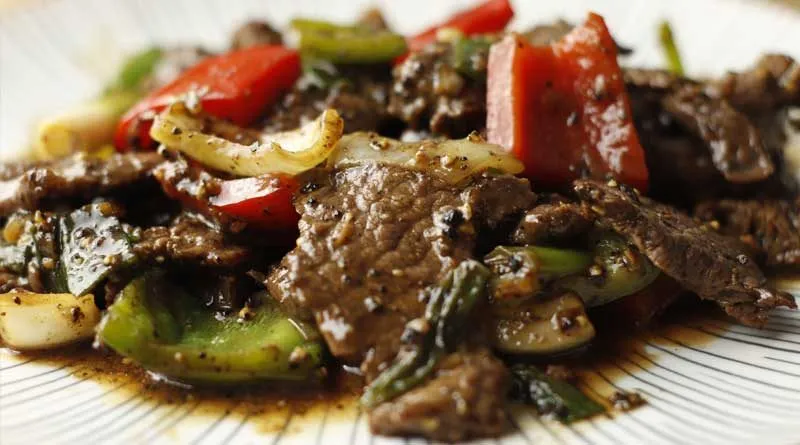
About Nua Pad Prik Thai Dum
Nua Pad Prik Thai Dum (เนื้อผัดพริกไทยดำ), Thai black pepper beef stir fry, is a Bangkok street-food staple. It started out as a Chinese dish. Beef stir-fries came to Thailand with Chinese traders and settlers, and over time the Thai version leaned harder and harder into black pepper, which had reached Thailand through centuries of trade with India. Pepper heat is not chilli heat. It's drier and more aromatic, and the generous hand with it is what sets this dish apart.
In Thailand this is everyday food, not something you save for a special occasion. You order it at the made-to-order street stalls and rice shops (ran ahan tam sang) that will cook anything you ask for in a single wok over a roaring flame, and it lands on your rice in under five minutes. That speed is part of the recipe. Once the beef has marinated, cooking it takes about as long as the rice takes to steam.
In a hurry? Jump to the recipe | Jump to the video
What Does Nua Pad Prik Thai Dum Mean?
The Thai name breaks down simply. Nua (เนื้อ) is beef, pad (ผัด) means stir-fried, and prik thai dum (พริกไทยดำ) is black pepper. You'll see it romanised every which way, nua pad prik thai dam, neua pad prik thai dum, or just nua pad prik, but it's all the same dish. Swap the protein and the name follows: moo pad prik thai dum is the pork version, gai pad prik thai dum the chicken one.
Here's a detail I love. Prik thai translates literally as "Thai chilli", yet it means pepper, not chillies. Black pepper was the original heat in Thai cooking. Chillies only arrived in the 16th century with Portuguese traders, and before that the fire in Thai food came from peppercorns. So when you eat pad prik thai dum, you're tasting something close to how Thai food was spiced centuries ago.
My Thai Black Pepper Beef Stir Fry
This is such a simple dish to make but so tasty. It can be quite spicy for some people due to the amount of black pepper in the recipe. Remember, it’s supposed to be eaten with plain jasmine rice and that does help to reduce the spiciness. Feel free to reduce the amount of black pepper though if you want 🙂
Check the frequently asked questions at the bottom for info or feel free to ask a question in the comments.

Stir Fried Beef in Black Pepper Sauce Recipe
Ingredients
- 250 g Sliced Beef
- 1 tbsp Ground Black Pepper
- 1 tbsp Oyster Sauce
- 1 tbsp Cooking Wine
- 2 tbsp Seasoning Sauce
- 1 tbsp Sugar
- 30 g Onion
- 70 g Red & Green Peppers
- 20 g Spring Onion
- 2 cloves Garlic
Instructions
- Cut the beef into small slices and place in a bowl
- Add the oyster sauce, seasoning sauce and cooking wine
- Mix together in the bowl using your hand
- Cover with cling film and leave to marinate for 1 – 2 hours
- Peel the garlic and dice into small pieces
- Cut the red and green peppers into small chunks
- Cut the spring onions and onion into small pieces
- Heat your wok and add a small amount of cooking oil
- Stir-fry the garlic until it begins to change colour
- Add the black pepper and continue to stir fry
- Add the marinated beef and continue to stir fry
- Add the sugar and continue to stir fry
- Add the peppers, onion and spring onions
- Continue to stir until the peppers begin to soften up
Video
Visual Guide


The Black Pepper Is the Point

If you take one thing from this page, take this: crush whole black peppercorns yourself rather than reaching for pre-ground pepper. The aroma comes from volatile oils that start evaporating the moment the corns crack, and a jar of ready-ground pepper has already lost most of its fragrance to the air in the factory. Thirty seconds with a pestle and mortar, or the bottom of a heavy pan, gives you coarse, craggy pieces with proper aromatic heat.
Keep the crush coarse and uneven, some pieces barely cracked, some nearly powder. The big pieces give you little bursts of pepper as you eat, and that's exactly how the dish tastes in Thailand. For a milder plate, use less pepper rather than grinding it finer. You keep the flavour and lose only the burn. In Thailand you'll sometimes find this made with strands of fresh green peppercorns, still on the stalk. If you ever spot them in an Asian supermarket, throw a couple of strands in. They're wonderful.
Choosing and Slicing the Beef
Any tender, quick-cooking cut works. Sirloin and rump are my usual choices in the UK, and flank or skirt are great if you can get them. Two rules matter more than the cut itself:
- Slice thin, against the grain. Look at the direction of the muscle fibres and cut across them, not along them. That shortens the fibres so the beef stays tender even after a fierce stir-fry.
- Half-freeze the beef first. Twenty minutes in the freezer firms it up so you can shave thin, even slices instead of ragged chunks.
The marinade here is oyster sauce, seasoning sauce and a splash of cooking wine, and it does two jobs. It seasons the beef all the way through, and the wet coating keeps the surface from drying out in the wok. Give it 1–2 hours if you can. Restaurants often go a step further and "velvet" the beef with a pinch of bicarbonate of soda for that ultra-soft, slippery texture. It works, but with a decent cut sliced thin you really don't need it at home.
Wok Heat and Timing
This dish cooks in about five minutes, and the heat wants to be as high as your hob will go. A few things separate a glossy stir-fry from a grey, stewed one:
- Fry the garlic first, then bloom the pepper in the oil. Crushed pepper toasted briefly in hot oil releases far more aroma than pepper stirred in at the end.
- Don't crowd the wok. If you double the recipe, cook it in two batches. Too much cold beef at once drops the temperature and the meat boils in its own juices instead of searing.
- Vegetables go in last. The peppers, onion and spring onion need only a minute or two. They should still have bite when they reach the table.
Chicken, Pork or Prawn Versions
The black pepper sauce is a workhorse, and Thais make this exact dish with whatever protein is on hand. Gai pad prik thai dum uses chicken, with thigh staying juicier than breast. Moo pad prik thai dum uses thinly sliced pork loin or shoulder. The prawn version skips the marinade altogether: just toss the prawns in at the beef stage and cook until they turn pink. Timing aside, nothing else changes.
How It Differs From Pad Krapow and Chinese Pepper Steak
People often muddle this dish with its two nearest relatives, so here's the quick version:
| Pad Prik Thai Dum | Pad Krapow | Chinese pepper steak | |
|---|---|---|---|
| Heat from | Black peppercorns | Fresh bird's eye chillies | Mild — black pepper sauce |
| Signature flavour | Toasted pepper + garlic | Holy basil | Soy + butter notes |
| Meat | Sliced beef | Minced pork or chicken | Sliced beef |
| Sauce base | Oyster + seasoning sauce | Fish sauce + soy | Soy + oyster, often thickened |
The Chinese comparison is no accident. The dish almost certainly arrived with Chinese cooks, then turned Thai as the kitchens doubled down on the pepper and balanced the sauce with sugar the way Thai cooks do. If you enjoy this one, pad krapow gai is the natural next dish to try: same speed, same rice-plate format, completely different heat.
What to Serve With It

Plain steamed jasmine rice, always. The mild, fragrant rice is what tempers the pepper heat, and the sauce is built to soak into it. In Thailand it's often topped with a crispy fried egg (kai dao), the runny yolk mixing into the sauce, and I'd call that mandatory rather than optional. A simple clear soup or some sliced cucumber on the side cools things down if you've been generous with the pepper.
Frequently Asked Questions
Is Thai black pepper beef spicy?
It is, but it's pepper heat, not chilli heat. You get a warm, aromatic burn that builds, rather than the sharp sting of bird's eye chillies. Eaten the proper way, with plain jasmine rice, it mellows a lot. If you're heat-shy, halve the pepper rather than grinding it finer. You keep the flavour and lose the burn.
Should I use whole peppercorns or ground black pepper?
Whole peppercorns, crushed coarsely in a pestle and mortar just before you cook. Pepper's aroma lives in volatile oils that evaporate quickly once the corns crack, so pre-ground pepper gives you heat without fragrance. Ready-ground works at a push. The dish will just taste flatter.
What is the best cut of beef for pad prik thai dum?
Sirloin, rump, flank or skirt, anything tender that cooks fast. Slice it thinly against the grain, and half-freeze the beef for 20 minutes first so you can cut clean, even slices. Steer clear of slow-cooking cuts like chuck or shin. They'll be tough in a five-minute stir-fry.
How long should I marinate the beef?
One to two hours is ideal, long enough for the oyster and seasoning sauces to work right through the beef. Pressed for time? Even 15 minutes makes a difference. You can also marinate it overnight in the fridge for deeper flavour.
What is the difference between pad prik thai dum and pad krapow?
They're both fast Thai stir-fries served over rice, but the flavours are worlds apart. Pad prik thai dum is sliced beef with toasted black pepper as the star. Pad krapow is minced meat with holy basil and fresh chillies. Pepper heat versus chilli heat, sliced versus minced, no basil versus lots of it.
Is this the same as Chinese pepper steak?
It's a close cousin. The dish almost certainly came to Thailand with Chinese cooks. The Thai version uses far more black pepper, balances the sauce with sugar in the Thai style, and leans on oyster and seasoning sauces rather than the heavier soy-based sauce of Chinese black pepper beef.
Can I make it with chicken or pork instead of beef?
Absolutely. Gai pad prik thai dum (chicken) and moo pad prik thai dum (pork) are everyday dishes in Thailand. Use chicken thigh rather than breast if you can, since it stays juicier, or thinly sliced pork loin. The sauce, pepper and method stay exactly the same.
Can I make a vegetarian version?
Yes. Firm tofu or king oyster mushrooms take the black pepper sauce very well. Swap the oyster sauce for a vegetarian mushroom "oyster" sauce, which most Asian supermarkets stock, and check your seasoning sauce is vegetarian. The rest of the recipe works unchanged.
What do you serve with Thai black pepper beef?
Plain steamed jasmine rice is essential. It soaks up the sauce and tames the pepper. For the full Thai street-food experience, top it with a crispy fried egg (kai dao) and let the runny yolk mix into the sauce.
Can I make it ahead or store leftovers?
It keeps for up to three days in an airtight container in the fridge and reheats well in a hot pan, which beats a microwave, since that can toughen the beef. You can also slice and marinate the beef a day ahead so the actual cooking takes five minutes.



Comments