Written by Manaow Prasatthong, 3rd Generation Thai Chef
Lemongrass, ta-krai (ตะไคร้) in Thai, is one of the three aromatics that form the backbone of Thai soups and curry pastes, alongside galangal and kaffir lime leaves. If you have eaten tom yum soup and noticed a clean, citrusy fragrance that is distinctly Thai but not quite lemon, that is lemongrass. Technically it is a tropical grass rather than a herb, but it behaves like one in the kitchen. Its scientific name is Cymbopogon citratus, and it is one of the 20 most common ingredients in Thai food.
What is lemongrass?

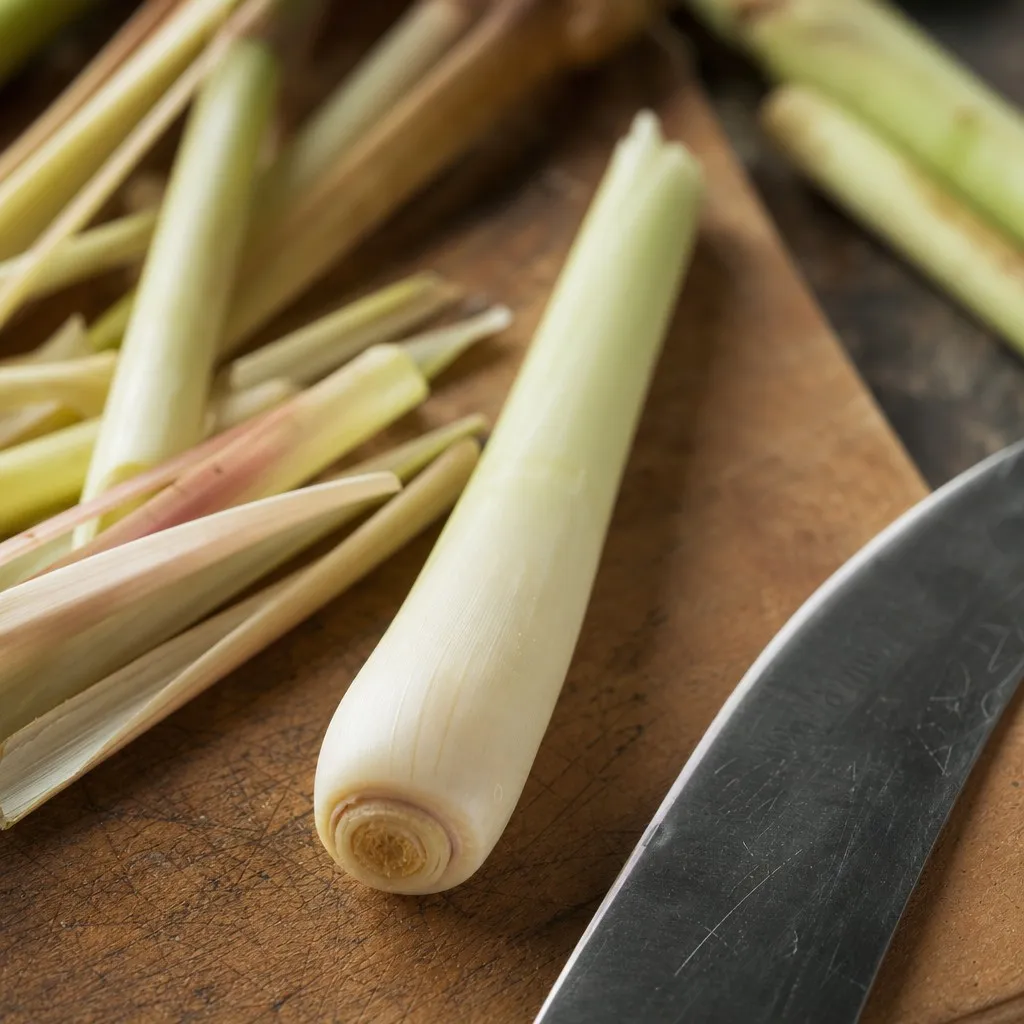
Lemongrass grows in tall, dense clumps in tropical climates. The stalks are long, typically 30–60cm, and have a distinctive structure: the outer layers are dry and papery, the upper portion is a darker, tougher green, and the bottom section near the root is pale cream or white and much more tender. That pale, inner bottom section is the part you use.
A fresh stalk of lemongrass is firm and aromatic: even before cutting, if you bruise it against a chopping board you can smell the lemon-citrus fragrance immediately. The plant is grown commercially across South-East Asia and is harvested year-round, which is why it is one of the more accessible Thai aromatics to find in UK supermarkets.
What does lemongrass taste like?
Citrusy is the obvious description, but lemongrass is more nuanced than that. The flavour has the brightness of lemon and lime, with a floral undertone, a faint hint of ginger, and a very slight mintiness. Crucially, it has none of lemon's sharpness or bitterness; it perfumes rather than acidifies. A good bowl of tom yum has sourness from lime juice, not from lemongrass. The lemongrass is there for fragrance and depth.
When you simmer lemongrass in broth, it releases its aromatic oils gradually and fills the soup with a clean, warm citrus quality that is unmistakably Thai. When it is pounded raw into a curry paste, the flavour is more concentrated and grassy, becoming one of the building blocks of the paste's overall character rather than a background note.
How to prepare lemongrass
Preparation depends on how you are using it:
For soups and broths: Remove 1–2 dry outer layers by peeling them away; they are papery and have little flavour. Cut off the dried top section and the very bottom root end. The usable part is the bottom 8–10cm of the stalk: the pale, relatively tender section. Bruise this section firmly with the flat of a knife or a rolling pin (this cracks the fibres and helps release the aromatic oils), then cut into 2-inch chunks. Add to the broth, simmer, and remove or push aside before eating. The chunks are too fibrous to eat comfortably.
For curry pastes: Use the same bottom 8–10cm. Slice it as thinly as possible (across the grain, in rounds) before adding to the mortar or blender. Lemongrass is fibrous and takes longer to break down than most paste ingredients, so slice it finely first and pound it thoroughly. Rushing this step leaves stringy threads in the paste.
Can't decide what to eat tonight?
Take our 60-second quiz and we'll pick for you
For salads: Slice the tender inner stalk paper-thin diagonally. In some Thai salads, particularly in northern Thailand, finely sliced raw lemongrass is used as an ingredient in its own right rather than purely for flavouring. See the northern Thai food guide for more on this.
How lemongrass is used in Thai cooking
Lemongrass is one of the three essential aromatics in tom yum soup. Without it, the soup tastes completely different. The standard approach is bruised chunks simmered in the broth and discarded before serving. For the full method, the tom yum soup recipe walks through exactly how the aromatics work together.
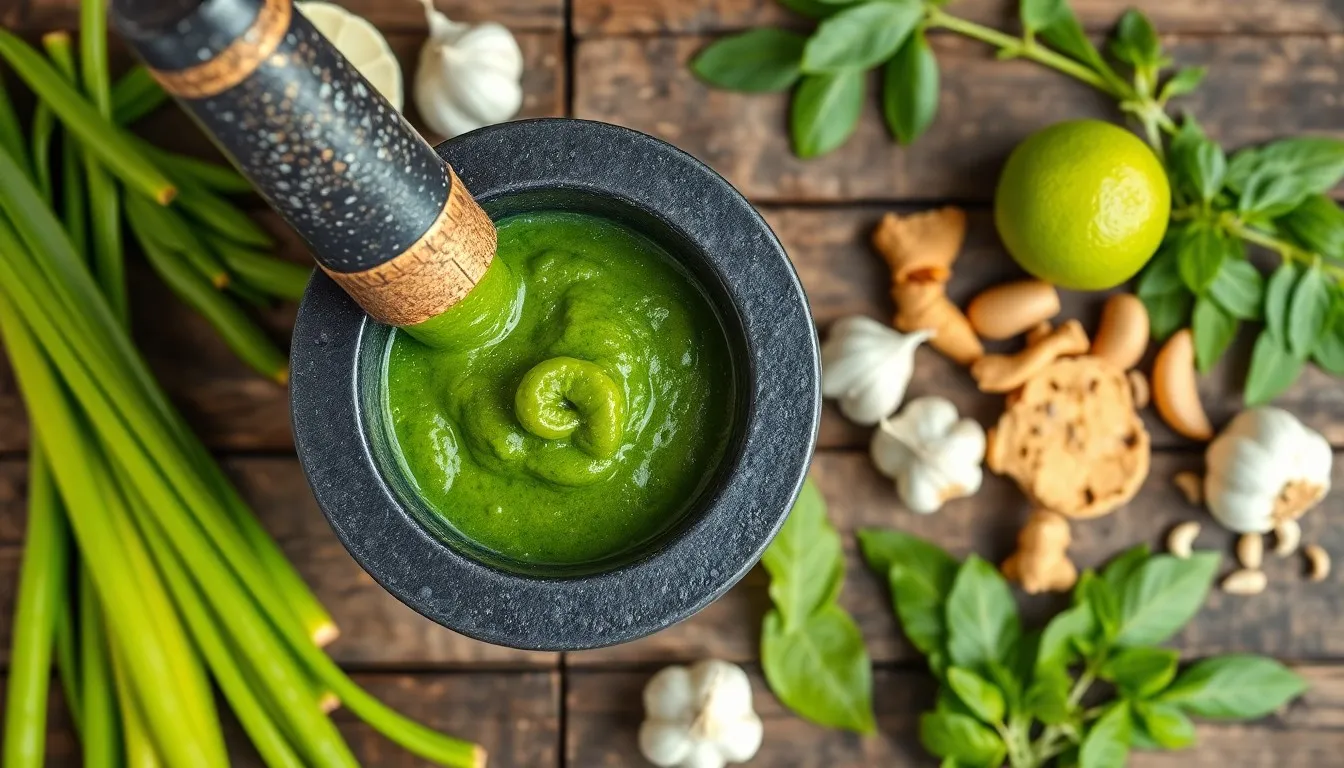
In curry pastes, lemongrass is pounded with galangal, kaffir lime leaves, chillies, shallots, garlic, and other ingredients to form the base. It is a core component of both green and red curry pastes: if you make curry paste from scratch, lemongrass is one of the first things you pound into the mortar. The Thai green curry paste recipe specifies the quantity and preparation method in detail.
Beyond soups and curry pastes, lemongrass appears in:
- Tom kha gai (the coconut galangal soup, where lemongrass works alongside galangal and kaffir lime leaves)
- Marinades for grilled meats and fish, finely chopped or pounded into the marinade
- Thai-style salad dressings
- Lemongrass tea: a simple infusion of bruised stalks in hot water, widely drunk in Thailand
Where to buy lemongrass in the UK
Fresh lemongrass is more widely available in UK supermarkets than most Thai aromatics. Waitrose and M&S stock it reliably, both in-store and online; Waitrose in particular carries it year-round. Larger Tesco and Sainsbury's branches increasingly stock it in the fresh herb or exotic produce section. Ocado carries it consistently.
Asian supermarkets are the most reliable source and tend to sell it in larger bundles at lower prices than mainstream supermarkets; a bunch of six to eight stalks is typical. If you live near any Chinese, Thai, or Vietnamese grocery shop, check there first.
Tube lemongrass paste (the Bart's brand is the most common in UK supermarkets) is available in most major supermarkets, usually in the world foods aisle. It is a convenient option when you need a small amount and do not want a whole bunch of fresh stalks. Use 1 tablespoon of paste per fresh stalk called for in a recipe. It is noticeably less aromatic than fresh but perfectly adequate for most cooked dishes.
How to store lemongrass
Fresh lemongrass stalks will keep for 2–3 weeks in the fridge. Wrap them loosely in damp kitchen paper inside a plastic bag or container; this keeps the outer layers from drying out completely.
For longer storage, freezing is excellent and lemongrass responds to it particularly well. You can freeze whole stalks and slice from frozen as needed; the stalks slice cleanly when frozen. Alternatively, pre-slice into rounds, spread on a tray to freeze individually, then transfer to a freezer bag so you can take out just what you need. Frozen lemongrass keeps well for up to 6 months and is almost indistinguishable from fresh once cooked. Many Thai cooks keep a bag in the freezer permanently as a backup.
Lemongrass substitutes

Lemongrass is one of the defining flavours of Thai food, and no substitute truly replicates it. That said, these are your realistic options:
| Substitute | Use ratio | Notes |
|---|---|---|
| Lemon zest + grated ginger | 1 tsp zest + ½ tsp ginger per stalk | Closest fresh substitute; covers the citrus and the warmth but lacks the floral quality |
| Lemongrass paste (tube) | 1 tbsp per fresh stalk | Bart's brand in most UK supermarkets; good for sauces and pastes, slightly weaker in soups |
| Lemon verbena | 2–3 fresh leaves per stalk | More floral and less gingery; works reasonably well in soups but can be hard to find |
| Kaffir lime zest | ½ tsp per stalk | Shares the citrus quality without the grassiness; use alongside ginger for a closer result |
If you are making a recipe where lemongrass is central (tom yum, tom kha, or a curry paste), it is worth the effort to source the real thing rather than substitute. The flavour difference is significant. For dishes where lemongrass plays a supporting role in a marinade or dressing, the lemon zest and ginger combination is a respectable workaround.
Lemongrass, galangal, and kaffir lime leaves are the aromatic trio that makes Thai soups and curries taste unmistakably Thai. You can read about the other two in the galangal guide and the kaffir lime leaves guide. Once you understand what each one contributes, you will have a much clearer picture of how Thai flavour works, and why each ingredient is genuinely hard to leave out.
Frequently asked questions
Can you eat lemongrass?
The tender inner stalk can be eaten when sliced very finely, as in some Thai salads where paper-thin rounds are used as an ingredient in their own right. But the outer layers are too tough and papery to eat, and the thick chunks used to infuse soups are too fibrous to eat comfortably. In most cooked dishes, lemongrass is a flavour vehicle: you add it, infuse the dish with its aroma, and then remove it before eating.
Is lemongrass the same as lemon?
No. Lemongrass has a citrusy flavour that resembles lemon but is more floral, less sharp, and has none of lemon's bitterness. Where lemon juice adds acidity, lemongrass adds fragrance. You cannot substitute lemon juice for lemongrass; the character is completely different, and the result would taste sour rather than aromatic. In a recipe that calls for both (tom yum, for example), each is doing a different job.
Where can I buy lemongrass in UK supermarkets?
Waitrose, M&S, and larger Tesco branches stock fresh lemongrass. Asian supermarkets stock it reliably year-round, usually in larger quantities and at better prices than mainstream supermarkets. Tube lemongrass paste (Bart's brand) is available in most major supermarkets and is a convenient backup. Ocado and Waitrose online both carry fresh lemongrass with good availability.
Can you freeze lemongrass?
Yes, and it freezes very well. Freeze whole stalks and slice from frozen as needed; they slice cleanly straight from the freezer. Alternatively, pre-slice into rounds, freeze on a tray first, then bag up in portions so you can take out exactly what you need. Frozen lemongrass is almost indistinguishable from fresh in cooked dishes and will keep for up to 6 months.



Comments