Written by Manaow Prasatthong, 3rd Generation Thai Chef
Galangal is a rhizome (a root-like stem) closely related to ginger and turmeric, and one of the most important aromatic ingredients in Thai cooking. It appears in soups, curry pastes, and broths, and is one of the 20 most common ingredients in Thai food. Most people encounter it without knowing what it is: if you have ever eaten tom kha gai and noticed a pale, woody slice in your soup that you were not supposed to eat, that was galangal.
What does galangal look like?
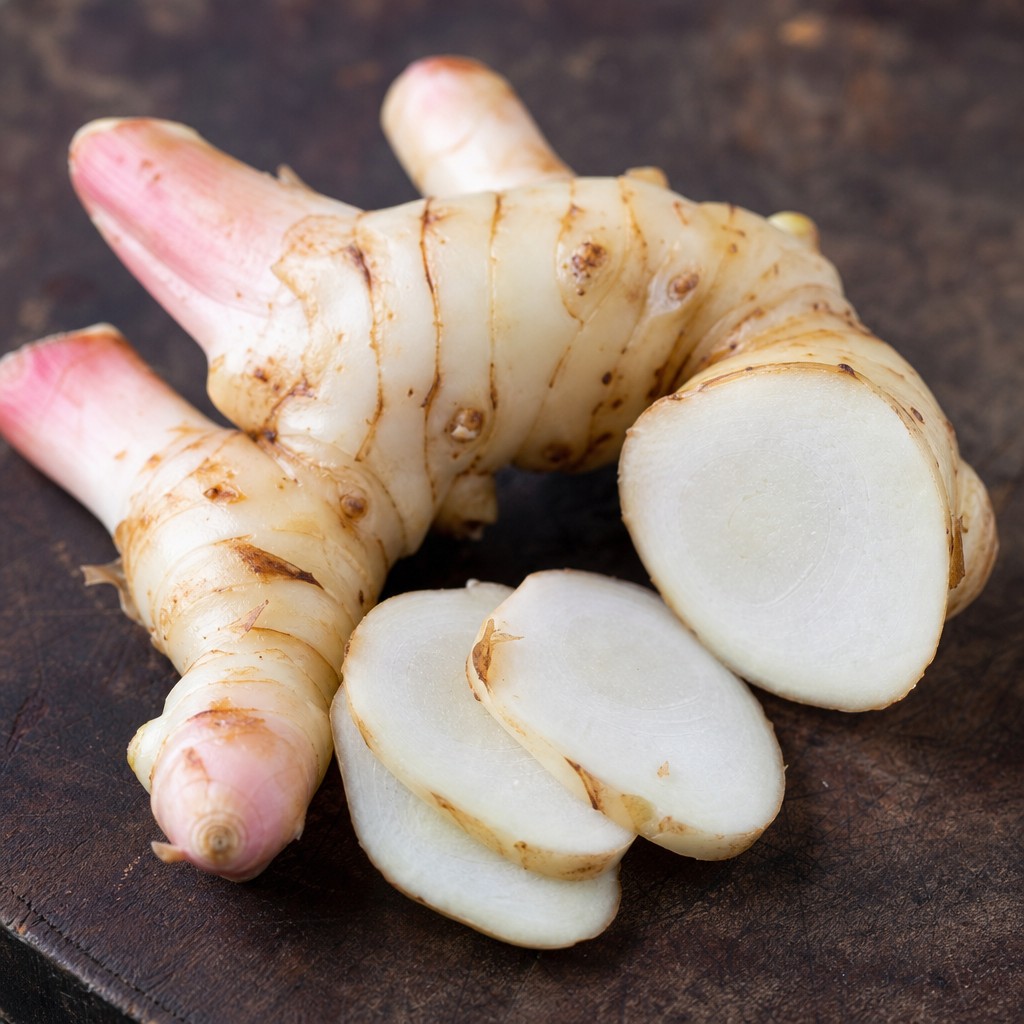
Fresh galangal has a pinkish-white or pale cream skin, and is noticeably denser and harder than ginger. Where ginger tends to be a warm, golden-brown colour with a papery skin that peels easily, galangal is paler, smoother, and much more rigid: it can be difficult to cut through with a standard kitchen knife if the root is mature.
The root grows in segments separated by rings or nodes, giving it a jointed, almost bamboo-like appearance. Young galangal (sometimes sold as pink or baby galangal) is smaller, pinker, and more tender; its flavour is brighter and it is easier to work with. Mature galangal is larger, harder, and has a more fibrous texture; the flavour is stronger and more resinous. When buying fresh galangal, both forms are usable, but young galangal is generally preferred for dishes where it is eaten rather than used purely to infuse a broth.
What does galangal taste like?
Galangal is often described as having a sharper, more medicinal flavour than ginger, with a distinct piney, citrusy quality and almost a mentholated edge. It is less sweet than ginger and more resinous; there is something almost eucalyptus-like in the background, which is not unpleasant but is very different from ginger's familiar warmth.
In terms of heat, galangal is gentler than ginger. It does not deliver the same sharp, immediate bite; instead, its spice is more diffuse and integrated into the overall flavour. When used to infuse a broth (as in tom kha gai) it lends a deep, aromatic quality that is hard to identify but immediately recognisable as "Thai." When pounded into a curry paste, it adds body and a characteristic resinous depth that underpins everything else.
Galangal vs ginger: what's the difference?
The two roots are closely related but taste and behave quite differently in the kitchen. Here is a quick comparison:
| Feature | Galangal | Ginger |
|---|---|---|
| Appearance | Pale pinkish-white, dense, ringed | Warm golden-brown, papery skin, knobbly |
| Flavour | Piney, citrusy, resinous, mentholated | Warm, sweet-spicy, earthy |
| Texture | Very hard and fibrous when mature | Softer, easier to grate |
| Heat level | Mild and diffuse | Sharp, immediate bite |
| Primary uses | Thai/SE Asian soups and curry pastes | Wide: baking, curries, stir-fries, drinks |
Can you substitute ginger for galangal? The short answer is: not really, and you will know the difference. Ginger will not give you the piney, resinous quality that defines galangal's contribution; the dish will taste different, sometimes noticeably so. That said, for cooked dishes (soups, curries) where galangal is used to infuse the broth rather than eaten directly, ginger is a better-than-nothing substitute. Use slightly less than the amount of galangal called for, since ginger's sharper heat can overpower. For curry pastes, galangal is harder to substitute because its flavour is more central to the overall profile.
Can't decide what to eat tonight?
Take our 60-second quiz and we'll pick for you
How is galangal used in Thai cooking?
Galangal appears in two distinct forms in Thai cooking, depending on the dish: sliced whole to infuse broths, or finely pounded as part of a curry paste.
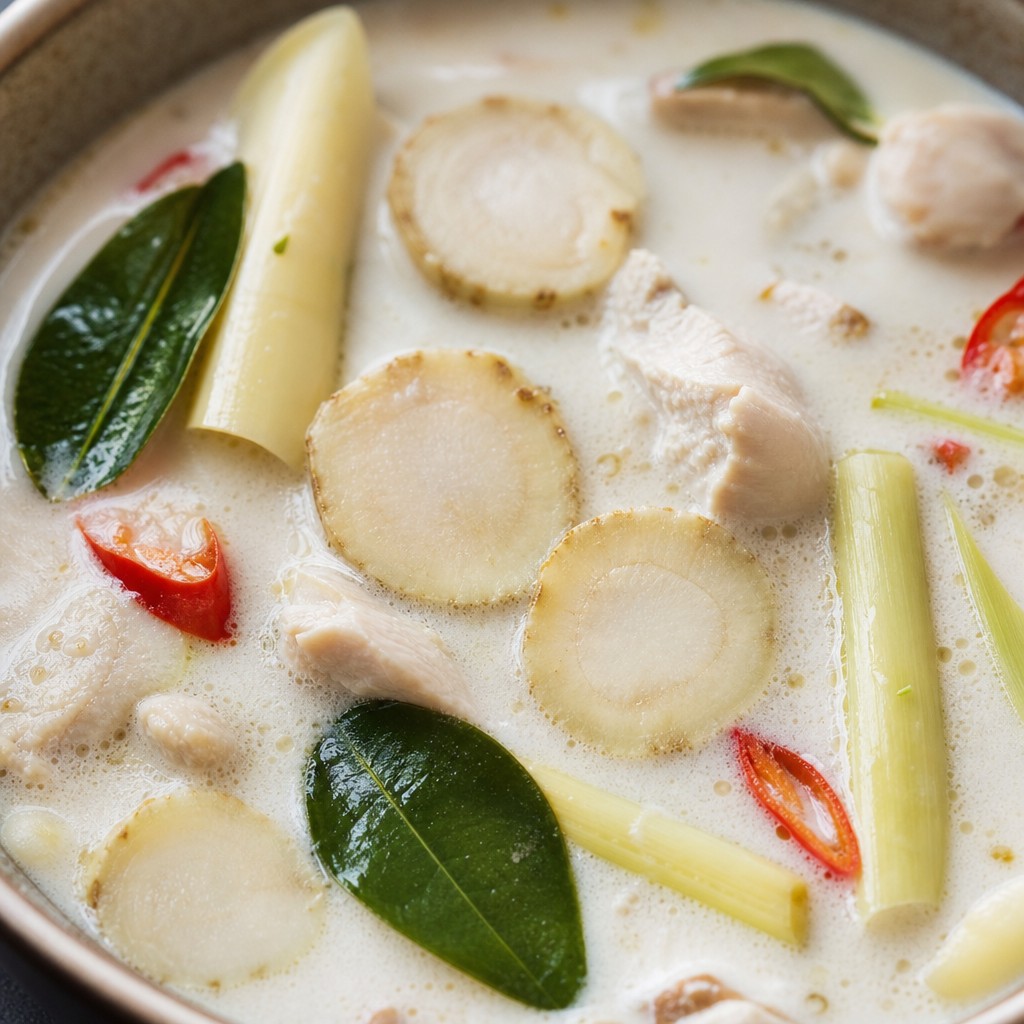
In soups (most famously tom kha gai) thick slices of galangal are added to the broth and simmered to release their flavour, then pushed aside or removed before eating. The slices themselves are not consumed (they are too fibrous and the flavour is too intense), but they give the broth its characteristic aromatic depth. You will find a similar approach in our easy tom yum soup recipe, where galangal plays a supporting role alongside lemongrass and kaffir lime leaves.
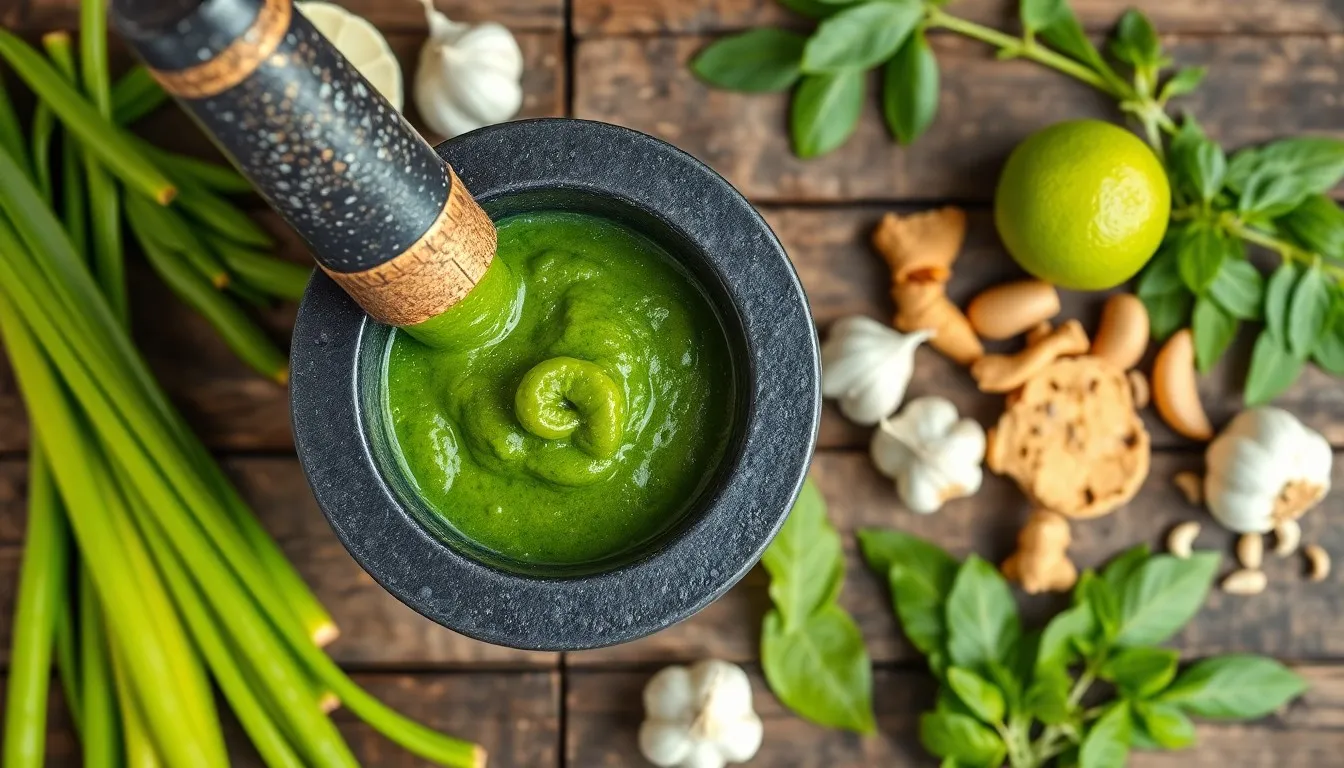
In curry pastes, galangal is peeled, sliced, and pounded with the other paste ingredients until smooth. It is a base ingredient in green, red, and massaman curry pastes; without it, the paste lacks an important layer of flavour. If you want to see exactly how it is used, the Thai green curry paste recipe includes galangal as one of the core aromatics.
Where to buy galangal
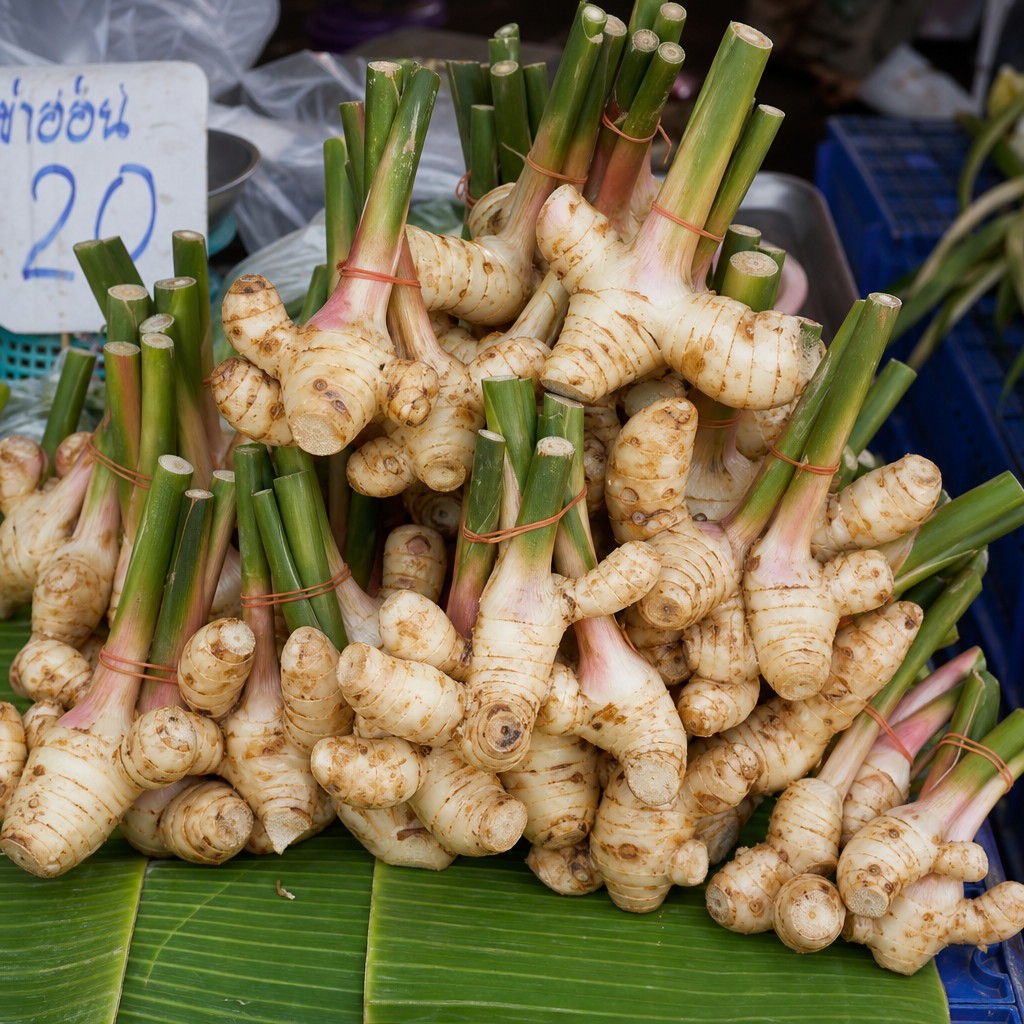
Fresh galangal is most reliably found at Asian supermarkets: almost any shop that stocks Thai or South-East Asian ingredients will carry it. In the UK, larger branches of Waitrose and M&S occasionally stock it, and some farmers' markets with specialist produce stalls carry it during certain seasons, but Asian supermarkets are by far the most consistent source.
Frozen galangal is widely available online and is a very good quality substitute for fresh. The freezing process breaks down some of the fibres, making it easier to slice and grate, and the flavour is well-preserved. Many Thai home cooks keep a bag of frozen galangal slices in the freezer year-round and use it as needed. If fresh galangal is not available locally, frozen is the recommended alternative.
Dried galangal powder (sometimes sold as laos powder, its Indonesian name) is available in some specialist spice shops, but the flavour is significantly weaker and the piney quality is largely lost in the drying process. Use dried galangal powder only as an absolute last resort, and increase the quantity: a rough guide is one teaspoon of powder per tablespoon of fresh galangal.
How to prepare and store galangal
Young galangal does not need to be peeled: scrub it well under cold water and it is ready to use. The skin of young galangal is thin and mild. Mature galangal has a thicker, tougher skin that is worth peeling if you are pounding it into a paste; for soups where you are just using thick slices to infuse a broth, peeling is not necessary.
For soups, cut galangal into thick slices (about 3–5mm) across the grain. The slices will infuse the broth as it simmers. For curry pastes, slice it more thinly and then pound it thoroughly; its dense, fibrous texture means it takes longer to break down than ginger, so be patient.
To store fresh galangal, wrap it in a paper towel and place it in a loose plastic bag or container in the fridge. It will keep for one to two weeks. For longer storage, freeze it: slice it first, spread the slices on a tray to freeze individually, then transfer to a freezer bag. Frozen galangal slices will keep for several months and can be used directly from frozen in soups and broths.
Galangal is one of those ingredients that makes an immediate difference to the authenticity of Thai cooking. Its piney, resinous flavour is not something that can be truly replicated; once you have tasted a tom kha gai made with fresh galangal versus one made without it, the difference is clear. If you are getting serious about cooking Thai food at home, keeping galangal (fresh or frozen) in your kitchen is one of the most valuable things you can do.



Comments