
A metallic or tinny taste in Thai red curry takes the pleasure out of the entire meal. The curry looks right, smells promising in the pan, then delivers a strange, almost iron-like finish on the tongue. It is not bad ingredients. It is nearly always a technique problem or a reactive surface, and it is entirely fixable.
I have been cooking Thai red curry since I was small, in my family's restaurant in Chiang Mai, and I have seen six causes come up again and again at our pop-up events here in Dorset.
The quick answer
The most common cause is undercooked curry paste. The dried chillies, galangal and shrimp paste in red curry paste have a raw, harsh note that reads as metallic when the paste hasn't been properly fried in hot coconut cream for at least 3–5 minutes. Other causes are a reactive pan, cheap coconut milk with a tin note, and low-quality fish sauce. An open bottle that has lost its aroma is worth ruling out too, since the flavour fades while the salt stays; does fish sauce go bad explains what changes with age.
Cause 1: undercooked curry paste (the most common culprit)
Red curry paste is a concentrated blend of dried chillies, galangal, lemongrass, shallots, garlic, coriander root, cumin and shrimp paste. Raw, those ingredients have a sharp, sometimes medicinal quality, particularly the dried chillies and galangal. Fry the paste in hot coconut cream for several minutes and the heat drives off the harsh volatile compounds; the paste becomes rounded, fragrant and deeply flavoured. Skip that step, or just stir the paste straight into coconut milk, and those raw notes survive into the finished curry. Your brain registers them as metallic or bitter because they sit in a flavour register similar to the taste of metal on the tongue. This is by far the most common cause.
Scoop the thick coconut cream from the top of an unshaken tin and heat it in your pan over medium heat until it starts to crack (the oil visibly separates, so you will see it shimmer around the edges). Add 2–4 tablespoons of red curry paste and fry it in that hot cream, stirring almost constantly, for a minimum of three minutes and ideally five. Smell it: it should be warm, spicy and rounded, not raw and sharp. If it still smells raw, keep frying. Only then add the rest of the coconut milk.
There is no shortcut here. Low heat or short time and you will taste it in every mouthful.
Cause 2: a reactive pan

Thai curries are acidic. Tamarind paste, lime juice added at the end, and coconut milk itself is mildly acidic. Cook that against bare cast iron, uncoated carbon steel or untreated aluminium and the acid reacts with the metal surface, pulling trace metal ions into the food. The result is a real metallic taste that no amount of technique adjustment will fix, because the pan is the source.
I know a lot of people swear by cast iron for everything. For searing and stir-fries, fair enough. But a coconut milk curry with tamarind simmering for twenty minutes is a different matter, and cast iron will reliably leave a metallic note. America's Test Kitchen tested this and found that unseasoned cast iron releases roughly ten times more iron into food than a well-seasoned pan; the seasoning acts as a barrier between the acid and the raw metal. The longer the curry sits in a reactive pan, the worse it gets.
Use stainless steel, enamelled cast iron or a non-stick pan for Thai curries. Anodised aluminium is fine too, because the hardened surface is sealed. If you suspect the pan, cook the same recipe in a different one and taste the difference.
Cause 3: cheap or tinny coconut milk
Before you pour, open the tin and smell it. If there is even a faint smell of the can itself, a metallic and slightly cold odour, that note will carry through into the curry. The can lining and processing method both play a part. Lower-end brands also tend to have more stabilisers and less actual coconut fat, which makes the paste-frying step less effective because there is not enough fat to properly cook the paste.
The brands I use at our pop-ups are Mae Ploy, Chaokoh and Aroy-D. A little more than supermarket own-brand, but when coconut milk is the backbone of the sauce, it is worth it.
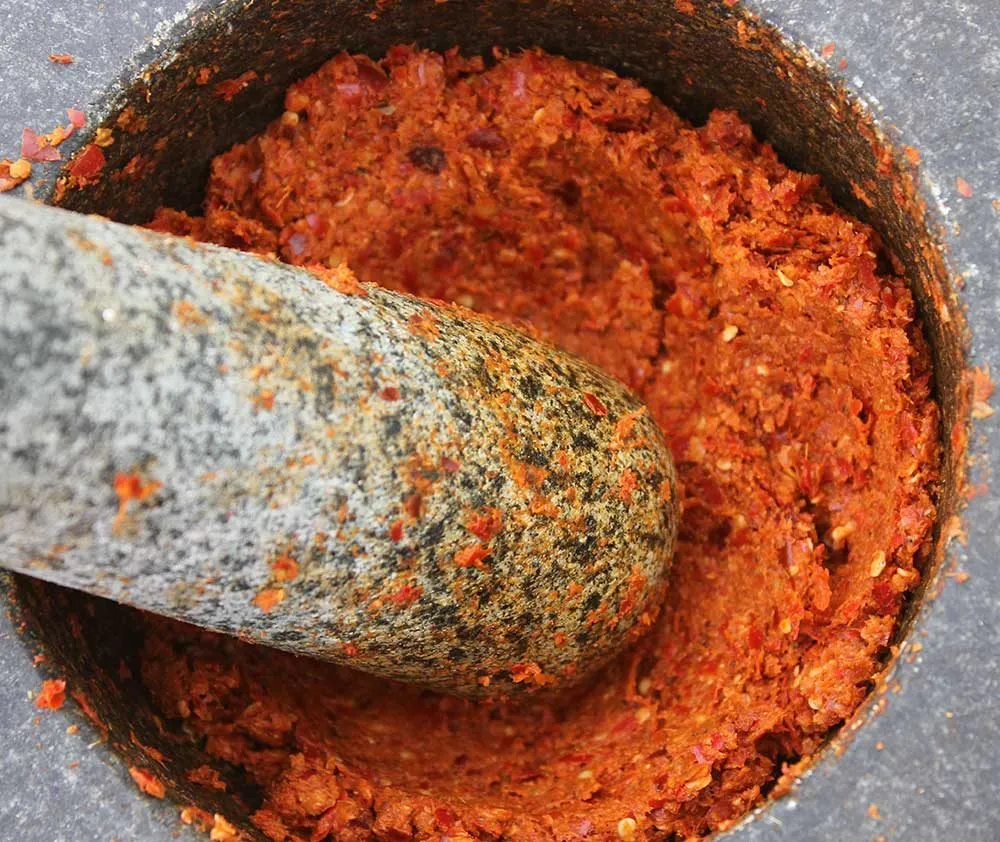
Learn how to make it like this →
Cause 4: low-quality fish sauce
Good fish sauce is pungent and funky but rounded and savoury underneath. It disappears into the curry and adds depth rather than announcing itself. Poor-quality fish sauce has a harsh, almost chemical edge that persists in the finished dish and reads as metallic, especially when it sits alongside the sharper notes in the paste.
I use Tiparos and Squid Brand. Both are made from anchovies fermented in salt and are in most UK Asian supermarkets. For more on why brand matters with fish sauce, see our guide to why Thais use Squid brand fish sauce.
Cause 5: dried chillies that were not toasted (homemade paste)
Making your own red curry paste? The dried red chillies need to be dry-toasted before grinding. Put them in a dry pan over medium heat and move them around until they darken slightly, blister a little and smell fragrant, which usually takes two to three minutes. That toasting drives off the raw, slightly resinous quality that dried chillies have straight out of the packet.
Skip it, and some of that harshness carries through into the paste and then the curry, even with a good frying technique. Shop-bought paste has already had this done by the manufacturer, so it only matters if you are making from scratch, and it is the step most people miss.
Cause 6: kaffir lime leaves cooked from the start
Kaffir lime leaves (makrut lime leaves) make a curry sing, but the fragrant oils that make them wonderful are the same ones that turn slightly bitter and medicinal when they cook too long. Add them at the very start with the paste and cook them for twenty minutes or more, and those oils break down into compounds that register as astringent or faintly metallic, particularly in combination with the other acidic elements of the curry.
Tear the leaves (removing the tough central rib) and add them once the liquid is in, for the last ten to fifteen minutes of simmering. Some cooks add them right at the end for maximum fragrance. Both work. Just do not throw them in at the paste-frying stage.
Canned bamboo shoots and other tinned vegetables
If you add bamboo shoots to your red curry, as many recipes do, and they came from a tin, they are a very likely source of the metallic taste that most people never think to blame. Canned bamboo shoots are heat-sterilised inside sealed metal tins. That process leaves a faint metallic film on the surface of the vegetable, and if you tip them straight from the tin into the curry, that film goes with them.
Can't decide what to eat tonight?
Take our 60-second quiz and we'll pick for you
Fix: tip the bamboo shoots into a saucepan with fresh water, bring to the boil, then drain and rinse. Three to five minutes lifts the metallic film left by the canning process. Do the same with any other tinned vegetables going into the curry.
Two storage habits that cause metallic flavours
Never store leftover coconut milk in the tin it came in. Once the tin is opened, the citric acid in the coconut milk starts reacting with the tin lining within hours, and that reaction creates off-flavours, including a metallic one. Transfer any leftover coconut milk into a glass jar or an airtight plastic container straight away, even if you only opened it an hour ago.
Check how old your open curry paste is. Curry paste loses its aromatic compounds, the bright notes from galangal, lemongrass and coriander root, within about two to three weeks of opening, even refrigerated. A stale paste does not taste metallic in itself, but as the fresh aromatics fade, the harsher and more acidic notes underneath become more prominent. That imbalance is something many people experience as metallic or tinny.
Smell the paste before you use it. It should be bright and aromatic: lively, fragrant and fresh. If it smells sour or flat, it has passed its best, and a fresh tub will give you a noticeably cleaner curry.
Summary: the six causes at a glance
| Cause | How to tell | Fix |
|---|---|---|
| Undercooked paste | Raw, sharp smell; paste still bright red | Fry paste in cracked cream 3–5 min minimum |
| Reactive pan | Metallic even with good technique | Switch to stainless steel or enamelled pan |
| Cheap coconut milk | Faint tin smell on opening | Use Mae Ploy, Chaokoh or Aroy-D |
| Low-quality fish sauce | Chemical, sharp smell in the bottle | Switch to Tiparos or Squid Brand |
| Untoasted dried chillies (homemade paste) | Harsh, resinous note | Dry-toast before grinding |
| Kaffir lime leaves over-cooked | Astringent, slightly bitter finish | Add in last 10–15 minutes only |
How to fix a metallic red curry mid-cook
Already tasting metal? A few things can help:
- If the paste is undercooked: remove any protein, reduce the sauce hard over high heat for five minutes, stirring constantly. This drives off more of the raw compounds. It will not be perfect, but it will improve.
- Add palm sugar: sweetness counteracts metallic and bitter notes. A teaspoon of palm sugar (or light brown sugar) stirred in can round the flavour significantly.
- Add more fish sauce: a small amount, half a teaspoon at a time, of good fish sauce adds savoury depth that can mask harshness.
- A squeeze of lime at the end: fresh acidity can push the flavour into a more balanced place.
None of these fixes a reactive pan. If the pan is the source, the only solution is to move to a different one next time.
Frequently asked questions
Why does my Thai red curry taste metallic?
The most common cause is undercooked curry paste, because the raw dried chillies, galangal and shrimp paste need at least 3–5 minutes of frying in hot coconut cream before liquid is added. Other causes include a reactive pan (cast iron or uncoated aluminium), cheap tinned coconut milk with a tinny note, or low-quality fish sauce.
How long should you fry Thai curry paste?
Fry the paste in cracked coconut cream for at least 3–5 minutes over medium heat, stirring constantly, until it smells fragrant (not sharp or raw) and the paste darkens slightly and the oil begins to separate around the edges. Rushing this step is the single most common cause of a harsh, metallic curry.
Can a cast iron pan make Thai curry taste metallic?
Yes. Cast iron reacts with acidic ingredients such as tamarind, lime juice and coconut milk, causing a metallic, sometimes iron-tinged flavour to leach into the food. Use stainless steel, enamelled cast iron, or a non-stick pan for Thai curries.
Does cheap coconut milk cause a metallic taste?
It can. Low-quality tinned coconut milk sometimes has a slight metallic note from the can interior, especially if the tin was not properly coated. Brands like Mae Ploy, Chaokoh and Aroy-D are more reliable. If the coconut milk smells faintly of tin when you open it, that note will come through in the curry.
Why does my homemade red curry paste taste metallic?
Homemade paste with under-toasted dried chillies is the usual culprit. Dried red chillies should be dry-roasted in a pan without oil until fragrant and slightly darkened before being ground. Untoasted dried chillies have a raw, harsh edge that reads as metallic or bitter when the paste is not properly fried.
Can fish sauce make Thai curry taste metallic?
Cheap or low-quality fish sauce can have a chemical, almost metallic edge. Good fish sauce, such as Tiparos, Squid Brand or Megachef, should smell pungent but rounded, not sharp or chemical. If yours smells harsh straight from the bottle, switching brands is likely to improve the overall flavour of the curry.
How do I fix a Thai red curry that already tastes metallic?
If the paste is undercooked, remove the protein temporarily, crank the heat and cook the sauce down hard to drive off more of the raw note. It will not be perfect but it will improve. A small amount of palm sugar and extra fish sauce can mask residual harshness. If you used a reactive pan, switch to a different one next time.
Should you add kaffir lime leaves early or late in Thai curry?
Add kaffir lime leaves partway through, not at the very beginning and not at the very end. Tearing them and adding them after the liquid goes in for the last 10–15 minutes gives you fragrance without bitterness. Cooking them from the start causes the volatile oils to break down into a slightly bitter, medicinal note.



Comments