
A grainy, oily, separated green curry is one of the most dispiriting sights in the kitchen. The sauce looks curdled, the oil floats on top in a slick, and nothing resembles the smooth, glossy curry you were aiming for. It almost always comes down to a handful of fixable mistakes, and once you understand the science behind it, it will never happen again.
I have cooked Thai green curry at pop-up events across Dorset for years, often in batches where the margin for error is unforgiving. This is why the sauce breaks, and how to stop it.
The quick answer
Thai green curry is an emulsion of fat and water held together by the proteins in coconut milk. Too much heat, or adding the liquid coconut milk before properly frying the paste in thick coconut cream, breaks that emulsion and the fat separates. The fix: use full-fat tin coconut milk, fry the paste in the unshaken cream first, and never boil the curry hard once the liquid goes in.
Two kinds of separation, and only one is a problem
There are two completely different kinds of separation in a green curry, and most home cooks muddle them together and overcorrect.
The first is desirable. When you fry the paste in thick coconut cream, you want the oil to split out and pool on the surface. That slick tells you the aromatics have cooked through and the paste is ready. It is the whole point of the technique.
The second is problematic. This is the graininess and curdling that appears later, when the finished sauce breaks and the smooth body turns to oily liquid with a curdled texture running through it.
If you see a slick of oil form on top while frying the paste. That is correct, and it is not the problem. The problem is when the finished sauce looks grainy or curdled. Cooks who panic at the early oil and stir in extra liquid to fix it usually sabotage the very technique that keeps the sauce stable later.
What is actually happening when a curry separates?
Coconut milk is not just fat and water sitting alongside each other. It is an emulsion, meaning tiny droplets of fat are suspended in water, held by natural proteins and emulsifiers in the coconut flesh. This is why a fresh tin looks creamy rather than oily.
When you apply heat, those proteins denature and lose their grip. At a gentle simmer this happens slowly enough that the emulsion stays mostly intact and your curry looks smooth. At a hard boil the proteins break down fast and the fat droplets coalesce, rising to the surface as visible oil while the watery liquid sits below, which is a curry that looks separated and grainy.
Three things matter: the type of coconut milk, the technique of adding it, and the temperature once it is in the pan.
Cause 1: you didn't fry the paste in thick coconut cream first
This is the most common mistake, and the one that causes the most dramatic separations. The correct Thai technique is built around a step called cracking the cream, and most Western recipes skip it entirely.
Open a tin of full-fat coconut milk without shaking it. At the top sits a thick, almost solid layer of cream; below it, the thinner liquid. Scoop that cream into your pan over medium heat. After a minute or two the surface looks shiny and the edges separate, so clear oil appears at the rim. That is the cream cracking: the emulsion has deliberately broken, releasing the natural coconut oil.
This is the moment to add your curry paste and fry it in that released oil, stirring constantly for 3–5 minutes until fragrant and slightly darkened. The dry-frying drives off the raw notes in the lemongrass, galangal and chillies, and the paste becomes deeper and rounder in flavour.
Only then do you add the remaining thin liquid with any stock or water. Adding all the coconut milk at once, especially cold from the tin, means the paste never gets properly fried, and the sauce is essentially uncooked coconut milk with raw-tasting paste stirred in. It will be flat in flavour and prone to separating the moment it heats up.
Cause 2: boiling the curry too hard
Once the liquid and protein are in, the curry wants a gentle, lazy simmer, with the surface just trembling and the occasional bubble rising slowly. A hard, rolling boil is the enemy of a smooth Thai curry sauce.
Hard boiling does two things: it agitates the emulsion mechanically, knocking fat droplets loose, and it drives the temperature up to where the coconut proteins break down faster than they can hold the sauce together. You end up with an oily, grainy mess even if your starting technique was perfect.
Keep the heat at medium-low once the liquid is in. For protein that needs time, like bone-in chicken, keep a lid on and the dial barely above minimum, nudging it down if it bubbles too actively.
Cause 3: the wrong type of coconut milk
Not all coconut milk behaves the same under heat. Full-fat tinned coconut milk, from brands like Chaokoh, Mae Ploy or Aroy-D, has the fat content and protein structure to stay emulsified at cooking temperatures when treated correctly. Other formats break far more readily:
| Coconut milk type | Behaviour under heat | Use for curry? |
|---|---|---|
| Full-fat tin (Chaokoh, Mae Ploy) | Stable if not overboiled | Yes, best choice |
| Reduced-fat tin | Separates easily; watery | No |
| Carton coconut milk | Often stabilised differently; can go grainy | No |
| Coconut cream (tin) | Very stable; richer | Yes, use as cream layer |
| UHT coconut milk (long-life) | More processed; less stable | Poor substitute |
If you have been using carton or reduced-fat coconut milk and wondering why your curry always looks grainy, switch to full-fat tinned and the problem may disappear immediately.
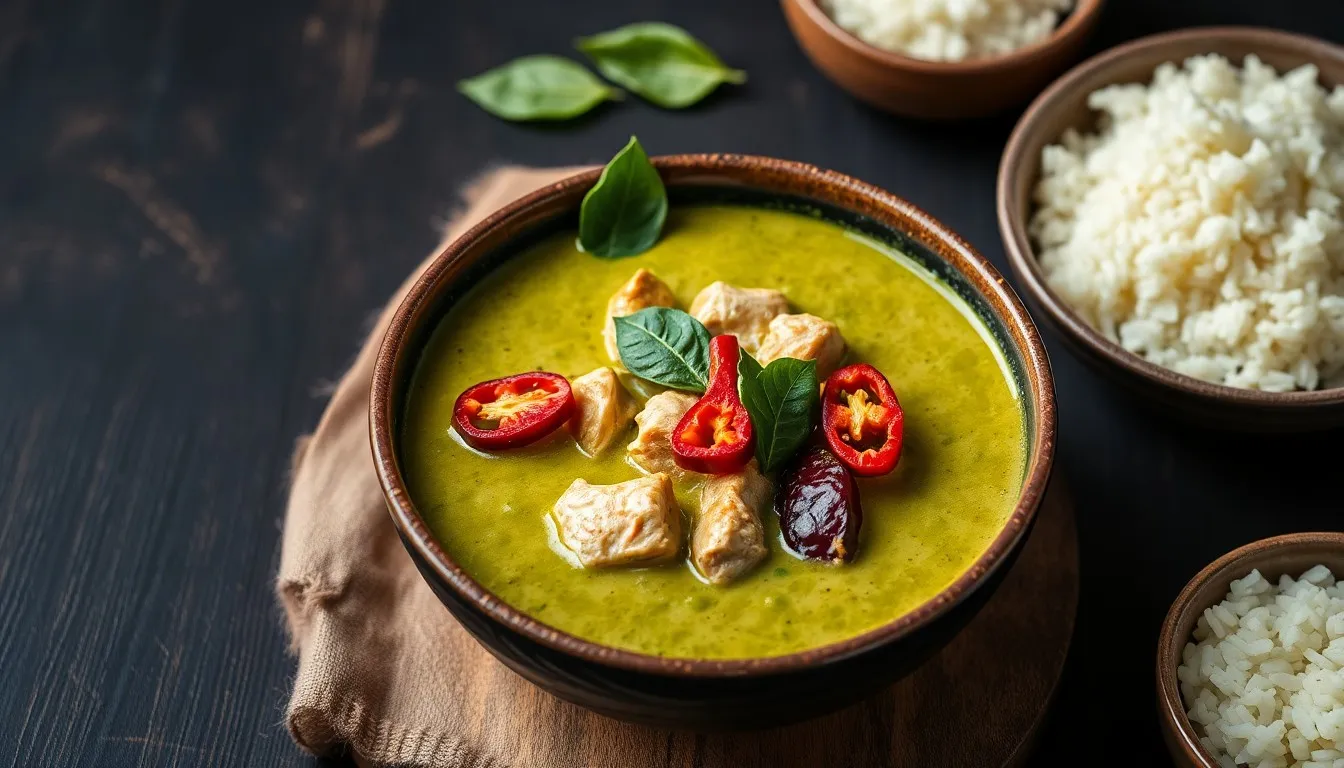
Learn how to make it like this →
Cause 4: shaking the tin
Shaking the tin does not cause separation by itself, but it costs you the thick/thin division that makes the crack-the-cream technique possible. An unshaken tin has a thick, almost solid cream at the top and a thinner liquid below. That thick cream is what you fry the paste in. Shake the tin and you mix them back together, losing the division.
The habit of shaking a tin before opening, logical for beans or tomatoes, is the wrong instinct here. Store coconut milk upright and leave it unshaken.
Cause 5: adding acidic ingredients too early
Acid shocks the coconut milk emulsion. Add it too early, while the sauce is still establishing itself, and you tip a borderline curry over the edge into graininess. It is a small thing, but I have watched perfectly good curries go grainy at the last minute for exactly this reason.
Fish sauce is the main culprit, because people reach for it at the start out of habit. Don't. Add it near the end, in the last 2 minutes, once the sauce has set and the heat is gentle.
The same goes for lime juice, which is even more acidic. Never simmer it into the curry. Add it off the heat just before serving, or let people add it at the table. It brightens the flavour without breaking anything.
Can't decide what to eat tonight?
Take our 60-second quiz and we'll pick for you
How to rescue a separated green curry

All is not lost. If your curry has already split, try this:
- Turn the heat to its absolute lowest setting and let the curry cool slightly, thirty seconds or so.
- Add 2 tablespoons of fresh, room-temperature full-fat coconut cream to the centre of the pan.
- Stir slowly in small circles from the centre outward, incorporating the cream gradually rather than wildly.
- Keep the heat low as you stir, gently coaxing the fat back into suspension.
It will rarely look as smooth as if it had never broken, but it will be much better. The key is to avoid cold coconut milk from the fridge and high heat, both of which make it worse.
If the coconut cream rescue isn't enough, there is a reliable starch trick. Mix 1 tablespoon of tapioca starch (or cornflour) with 2 tablespoons of cold water into a smooth slurry, then stir it into the curry off the heat. Let it sit for 30 seconds, return to very low heat and stir gently. The starch binds the loose water and fat back into a cohesive sauce.
An immersion blender can also pull a grainy curry together. Apply it briefly in the pan to blend the particles smooth. Use it for only 5–10 seconds, though, or you over-emulsify and leave the curry pasty and dull rather than glossy.
Reheating leftover green curry without it splitting
Leftover green curry often separates when reheated, because the cold sauce hits hot metal and the shock curdles it. Warm it very gently over low heat and never let it boil.
What I do: warm a ladle of the sauce in a small separate pan first, then pour it back and stir. This tempers the cold curry gradually and prevents the shock that causes curdling.
The correct technique from the beginning
Run through this sequence and the sauce will be smooth and stable every time:
- Open the tin without shaking it. Scoop 4–5 tablespoons of the thick cream into a wide pan or wok over medium heat.
- Heat the cream until the oil visibly separates at the edges, which takes 2–3 minutes. This is cracking the cream.
- Add 2–4 tablespoons of green curry paste and fry in the cracked cream for 3–5 minutes, stirring constantly, until fragrant and slightly darker.
- Add the remaining coconut milk and any stock or water. Stir well.
- Add your protein, kaffir lime leaves, and any vegetables.
- Bring to a very gentle simmer, just below bubbling, and keep it there throughout. Never let it boil hard.
- Season with palm sugar, then add fish sauce in the last 2 minutes. Stir any lime juice in off the heat, or serve it at the table.
Follow this sequence and the sauce will be smooth, glossy, and properly emulsified every time. For the full recipe with timings and quantities, see our Thai green curry recipe.
A note on green curry paste quality
If the paste itself has separated in the jar (oil on top, solids below), that signals a lower-quality paste or one stored improperly. Good Thai curry paste, whether Mae Ploy, Maesri or homemade, should be a smooth, cohesive mass. Stir the jar before measuring, and never use paste that smells rancid or has a chemical edge.
Homemade paste behaves beautifully in the crack-the-cream technique thanks to its fresh aromatics and natural oils. Shop-bought works well too but benefits from an extra minute of frying to drive off any preservative notes.
Frequently asked questions
Why does my green curry look grainy and separated?
The fat in coconut milk has separated from the water, which means the emulsion has broken. The most common causes are boiling too hard after adding the coconut milk, using reduced-fat or carton coconut milk, or adding the liquid milk before frying the paste in thick coconut cream first.
Is it normal for green curry to separate?
A slight shimmer of oil on the surface is normal and desirable, because it means the coconut cream was properly fried with the paste. But an oily, watery split where the curry looks curdled means the emulsion has fully broken. That is a technique issue, not a sign of good cooking.
How do I stop green curry from separating?
Use full-fat tin coconut milk, don't shake the tin, scoop the thick cream from the top to fry the paste, and once you add the thin liquid, never let it boil hard. Keep it at a gentle simmer throughout.
Can I fix green curry that has already separated?
Yes. Turn the heat down to its lowest setting. Add 2 tablespoons of fresh full-fat coconut cream and stir in small, steady circles from the centre of the pan outward. Do not rush. Gentle heat and gradual stirring allows the emulsion to re-form. It will not look perfect but it will be close.
Does shaking the coconut milk tin cause separation?
It does not cause separation on its own, but opening an unshaken tin gives you thick cream on top and thin liquid below, which is exactly what you want. Skim off the thick cream to fry the paste in firstrst, then add the remaining thin liquid. If you shake the tin, you lose that useful division.
What coconut milk is best for Thai green curry?
Full-fat tinned coconut milk gives the most stable, creamy result. Chaokoh, Mae Ploy, and Aroy-D tins all work well. Avoid reduced-fat coconut milk, carton coconut milk, and coconut cream in squeezy bottles, because these are made with more water or different stabilisers that break down under heateat differently.
What does 'cracking the cream' mean in Thai cooking?
Cracking the cream means heating the thick coconut cream until the fat visibly separates from it. You will see clear oil appearing at the edges and the surface looking slightly oily. This is the correct moment to add the curry paste and fry it. It is a controlled, intentional split done at medium heat before any liquid is added.
Can I use coconut cream instead of coconut milk for green curry?
Yes, and it can actually be easier, because coconut cream is the thick part of coconut milk with less water, so it cracks more readilyleanly when heated and gives a richer, more stable sauce. Use it for frying the paste, then add water or stock to reach your preferred consistency.



Comments