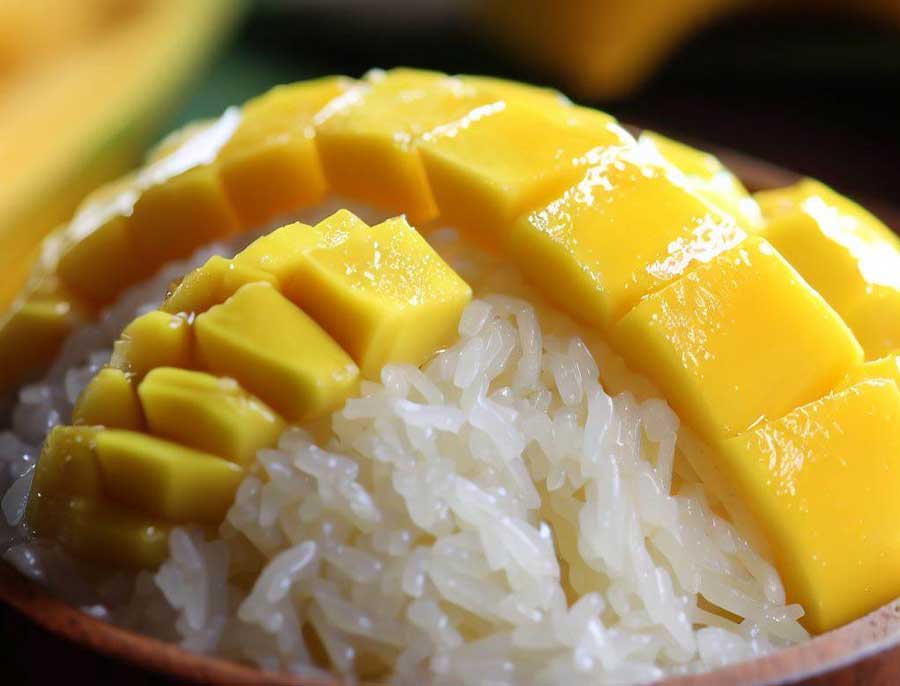
Mango sticky rice is the dessert everyone wants to make after a holiday in Thailand, and then they hit one snag: they don't own a bamboo steamer. Good news: you absolutely don't need one. I've made sticky rice in restaurant kitchens with a proper steamer and at home with nothing but a sieve and a saucepan, and the trick is the same either way — soak the rice, then steam it gently (never boil it). Here's how to do it with kit you already have.
The quick answer
Soak glutinous (sticky) rice for at least a few hours, then steam it over, not in, simmering water. The easiest no-steamer setup is a metal sieve or colander lined with a thin cloth, set over a pot of simmering water with the lid on, for about 20–30 minutes. A microwave or rice cooker will also do it. Then dress the hot rice with warm sweet-salty coconut sauce and serve with ripe mango.
Step 1: Soak the rice (don't skip this)
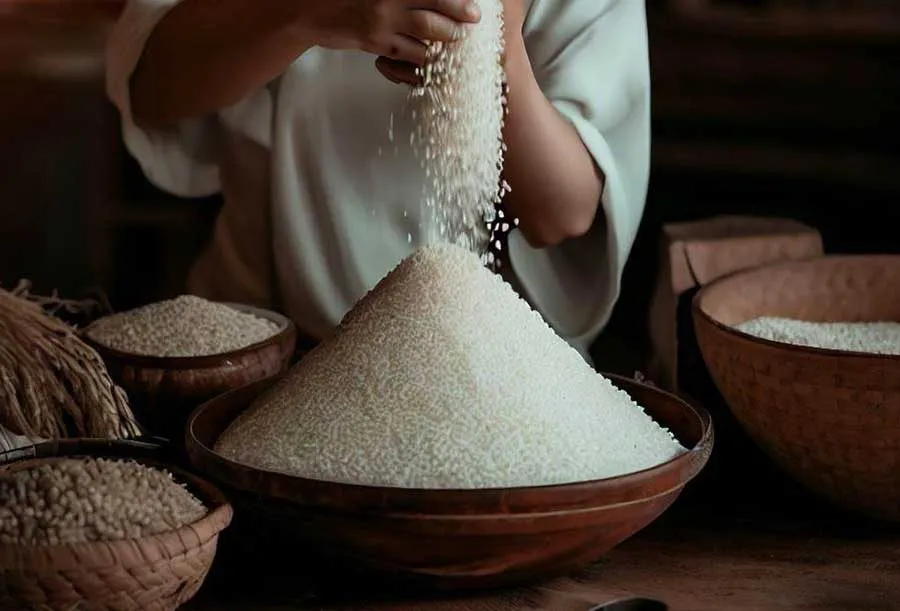
This is the one non-negotiable step. Glutinous rice must be soaked before cooking or it cooks unevenly and turns gummy with hard, chalky centres. Cover it generously with water and leave it:
- Best: 4 hours to overnight in cold water.
- Minimum: about 3–4 hours.
- In a hurry: 2 hours in warm water; the warmth speeds up how fast the grains drink it in.
Use real glutinous (sweet) rice, sometimes labelled "sticky rice." Jasmine or ordinary long-grain won't work; see the best rice for sticky rice if you're not sure what to buy. Drain it well after soaking.
Step 2: Steam it — three ways without a steamer
1. The sieve-and-pot method (best, most authentic)
This is the one I'd use. Line a metal sieve or colander with a thin, damp cloth (muslin, cheesecloth or a clean thin tea towel), tip in the drained rice, and set it over a pot holding a couple of inches of simmering water. The key: the water must not touch the rice: you want steam, not a bath. Cover with a lid (or foil), and steam over a medium simmer for 20–30 minutes, turning the rice over halfway so it cooks evenly. It's done when the grains are translucent, glossy and tender-chewy all the way through.
A couple of pointers: keep the cloth damp, not dry (a dry cloth wicks moisture out of the rice and makes it stick), and don't pile the rice more than about three inches deep so the steam can get through.

2. The microwave (fastest)
Put the soaked, drained rice in a microwave-safe bowl with a splash of water, cover, and microwave in bursts — a few minutes at a time, stirring between — until the grains are translucent and tender, then rest it covered for 5 minutes. It's the quickest route and perfectly good, though the texture is a touch less even than steamed.
3. The rice cooker or Instant Pot
A rice cooker works well: soaked rice with an equal volume of water (1:1), on the normal or "sweet rice" setting, then rested 10 minutes with the lid down. An Instant Pot does it too (pot-in-pot, high pressure ~12 minutes, natural release). These are the most forgiving, hands-off options — handy if you make sticky rice often.
Which method should you use?
| Method | Texture | Effort |
|---|---|---|
| Sieve over a pot | Best; properly chewy | A little hands-on, needs soaking |
| Microwave | Good, slightly less even | Fastest, needs soaking |
| Rice cooker / Instant Pot | Good, a touch softer | Most hands-off; can skip soaking |
If you want it as close to a Thai street stall as possible, use the sieve. If you just want pudding tonight with minimum fuss, the microwave or rice cooker will get you there happily.
Why you can't just boil it
It's tempting to treat sticky rice like pasta and boil it in plenty of water — please don't. Glutinous rice is almost entirely one type of starch (amylopectin), which breaks down fast in lots of bubbling water and collapses the grains into a gluey mush. Steaming is gentler: the soaked grains hydrate and firm up into that distinctive chewy bite without falling apart. Soak, then steam. That's the whole secret.
Step 3: The coconut sauce

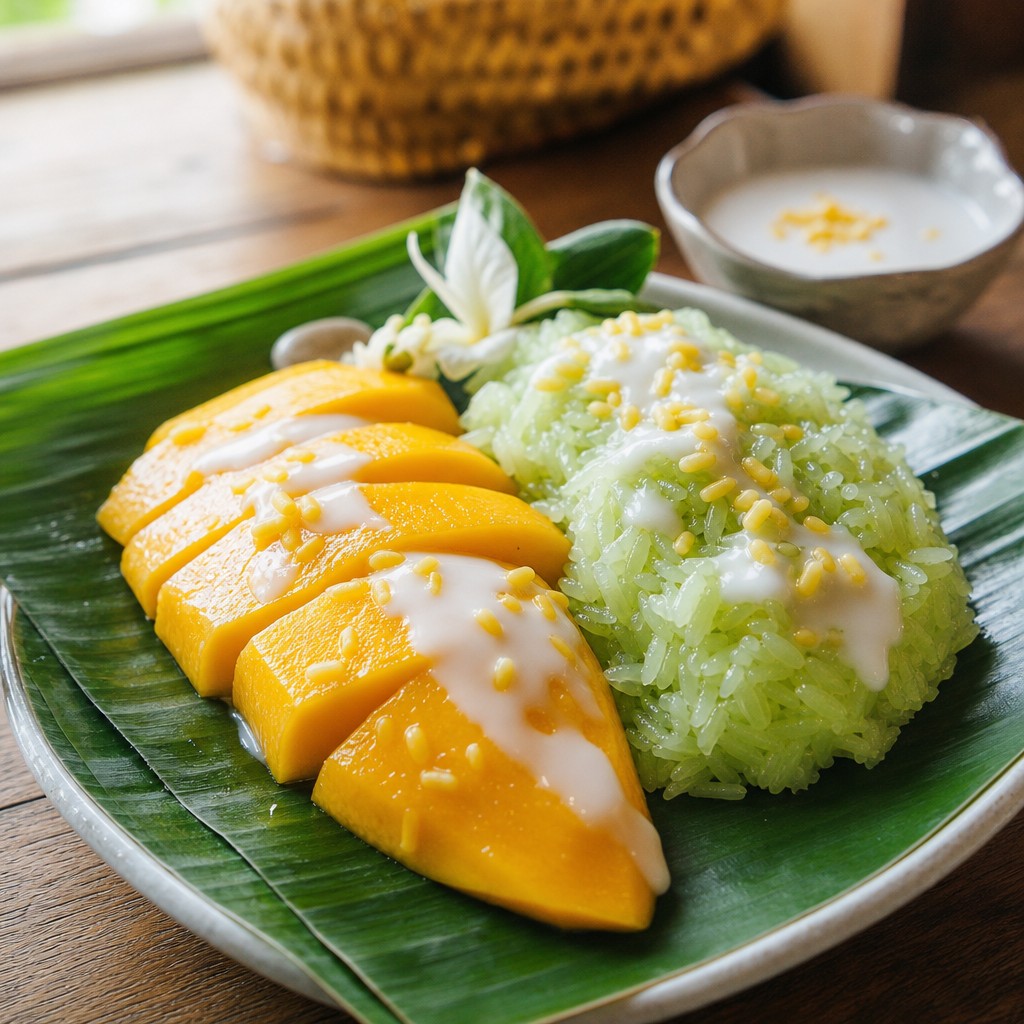
While the rice steams, make the sauce. Gently warm full-fat coconut milk with sugar and a good pinch of salt, stirring just until the sugar dissolves. Don't let it boil, which dulls the fresh coconut flavour. Pour most of it over the rice while both are still warm, stir gently, then cover and leave for 15–20 minutes so the rice drinks it in. For extra fragrance, warm a knotted pandan leaf in the sauce before pouring. Hold back a few spoonfuls (a slightly saltier batch, optionally thickened with a little cornflour) to drizzle over at the end. That salty-sweet contrast is what makes the dish.
Use full-fat coconut milk, not light, or the sauce will be thin and watery. If you enjoy this recipe, see our guide to Thai desserts with coconut milk for more sweets built on the same base.
Can't decide what to eat tonight?
Take our 60-second quiz and we'll pick for you
Step 4: The mango (and serving)
Choose a ripe but still firm sweet mango: in Thailand it's nam dok mai; a honey (Ataulfo) mango is the best easy substitute. If yours is still hard, see our guide on how to ripen a mango quickly. It should give slightly when pressed but still hold its shape. Slice it and serve alongside the warm, sauced rice, with the reserved coconut drizzle and, if you like, a scatter of toasted mung beans or sesame seeds for crunch.
One thing: don't refrigerate the finished dish: the cold sets the coconut cream hard and makes the rice stiff. Mango sticky rice is at its best warm or at room temperature, soon after making.
Troubleshooting
- Hard or chalky centres: under-soaked or under-steamed; soak longer next time and give it a few more minutes.
- Mushy or gluey: it boiled rather than steamed (water touching the rice), too much water, or you stirred it mid-cook. Keep the water below the rice and leave it be.
- Rice sticking to the cloth: the cloth was too dry; dampen it before adding the rice.
- Sauce thin and watery: light coconut milk; use full-fat.
The bottom line
A bamboo steamer is lovely, but it's a luxury, not a requirement. Soak your glutinous rice, steam it gently in a cloth-lined sieve (or take the microwave or rice-cooker shortcut), dress it in warm coconut sauce, and serve with ripe mango. Do that and you'll have proper mango sticky rice at home with nothing more than the kit already in your kitchen.
Frequently Asked Questions
Can you make sticky rice without a steamer?
Yes, easily. A metal sieve or colander lined with a damp cloth set over a pot of simmering water works brilliantly, and a microwave, rice cooker or Instant Pot will also do the job. You just need to steam it, not boil it.
Do you have to soak sticky rice first?
For the sieve and microwave methods, yes: soak it at least 3 to 4 hours (overnight is best, or 2 hours in warm water). Without soaking it cooks unevenly with hard centres. A rice cooker or Instant Pot can skip soaking, but the texture is a little softer.
Can you cook sticky rice in a rice cooker?
Yes. Use soaked rice with an equal volume of water (1:1), cook on the normal or sweet-rice setting, then leave it to rest for 10 minutes with the lid down before serving.
Can you microwave sticky rice?
Yes: put soaked, drained rice in a covered microwave-safe bowl with a splash of water and cook in short bursts, stirring between, until the grains are translucent and tender, then rest 5 minutes. It's the fastest method.
Should sticky rice be boiled or steamed?
Always steamed. Glutinous rice is almost pure amylopectin starch, which dissolves into mush when boiled in lots of water. Soaking then steaming gives the firm, chewy texture you want.
Why is my sticky rice hard in the middle?
It was under-soaked or under-steamed. Soak it longer next time and steam a few minutes more; the grains should be translucent and tender all the way through, with no chalky white centres.
Why is my sticky rice mushy?
Usually because water touched the rice and it boiled, or there was too much water, or it was stirred while cooking. Keep the water level below the rice, use steam, and don't stir until it's done.
What kind of rice do I need for mango sticky rice?
Thai glutinous rice, also sold as "sweet" or "sticky" rice, not jasmine or ordinary long-grain, which won't turn chewy and clingy. It's widely available in Asian grocers and many supermarkets.
Can I make the coconut sauce ahead?
You can, but pour it over the rice while both are warm so it absorbs evenly; cold sauce on cold rice won't soak in and sets firm. Gently rewarm it if needed, without boiling.
What's the best mango for mango sticky rice?
A sweet, low-fibre variety that's ripe but still firm: nam dok mai in Thailand, or a honey (Ataulfo) mango as the best everyday substitute. It should give slightly when pressed but still hold its shape.
If you do have a steamer, see our How to Cook Sticky Rice guide for the proper technique. It covers steaming, soaking times, and how to tell when the rice is done.

Comments