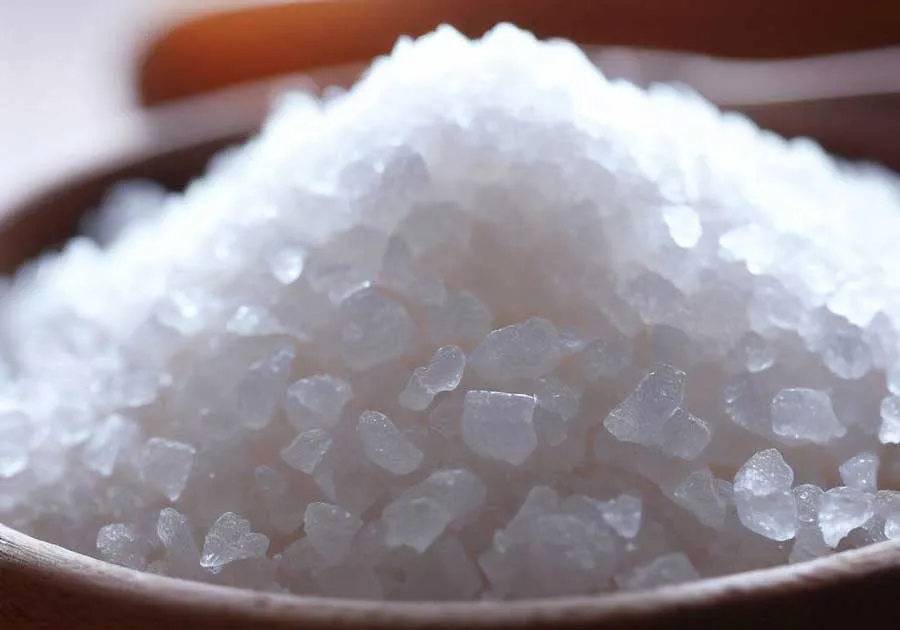
What is MSG?
Monosodium glutamate (MSG) is a sodium salt of glutamic acid, an amino acid naturally found in many foods. It's used as a flavour enhancer to intensify and round out the savoury, umami taste in dishes.
MSG was first isolated from seaweed broth by Japanese scientist Kikunae Ikeda in 1908. He identified glutamate as responsible for the distinct savoury quality we now call umami, one of the five basic tastes alongside sweet, sour, salty, and bitter.
Despite widespread concern, regulatory agencies including the World Health Organization (WHO), the US Food and Drug Administration (FDA), and Thailand's own food regulator, the Thai FDA (Ministry of Public Health), consider MSG safe for consumption within normal limits. A small number of people may experience mild symptoms when consuming large quantities, but this has not been consistently supported by scientific evidence.
The role of MSG in Thai cuisine
MSG is known in Thai as pong choo rot (ผงชูรส), literally "flavour powder." Thai chefs use it to intensify the umami dimension that underpins so much of Thai cooking: the savoury depth behind soups, the richness of curries, the satisfying roundness of a stir-fry sauce.
Thai cuisine aims for a careful balance of sweet, sour, salty, spicy and umami in every dish. MSG is a precision tool for that last element. It's used across a wide range of dishes, from street food noodle stalls to restaurant curries, and has been part of Thai cooking for generations.

In Thai restaurants, MSG usage varies. Some declare they don't use it and cater to customers with concerns. Others include it as standard, viewing it as essential to authentic flavour. At street food stalls, it's almost universally present.
For home cooking, it comes down to preference. Traditional Thai ingredients like fish sauce, tamarind, and dried shrimp all provide natural glutamate and can deliver umami depth without added MSG. Seasoning sauce is another natural source worth knowing about.
MSG in Thai food? Yes, in just about everything

MSG is present in the vast majority of Thai restaurant cooking and street food. It's not hidden or unusual; it's a standard pantry ingredient treated the same way a Western chef might use salt. If you're eating Thai food in Thailand, assume MSG is present unless you've specifically requested otherwise.
That said, Thai cuisine's depth and appeal extends far beyond MSG. The aromatics, fresh herbs, balanced sauces, and technique are what make it special; MSG simply amplifies what's already there.
Thai foods most likely to contain MSG
| Thai Dish | Likelihood of Containing MSG |
|---|---|
| Tom Yum Soup | Commonly contains MSG |
| Green Curry (Kaeng Khiao Wan) | Commonly contains MSG |
| Massaman Curry | May contain MSG |
| Stir-Fried Dishes | May contain MSG |
| Street Food | Often contains MSG |
| Pad Thai | May contain MSG |
| Red Curry (Kaeng Phet) | May contain MSG |
| Pineapple Fried Rice | May contain MSG |
| Larb (Spicy Thai Salad) | May contain MSG |
| Som Tum (Green Papaya Salad) | May contain MSG |
| Mango Sticky Rice | Typically does not contain MSG |
How to ask for no MSG in Thailand
If you're travelling in Thailand and want to avoid MSG, the phrase you need is "mai sai pong choo rot" (ไม่ใส่ผงชูรส), meaning "don't add MSG." Said with a smile at a street stall or restaurant, it will almost always be honoured without fuss; the request is common enough that nobody finds it strange.
Two caveats worth knowing. First, this only stops the cook adding MSG powder to your dish. The sauces in the wok (oyster sauce, seasoning sauce, fish sauce) still contain glutamate, some of it added during manufacturing, so a truly MSG-free Thai meal is close to impossible in practice. Second, at busy stalls the seasoning is muscle memory; a cook on autopilot may add it anyway. Restaurants with printed menus are more reliable for special requests than street vendors at rush hour.
Cooking Thai food without MSG at home
The home cook's advantage is total control, and Thai food made without MSG can still hit that deep savoury note. The trick is layering natural glutamate sources, which is exactly what Thai cooking did for centuries before flavour powder existed:
Fish sauce is the backbone; it's naturally rich in glutamate from fermented anchovies. Dried shrimp, pounded into pastes and salads, adds concentrated umami, and shrimp paste (kapi) in curry pastes does the same job. Tomatoes and mushrooms, both high in natural glutamates, deepen soups and stir-fries. A proper homemade stock instead of water transforms any noodle soup.
If a dish tastes flat without MSG, it usually needs more fish sauce, a pinch more sugar to round the edges, or simply more time; umami builds as ingredients cook together. For the full pantry rundown, see my guide to the 20 most common ingredients in Thai cooking.
Do some people actually react to MSG? The science behind sensitivity
The "Chinese Restaurant Syndrome" myth of the 1960s has been thoroughly debunked. Systematic studies show no consistent MSG reaction in controlled settings, though some people report real symptoms. Here's what the science actually says.
A small number of people (roughly 1–3%) may experience mild symptoms (headache, flushing, numbness around the mouth) when consuming large quantities of MSG on an empty stomach or in combination with salt and spicy food. The symptoms are real but not due to MSG toxicity; they reflect individual variations in glutamate receptor sensitivity and blood-brain barrier permeability.
Ironically, in Thai restaurants the culprit is rarely MSG alone. Combination effects matter: MSG combined with high capsaicin (fiery chillies), high sodium (fish sauce, soy sauce), and alcohol can amplify the perception of heat and intensity, leading to flushing or a burning sensation. MSG is often blamed unfairly for a synergistic effect.
Dose matters too. A tablespoon of MSG in a single bowl of soup (as might happen at a busy stall) is a much higher dose than the trace amounts naturally present in fish sauce or tamarind. If you're sensitive, the difference between "no added MSG powder" and authentic Thai sauce without MSG is significant.
MSG usage by Thai region: geographical differences
MSG use isn't uniform across Thailand; it varies by region, reflecting local cooking traditions and ingredient availability.
Can't decide what to eat tonight?
Take our 60-second quiz and we'll pick for you
Northern Thai cuisine (Chiang Mai, Lampang) is the least MSG-heavy. It relies on fermented ingredients (pickled fish, salted vegetables), dried chillies, and sticky rice. MSG is used but sparingly, and the regional flavour profile is earthier and less dependent on umami enhancement. Khao soi and sai oua are typically made with traditional pastes, not MSG-boosted sauces.
Central Thai cuisine (Bangkok and surrounding regions) has the highest MSG usage. This is the style served in most Thai restaurants globally, and it has adopted MSG widely as a standard seasoning. The balanced five-flavour profile of Central Thai cooking integrates MSG as a precision tool, and tom yum, pad thai, and curries from Bangkok kitchens are almost universally MSG-inclusive.
Southern Thai cuisine (Phuket, Krabi, Satun) sits at moderate-to-high usage, but MSG is often masked by naturally high glutamate from fermented fish sauce, shrimp paste, and dried seafood. Southern dishes taste rich and umami-forward regardless of whether MSG powder is added; fish sauce itself provides substantial glutamate.
Northeastern Thai cuisine (Isaan region) has moderate MSG usage. Isaan cooking traditionally relied on fermented fish (som pla), sticky rice, and fresh herbs, so no added MSG was necessary. Modern Isaan street food, particularly in Bangkok's Isaan districts, varies: some stalls add MSG, others don't. If you ask "mai sai pong choo rot," Isaan vendors are more likely to honour it than Central Thai restaurants.
If you're highly sensitive to MSG, Northern and Northeastern street food stalls offer the best odds of finding naturally low-MSG dishes. Central Bangkok restaurants, by contrast, treat MSG as a standard seasoning.
Verifying "no MSG" claims: a restaurant reality check
Simply asking "no MSG" isn't always sufficient, because MSG hides in places you wouldn't expect.
Fish sauce, oyster sauce, shrimp paste, and seasoning sauce (si-iw yod) all contain naturally occurring or intentionally added glutamate. A curry paste made last week in the restaurant kitchen might contain MSG; pre-packaged curry pastes from suppliers almost certainly do. A chef's honest answer of "no MSG powder added" still means your dish contains glutamates from sauces.
A few questions worth asking in the kitchen: whether they use pre-made curry pastes or make them fresh (fresh pastes allow ingredient control; pre-made usually contain MSG); which fish sauce brand they use (premium brands like Red Boat list ingredients, while cheap brands may hide additives); whether their seasoning sauce is homemade or commercial (commercial versions always contain glutamate); and whether they can prepare your dish with fresh stock instead of pre-made gravy (which reduces reliance on umami boosters).
One red flag to watch for: if a restaurant promises "100% no MSG" but their food tastes exceptionally rich and flavourful in ways you can't quite explain, MSG is probably hiding in the sauces. Authentic Thai food made without MSG powder still requires depth from fish sauce and other ingredients, but it should taste noticeably less "round" or less savory-intense.
Restaurants with printed menus and slower service are more reliable for special requests than busy street stalls. Busy kitchens operate on muscle memory; printed menus suggest organised operations where special requests are documented and honoured.
Sources
Safety of MSG as a food additive: World Health Organization; Thai FDA (Ministry of Public Health); US Food and Drug Administration.
Frequently Asked Questions
Does Thai food have MSG?
Yes. MSG is widely used in Thai restaurants and street food stalls. Known locally as pong choo rot (ผงชูรส), it is added to soups, curries, stir-fries, and noodle dishes to intensify umami. Some restaurants omit it on request, and home cooks can layer natural glutamate sources like fish sauce and tamarind instead.
What is MSG and is it safe?
MSG (monosodium glutamate) is a sodium salt of glutamic acid, an amino acid naturally present in many foods including tomatoes, mushrooms, and aged cheese. Regulatory bodies including the WHO and FDA class it as safe for consumption within normal limits. The "Chinese Restaurant Syndrome" claims from the 1960s have not been consistently supported by scientific evidence.
Which Thai dishes are most likely to contain MSG?
Tom Yum soup, green curry, and most stir-fried dishes commonly contain MSG in Thailand. Street food stalls use it almost universally; it's a standard seasoning, not a secret. Mango sticky rice is one of the few popular Thai dishes that typically doesn't contain it, since it's a sweet dessert made from rice, coconut milk, and fruit.
Can I request Thai food without MSG?
Yes. The phrase is "mai sai pong choo rot" (ไม่ใส่ผงชูรส), meaning "don't add MSG." Most Thai restaurants will honour this. Bear in mind that sauces like fish sauce, oyster sauce, and seasoning sauce contain glutamate as part of their natural fermentation process, so a truly MSG-free Thai meal is difficult to guarantee even when the powder isn't added.
Is MSG in fish sauce the same as added MSG?
Chemically, yes. Both are glutamate and your body processes them identically. The difference is how they arrived there: fish sauce acquires glutamate through fermentation of anchovies, whereas added MSG is a purified form of the same compound. If you're avoiding MSG for health reasons, "natural" sources like fish sauce still contain substantial amounts of it.



Comments